Introduction
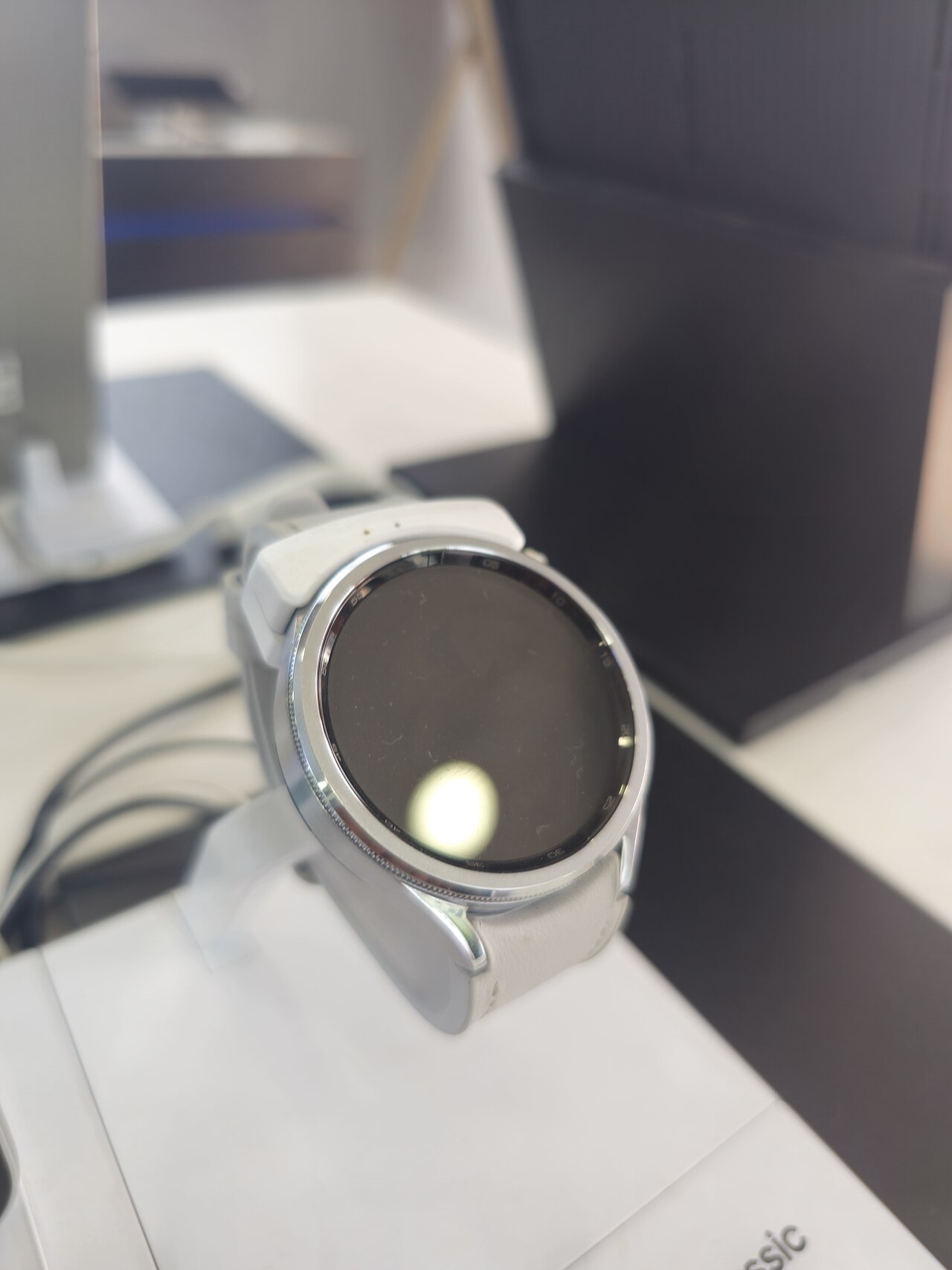
Some product design decisions become so popular they transcend the specific device that introduced them. Samsung's rotating physical bezel on the Galaxy Watch Classic line is one of those decisions. Since its introduction in the original Gear S2 and evolution through the Galaxy Watch and Watch Classic series, the tactile rotating bezel has been the defining interaction mechanism of Samsung's premium watch tier — and despite skipping it in the Galaxy Watch 4 generation, Samsung brought it back to thunderous customer reception with the Watch 5 Pro and the Watch 6 Classic.
The Galaxy Watch 6 Classic arrives in 43mm and 47mm sizes at $399 and $429, respectively. It represents Samsung's answer to consumers who want a smartwatch that looks like a proper timepiece — premium stainless steel case, classic round dial, a bezel that clicks with satisfying tactile feedback — while delivering Samsung's most advanced health monitoring platform and the latest Wear OS 5 software experience.
At the same $399 price as the Apple Watch Series 10's starting configuration, the Galaxy Watch 6 Classic makes a compelling case for Android users who want a device that genuinely doesn't look like a computer strapped to their wrist.
Design & Display
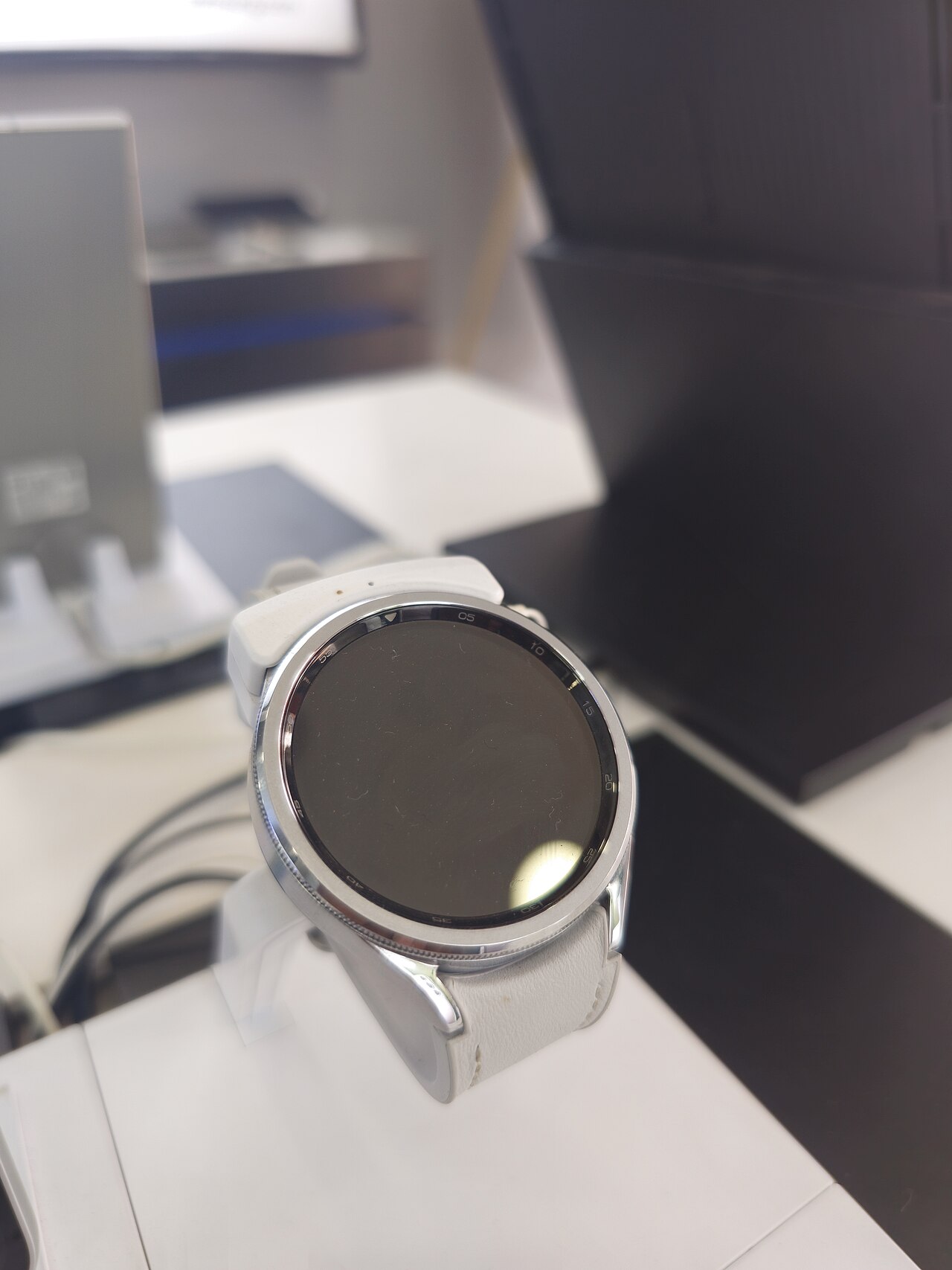
The Galaxy Watch 6 Classic's most defining feature is immediately obvious: the stainless steel rotating bezel that encircles the display. It rotates in both directions with precise mechanical detents — each click advances one item in a list or rotates one tick on the watch face — providing navigation control that doesn't require touching the display. When your hands are wet, gloved, or occupied, the bezel provides reliable, tactile navigation that pure touchscreen watches cannot match.
Ganesh Mohan T / Wikimedia Commons (CC BY-SA 4.0)
The watch is available in black or silver stainless steel, and both finishes are genuinely premium. The stainless steel construction gives the Watch 6 Classic a wrist presence that plastic-and-aluminum watches lack — it sits confidently on the wrist in formal environments where a Garmin Fenix or even an Apple Watch can feel out of place. This is a watch that works with a suit as well as workout clothes, a rare versatility in the smartwatch category.
The Super AMOLED display is excellent. At 480x480 resolution with Samsung's display tuning, colors are vibrant and accurate, blacks are deep, and outdoor brightness reaches levels adequate for daylight readability. The always-on display mode is well-implemented, showing watch face information at reduced brightness.
The physical bezel does develop micro-scratches over time — stainless steel is harder than aluminum but not scratch-proof. This is a known limitation that Samsung's longtime Watch Classic users accept as a natural patina. A case or bezel protector can mitigate surface wear if cosmetic perfection is important.
Health & Fitness Tracking
The Galaxy Watch 6 Classic carries Samsung's evolved BioActive Sensor — a multi-function health hardware package that is among the most versatile available in any smartwatch. The sensor provides three distinct measurement modes: an optical heart rate sensor for continuous HR monitoring, an electrical heart sensor for ECG readings, and a bioelectrical impedance analysis (BIA) system for body composition measurement.
Body composition measurement estimates body fat percentage, skeletal muscle mass, total body water, and basal metabolic rate by passing a low-level electrical current through the body via the watch's back sensors and your fingertip touching the bezel. The measurement takes approximately 15 seconds and is most useful for tracking trends over weeks and months rather than for absolute precision — consumer BIA measurements vary from clinical DEXA scan results — but as a weekly trend-tracking tool, it's uniquely valuable compared to any wearable that only tracks HR.
ECG readings detect atrial fibrillation patterns and record a heart rhythm trace. Skin temperature monitoring tracks nightly variations that can indicate illness onset, hormonal cycle patterns, or stress response. The sleep coaching feature provides Samsung Health's most detailed sleep feedback to date, analyzing sleep stages, heart rate patterns during sleep, and comparing your sleep data to population benchmarks.
Galaxy AI health features — available on compatible Samsung Galaxy phones — include Personalized HR Zones that calibrate your training zones to your individual physiology rather than using age-predicted formulas, and Energy Score, Samsung's synthesis metric combining sleep quality, recovery signals, and activity history into a daily readiness number.
Workout tracking covers all standard categories, with swim tracking using the 5ATM water resistance and IP68 dust resistance. The MIL-STD-810H certification provides military-grade durability testing across temperature extremes, humidity, shock, and vibration — though this is primarily reassurance for daily-use durability rather than a claim of extreme outdoor capability.
Battery Life
The Galaxy Watch 6 Classic delivers 40 hours in the 43mm model and 44 hours in the 47mm — approximately 1.5 to 2 days of typical use. Independent testing has found that the 47mm model can end a full 24-hour day with continuous health monitoring, two workout sessions, and active notification use with approximately 60% remaining — supporting the 44-hour rating as accurately conservative.
This battery life profile means the Watch 6 Classic can comfortably run an entire work week (Monday morning to Wednesday evening) before requiring a charge for typical users. Weekly charging — charging twice per week — is a realistic cadence. The magnetic charging puck is Samsung's proprietary design and achieves a full charge in approximately 90 minutes.
Compared to the Apple Watch Series 10 (18 hours), the Galaxy Watch 6 Classic's battery is substantially better. Compared to the Samsung Galaxy Watch 7 (40 hours on the 44mm model), it's comparable. The extra stainless steel weight comes with a larger internal battery, partially compensating for the heavier construction's power demands.
One UI Watch 6 & Galaxy AI
One UI Watch 6 on Wear OS 5 is Samsung's most refined wearable software interface to date. The tile-based interface, accessible via side swipe from the watch face, provides quick access to health metrics, calendar, weather, and app shortcuts. The digital rotating bezel integration — where the physical bezel controls are mirrored as a virtual interaction option — ensures that the UI is optimized for the bezel in a way that makes the Watch 6 Classic feel distinctly designed rather than merely a hardware variant.
Samsung Pay via NFC supports contactless payments across a wider range of terminal types than Apple Pay or Google Wallet in certain markets. The app ecosystem via Galaxy Store and Google Play is Wear OS's standard offering — smaller than Apple's Watch App Store but covering all major fitness, navigation, and utility categories.
Galaxy AI features — available when paired with a compatible Samsung Galaxy S or Z series phone — include text summarization for long notifications, AI-powered translation, and the health analytics features described above. The integration between Galaxy Watch and Galaxy Phone is as deep and frictionless as the Apple Watch / iPhone relationship — though the rewards are correspondingly most available to Samsung ecosystem users.
Samsung Galaxy Watch 6 Classic vs Galaxy Watch 7
The Galaxy Watch 7 is Samsung's mainstream smartwatch, available at $299 and featuring a slightly lighter aluminum construction, the same Wear OS 5 platform, and the BioActive sensor suite. The Watch 7's advantage is its lower price, lighter weight (28.9g vs. 59g for the 47mm Classic), and slightly more contemporary design. The Watch 6 Classic's advantages are the rotating physical bezel, the premium stainless steel case aesthetics, and the larger battery in the 47mm model.
The choice between them comes down almost entirely to whether you value the bezel navigation experience and the premium watch aesthetic. If the answer is yes and the $100 price premium is acceptable, the Watch 6 Classic is the better purchase. If you prioritize lightness and are indifferent to the bezel, the Watch 7 is excellent value.
Who Should Buy It?
The Samsung Galaxy Watch 6 Classic is the best choice for Android users who want a smartwatch that doubles as a premium-looking timepiece suitable for professional environments, and who specifically value physical navigation controls over touch-only interaction. Samsung Galaxy phone users will unlock the deepest feature integration including Galaxy AI health features.
Apple Watch users should not consider this device — it doesn't offer full functionality with iPhone, as many Samsung Health features and Galaxy AI integrations require an Android device. Fitness-first users who prioritize training analytics over watch aesthetics should consider a Garmin device instead.
Verdict
The Samsung Galaxy Watch 6 Classic successfully combines Samsung's most capable health monitoring platform with a premium physical design that stands apart from the plastic and aluminum aesthetic of most smartwatches. The rotating physical bezel remains the most satisfying navigation mechanic in the wearable category, and the stainless steel construction delivers a wrist presence that the standard Galaxy Watch 7 cannot match.
Battery life, body composition measurement, Galaxy AI integration, and a display that competes with the best in the category make the Watch 6 Classic a compelling $399 proposition for Android users who want a device that looks as good in a meeting as it does at the gym.