Introduction
The Garmin Venu 3 answers a question that has followed Garmin for years: can a company known for utilitarian sports instrumentation build a premium lifestyle smartwatch that competes visually and experientially with Apple and Samsung, while retaining Garmin's unrivaled health tracking depth? The answer with the Venu 3 is a resounding yes — and it adds a 14-day battery life that makes the competition look power-hungry by comparison.
Priced at $449 for the 45mm and $429 for the 41mm, the Venu 3 is not an entry-level device. It's Garmin's lifestyle flagship, positioned between the athletic Forerunner line and the ultra-rugged Fenix series. Its defining combination — AMOLED display, double-digit battery life, deep health analytics, and a market-first wheelchair activity profile — creates a profile unlike any other watch in the category.
For health-focused users who want Garmin's best-in-class monitoring without the athlete-specific complexity of a Fenix or Forerunner, the Venu 3 is the most compelling Garmin device available. It's also, unexpectedly, the most inclusive: the addition of wheelchair-specific activity profiles and push detection makes it the first major smartwatch to meaningfully serve users who use wheelchairs as their primary mobility device.
Design & Display
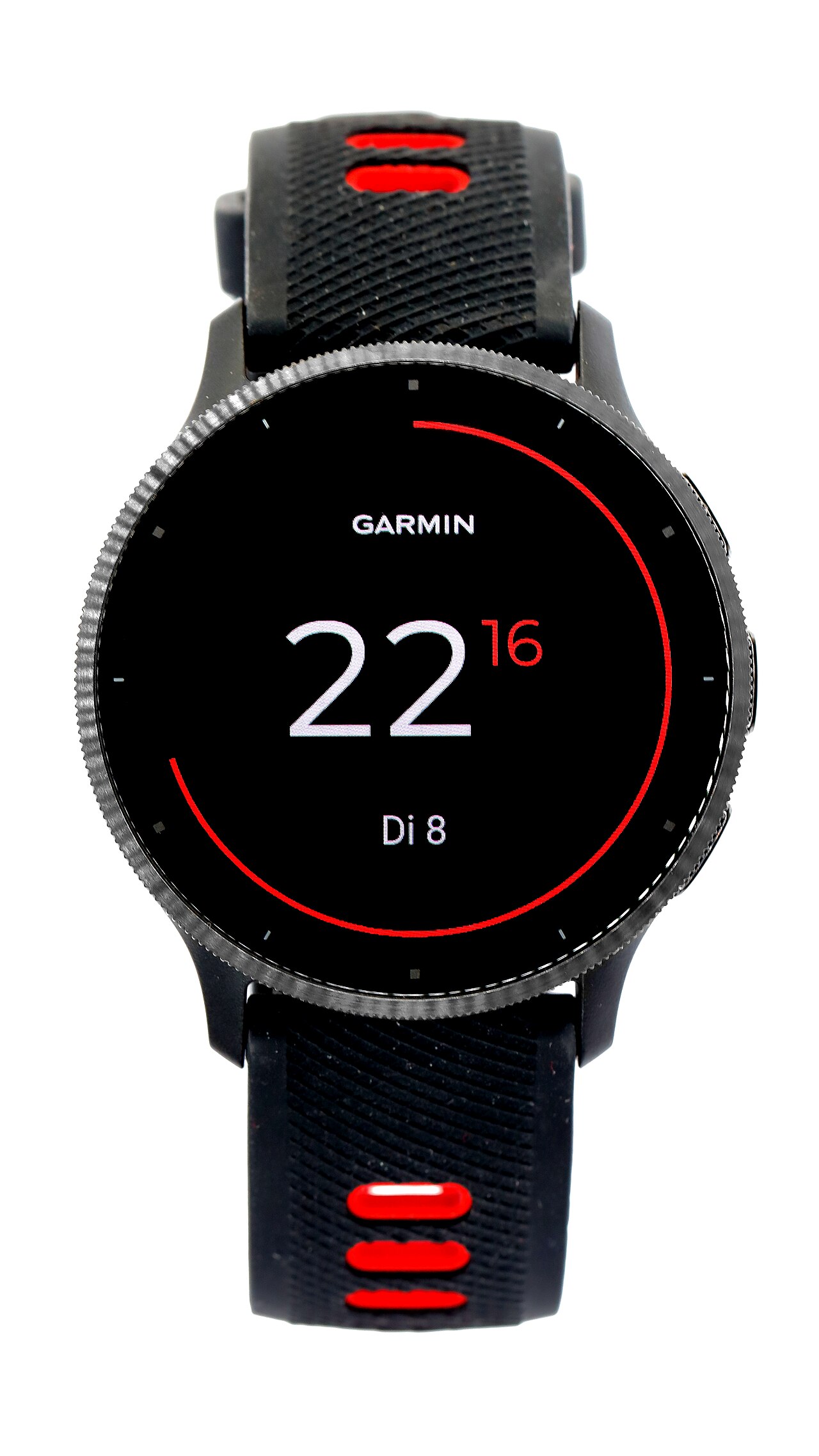
The Venu 3 arrives in a circular aluminum case with a polished bezel finish that positions it closer to a traditional watch aesthetic than the angular, tool-watch look of the Fenix line. At 12.1mm thick and 48g (45mm), it's notably more comfortable for all-day wear than the Fenix 7 Pro, sitting flat against the wrist without the bulky side protrusions of Garmin's rugged models.
C.Stadler/Bwag / Wikimedia Commons (CC BY-SA 4.0)
The AMOLED display is the Venu 3's most immediately striking feature. At 454x454 pixels on the 45mm model, it produces vivid, saturated colors that rival the Apple Watch Series 10 and Samsung Galaxy Watch 6 for visual quality. Watch faces — both Garmin's and third-party options from Connect IQ — render beautifully on the panel, and fitness metrics displayed during workouts are crisp and easy to read at a glance. The always-on display mode reduces battery life from 14 to approximately 10 days, which is still exceptional for an AMOLED device.
Compared to Garmin's MIP displays on the Fenix and Forerunner lines, the AMOLED panel's outdoor readability is slightly lower in direct sunlight — MIP displays have a reflective advantage in harsh sunlight conditions. However, for the Venu 3's lifestyle-oriented target audience (gym sessions, city runs, health monitoring at the office), the AMOLED's visual superiority more than compensates for any theoretical sunlight readability gap.
Five physical buttons provide tactile navigation, and the touchscreen supports swipe gestures for navigating watch faces and menus. Garmin Pay (NFC) enables contactless payments at supported terminals, and the built-in microphone allows voice responses to notifications — a feature that differentiates the Venu 3 from many Garmin devices.
Health & Fitness Tracking
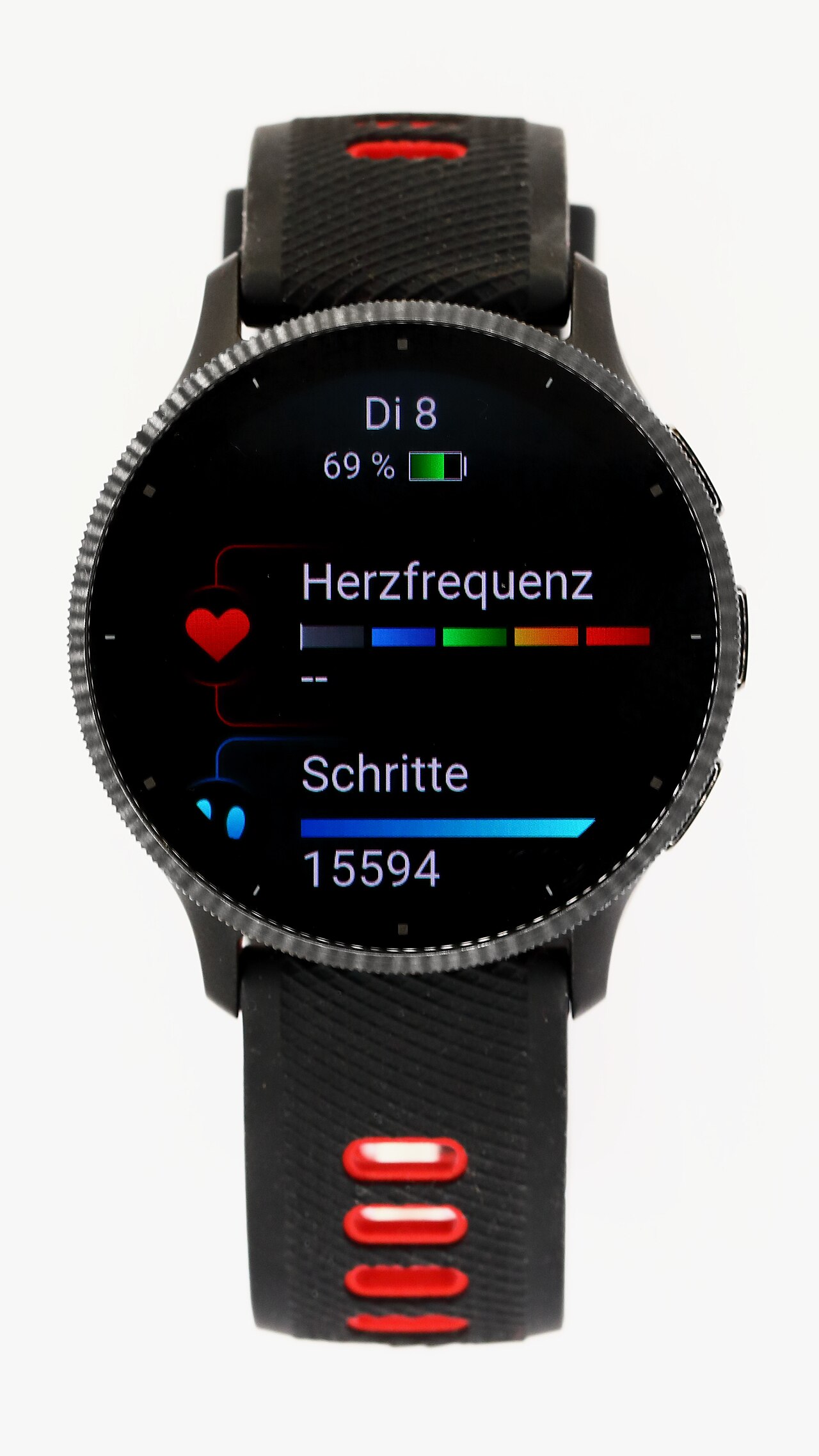
Garmin's health tracking platform is the deepest available in the consumer wearable market, and the Venu 3 carries the full suite. Body Battery — Garmin's proprietary energy level metric that synthesizes HRV, stress, sleep quality, and activity to produce a 0–100 "tank level" — is present and particularly useful for health-conscious users managing busy schedules. When Body Battery is low, the watch contextually suggests lighter activity; when it's high, it indicates readiness for harder training.
Sleep tracking on the Venu 3 is the best Garmin has ever shipped in a lifestyle watch. The Sleep Score rates overall sleep quality, while Sleep Coaching provides personalized recommendations based on your historical patterns — going to sleep earlier on nights before early starts, for example, or identifying that your REM sleep consistently drops after alcohol consumption. Nap Detection automatically identifies nap periods during the day and scores their quality, supporting users who incorporate strategic napping into their recovery routine.
Pulse Ox (SpO2) monitoring runs continuously during sleep to detect blood oxygen desaturation patterns consistent with sleep breathing disturbances. Unlike the Apple Watch Ultra 2 (which has SpO2 disabled in the US), Garmin's SpO2 operates fully. HRV Status tracks your overnight heart rate variability trend, establishing a personal range and flagging deviations. Stress tracking uses HRV data throughout the day to quantify stress levels on an hourly basis, with the Breathwork app providing guided breathing exercises when stress is elevated.
The Venu 3's wheelchair activity profiles are a landmark accessibility achievement. The watch detects pushing motion as activity (replacing step count with push count), provides adapted exercise profiles for hand-cycling and other wheelchair sports, and adjusts fitness metrics accordingly. For wheelchair users who have long been forced to use devices calibrated for walking and running, the Venu 3 is the first mainstream smartwatch to take their activity seriously.
Battery Life
The Venu 3 achieves its 14-day battery with AOD off through a combination of efficient Garmin hardware design and disciplined power management. With the always-on display enabled, battery life drops to approximately 10 days — still two to three times the battery life of most AMOLED smartwatches, including the Google Pixel Watch 3 (24-hour) and Samsung Galaxy Watch 6 (40-hour).
Independent testing has found that the 45mm Venu 3 with always-on display enabled and daily workout tracking (approximately 45 minutes of GPS activity per day) can end a 7-day week with approximately 40% remaining — reinforcing the 10-day AOD estimate as conservative. This means most users will charge the Venu 3 once every week or week and a half, a significant improvement in charging frequency versus Apple Watch or Pixel Watch users who charge nightly.
The longer battery window also benefits sleep tracking: users can go multiple nights without charging, allowing Garmin's sleep algorithms to gather more consecutive data and build more accurate long-term patterns.
Software & Smart Features
Garmin OS on the Venu 3 is less polished than watchOS or Wear OS in terms of notification interaction. Notifications display cleanly, and the microphone enables voice dictation for short replies on Android. However, the app ecosystem via Connect IQ is smaller than Apple's App Store or Google's Play Store equivalent, with fewer premium third-party apps available.
What Garmin's software excels at is health data synthesis and athlete analytics. Garmin Connect's mobile app provides among the richest post-workout and health trend analysis available, with week-by-week and month-by-month views of every health metric the Venu 3 tracks. For users who enjoy engaging deeply with their health data, Connect's analytics interface is significantly more capable than Apple Health, Samsung Health, or Google Fit.
Music storage supports up to 650 songs synced from your computer library. Spotify, Amazon Music, and Deezer sync are available, but this is a Wi-Fi sync to the watch — not streaming. This means you can listen to downloaded playlists without your phone, but you cannot stream on-demand. For users who primarily use curated playlists or podcasts, this is sufficient; for users who rely on Spotify's discovery or playlist rotation features, it's a limitation.
Garmin Venu 3 vs Apple Watch Series 10
The most compelling comparison for the Venu 3 is with the Apple Watch Series 10. Both are premium lifestyle smartwatches at similar price points with excellent displays. The Apple Watch wins on smartwatch functionality, notification interaction depth, app ecosystem, and Siri integration. The Venu 3 wins on battery life (14 days vs. 18 hours), health tracking depth (particularly sleep coaching and Body Battery), and platform-agnosticism (works equally well with iPhone and Android).
iPhone users who want the full smartwatch experience should choose the Apple Watch. Android users who prioritize health depth and battery life should strongly consider the Venu 3. Users who want the best sleep tracking available — regardless of platform — should consider the Venu 3.
Who Should Buy It?
The Garmin Venu 3 is the ideal choice for health-focused adults who want Garmin's best sleep tracking, body battery monitoring, and comprehensive health analytics in a visually premium AMOLED package without the battery anxiety of Apple Watch or Wear OS devices. It's particularly well-suited for shift workers who need flexible sleep schedules, users who practice strategic napping, and anyone in the Garmin ecosystem who wants to upgrade to a better display without sacrificing battery life.
Wheelchair users looking for a first mainstream smartwatch that tracks their actual activity accurately will find the Venu 3's wheelchair profiles to be a genuine game-changer with no direct competition.
Verdict
The Garmin Venu 3 is the best premium lifestyle smartwatch Garmin has ever made, combining the company's deepest health monitoring platform with a beautiful AMOLED display and the most impressive battery life in its display tier. The sleep coaching, nap detection, Body Battery, and wheelchair activity profiles represent meaningful innovation that goes beyond incremental improvements.
Its limitations — a smaller app ecosystem, no music streaming, and less athletic focus than the Forerunner or Fenix lines — are real but well-defined. For health-first users who want Garmin's analytics prowess in a daily-driver form factor that charges once a week rather than every night, the Venu 3 has no equal.