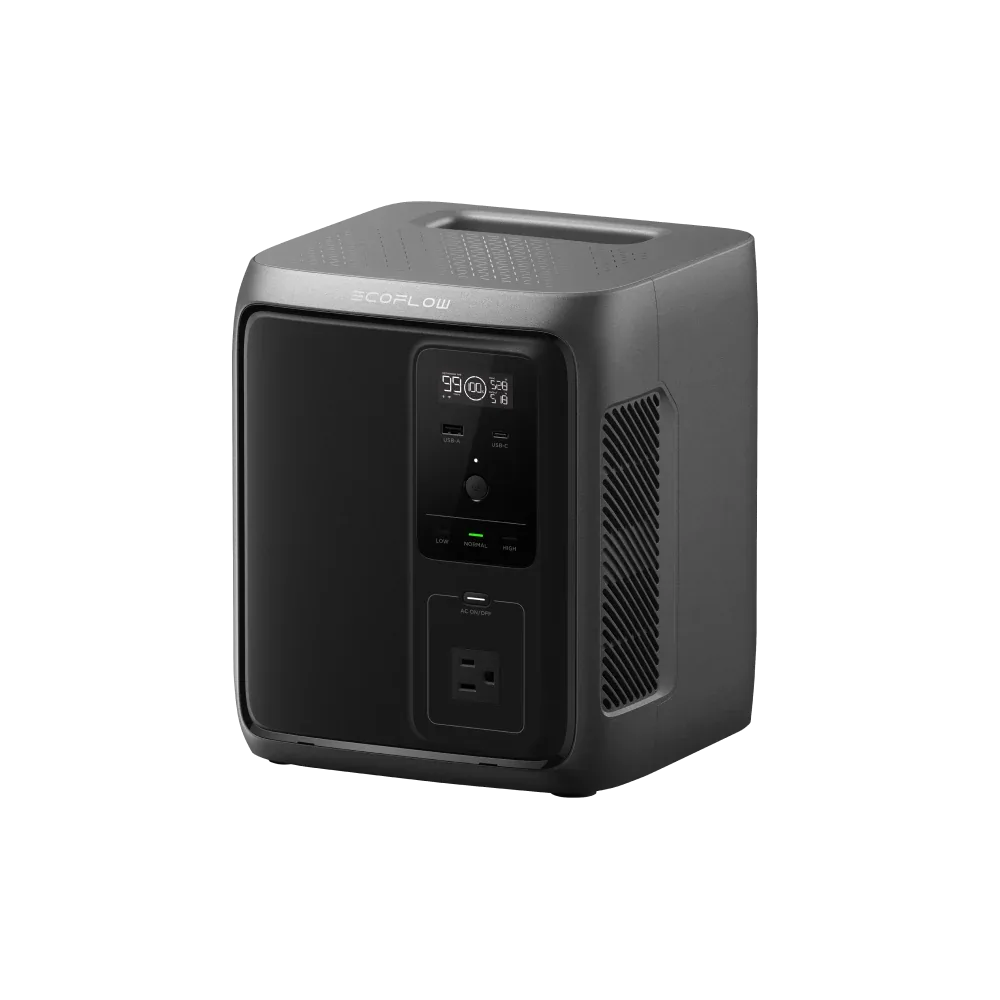
Introduction: the Air is a battery-first power station
The EcoFlow DELTA 3 1000 Air is easiest to understand as a large battery attached to a deliberately small inverter. It stores 960Wh, weighs 22 pounds, accepts up to 500W from solar, and delivers 500W through its single AC outlet. That is a very different proposition from the regular DELTA 3 family models, which are designed to run a much broader set of household loads.
EcoFlow product page (Manufacturer product image)
The trade is sensible if the job is keeping one important load alive: a router and modem, a desktop computer, a refrigerator during cycling, a CPAP machine after compatibility testing, or a modest camping setup. It is frustrating if the buyer expects a general-purpose station with several outlets, USB-C laptop charging, a 12V socket, or a path to more battery capacity. The Air has none of those extras.
There is also a naming wrinkle worth making clear. EcoFlow's official DELTA 3 family page documents the standard DELTA 3 and says its release was scheduled for November 1, 2024. EcoFlow's current US catalog and downloads page do not publish a separate product page or launch date for the 1000 Air. That makes November 1, 2024 useful family context, not a verified Air launch date. This review treats the Air as a distinct, stripped-down variant and does not pretend EcoFlow has published a launch date it has not.
Design, controls, and the cost of simplicity
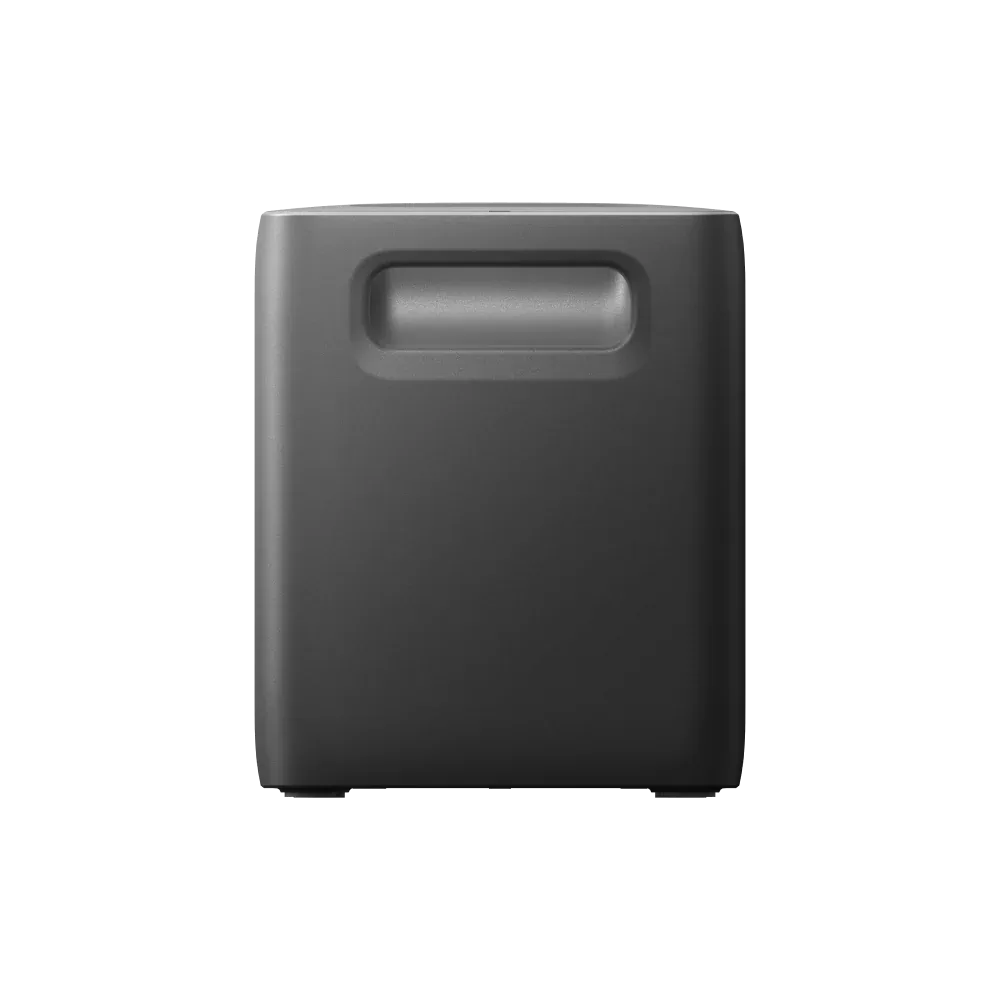
The 22-pound weight is the Air's most immediately useful physical specification. A 960Wh station at that weight is manageable from a closet to a car, from a vehicle to a campsite, or between a desk and a networking cabinet. It is not ultralight, but it is substantially easier to place than many 1,000Wh stations with 1,800W or 2,000W inverters.
EcoFlow product page (Manufacturer product image)
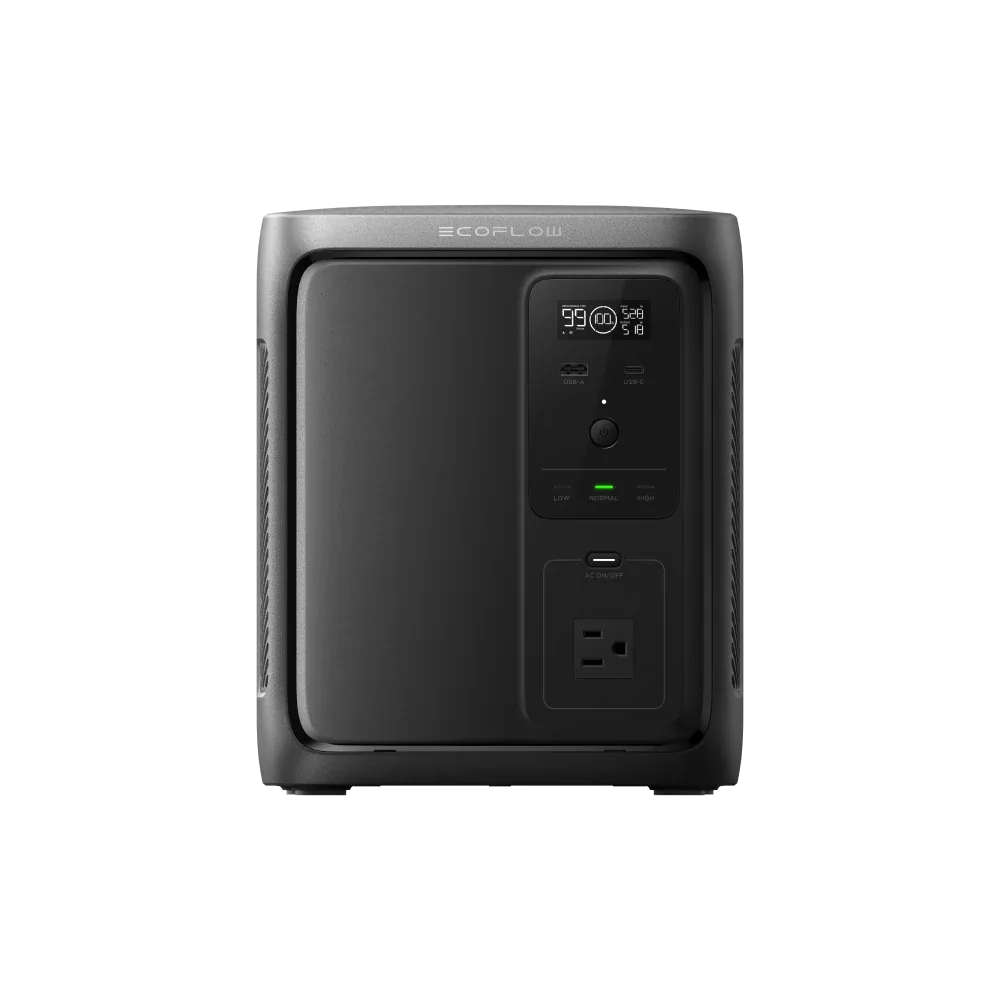
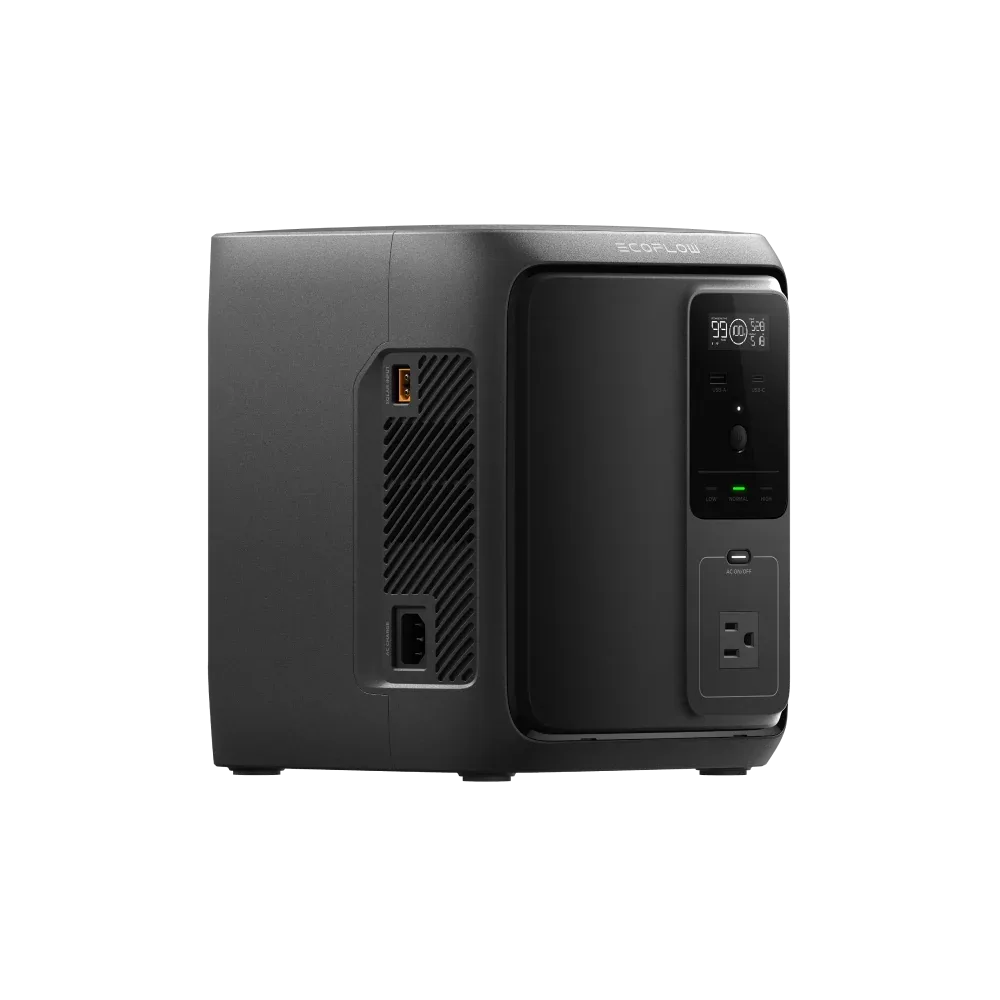
EcoFlow keeps the familiar DELTA screen and a rear handle, but the port layout is unusually sparse. The front gives you one 120V house outlet, one 12W USB-A port, and one 18W USB-C port. There is no second AC outlet, no 12V car socket, no built-in light, and no expansion connector. That is not a missing accessory; it is the design brief.
The limited interface can be an advantage during an outage. There are fewer output groups to understand and fewer ways to accidentally distribute a small battery across unimportant devices. It also makes the station a poor shared family power box. If one person is using the only AC outlet, everybody else is negotiating for access or reaching for a power strip.
The 18W USB-C port is another sign that this is not a modern laptop-charging hub. It can keep a phone, tablet, or small accessory topped up, but a laptop that normally wants around 60W to 100W will generally need the AC outlet and its own charger. A power strip can add sockets, but it cannot increase the 500W inverter limit or turn the USB-C port into a high-power DC output.
The EcoFlow app connects over Wi-Fi or Bluetooth and handles output controls, settings, and firmware updates. The Air also adds an input-stability indicator, which is useful when charging from an inconsistent generator or an unfamiliar electrical supply. EcoFlow's app documentation for the Air is not as complete as its documentation for the mainstream DELTA 3 models, so buyers should treat region-specific charging behavior as something to confirm before international travel.
Performance and charging: strong for one load
The 500W continuous inverter is the central constraint. It is enough for a router, monitor, laptop charger, small television, lights, and many refrigerator cycles, but it is not enough for the high-wattage appliances people commonly associate with a DELTA-branded station. A kettle, microwave, hair dryer, space heater, or induction cooktop will usually exceed the rating before runtime is even considered.
EcoFlow product page (Manufacturer product image)
That limit is easier to live with when the load is predictable. A computer or network cabinet does not need 1,800W of headroom, and a single low-wattage appliance can run for a useful period from 960Wh. The battery's capacity, not the headline output, is the reason to choose the Air. Buyers should make a list of the exact watts their essential devices draw rather than assuming the DELTA name implies whole-home capability.
The Solar Lab reported 88% overall efficiency in its testing. That is an independent result, not an EcoFlow claim, and it is one of the Air's strongest practical figures. Higher conversion efficiency means more of the stored energy reaches the connected device instead of disappearing in the inverter and conversion electronics. It does not mean a 960Wh battery will deliver 960Wh at the wall: cables, inverter overhead, temperature, and the load itself still matter.
The same testing measured about 14W of idle consumption with the inverter and screen left on. That is high for a compact station. At that rate, leaving the Air powered on with nothing attached can waste a meaningful part of the battery over a day or two. The ownership rule is simple: turn the AC output off when the load is gone, and do not treat the display as a permanent clock.
The 10ms UPS mode is a better match for the Air than a long list of appliance claims. The Solar Lab reported reliable switchover for computers, routers, and networking equipment. The station can also continue charging while under load; with a 500W load and AC input connected, the test report describes total input around 1,200W. That behavior is useful on an unstable grid because the battery can recover rather than slowly drain through repeated short outages.
UPS behavior still depends on the exact device. A 10ms transfer is not a universal medical or data-center certification, and EcoFlow does not publish a compatibility promise for every motor, compressor, NAS, or laboratory instrument. Test the actual computer, router, or CPAP setup before making it the only backup for something safety-critical.
Solar, alternator charging, and everyday ownership
The Air accepts up to 500W of solar input. The Solar Lab says a full solar recharge can take around two hours in suitable conditions. That is a useful system ceiling for a folding panel or a modest pair of panels, but it is not a weather guarantee. Shade, cloud, panel angle, cable losses, and the battery's state of charge can make the real day much longer.
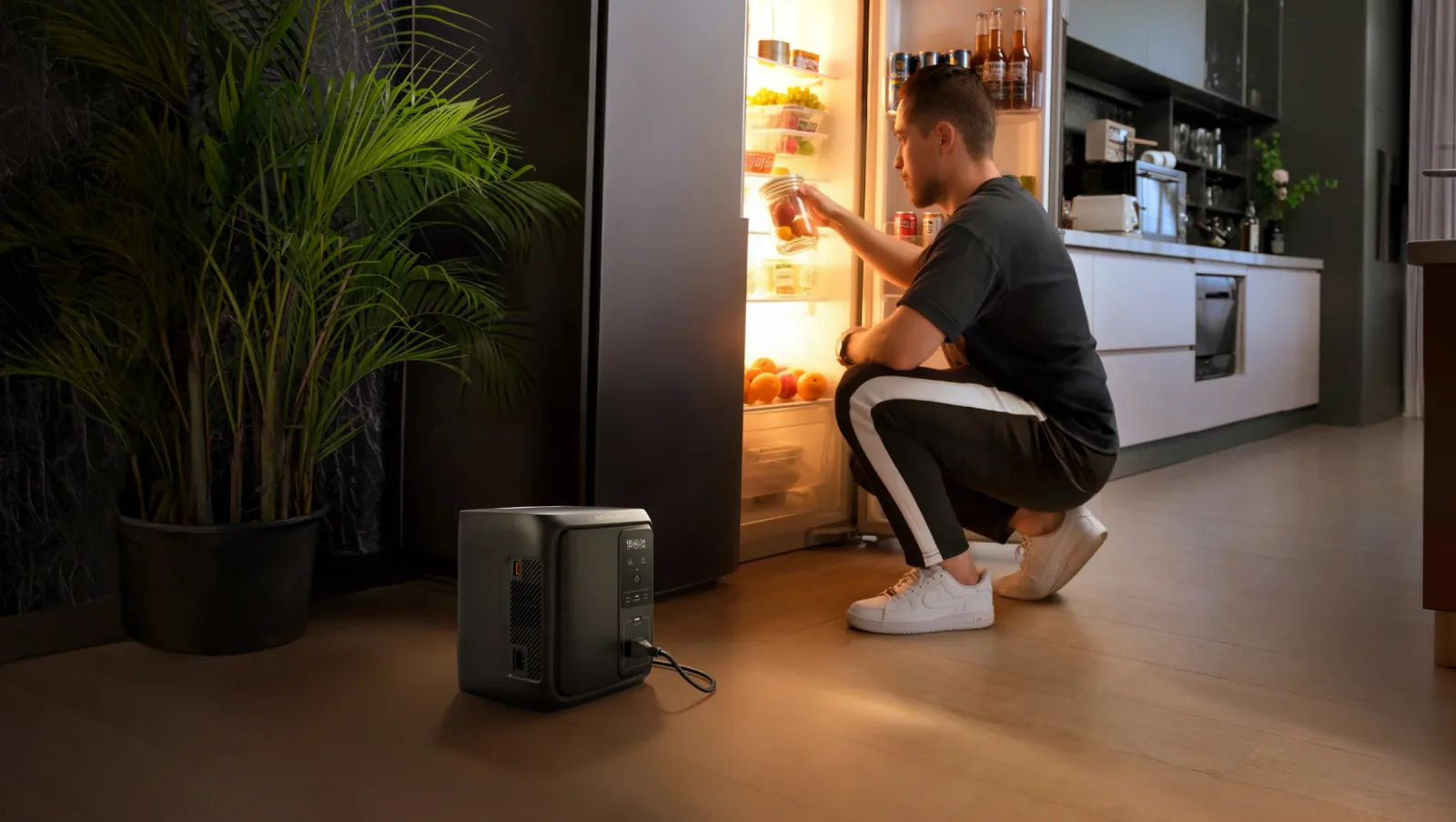
EcoFlow product page (Manufacturer product image)
AC input is rated at 650W, which is a reasonable match for a station intended to be refilled from an ordinary wall outlet. The important point is not a claimed stopwatch record; it is that the station can replenish at a rate that fits short outage recovery and routine travel. Buyers should not interpret the 650W input as 650W of continuous output. Charging power and inverter power are separate limits.
Compatibility with EcoFlow's 500W and 800W Alternator Chargers broadens the Air's usefulness in a vehicle. A driver can replenish the station from an alternator while moving, then use the stored energy at camp or during a stop. This is more practical than relying on a cigarette-lighter adapter for a 960Wh battery. The accessory cost and vehicle installation requirements still belong in the budget.
The no-expansion decision matters here too. The Air cannot become a 1,920Wh or 2,880Wh system by adding batteries later. That keeps the package simple and light, but it also fixes the upper limit of a future backup plan. If the first purchase is meant to become a home system, a modular station is a better starting point even if it is heavier and more expensive today.
DELTA 3 1000 Air vs. the alternatives
The Bluetti Elite 100 V2 is the clearest capacity-class alternative for buyers who want more than one useful port and a larger inverter. Bluetti's model is positioned with an 1,800W output, 10ms UPS behavior, and an expansion path. The Air wins on simplicity and the 22-pound carry, while the Bluetti makes more sense for mixed loads or a buyer who expects the system to grow.
The standard EcoFlow DELTA 3 is the better choice inside EcoFlow's own family if household versatility matters. EcoFlow lists it with a 1,024Wh battery, 1,800W output, 500W solar input, and 10ms UPS capability. It is heavier and more substantial, but the extra inverter headroom and broader port selection make it a much better fit for appliances and multiple simultaneous loads. The Air is only the smarter buy when low weight and one-load simplicity outrank flexibility.
The Jackery Explorer 1000 v2 is a more conventional 1kWh portable station. It is aimed at buyers who want familiar camping and emergency features rather than a deliberately minimal port panel. The Air offers a stronger argument for app-based monitoring, 500W solar input, and high-efficiency single-load backup; Jackery is easier to recommend when 12V camping accessories and a general-purpose interface are more important.
The EcoFlow RIVER 3 Plus is the portability-first alternative. Its smaller battery is easier to lift and better suited to short trips, while the Air gives you 960Wh and a more serious outage reserve. If the expected load is only a laptop, phones, and a router, the RIVER-class option may be enough. If the buyer wants overnight reserve for one essential device, the Air's larger battery earns its space.
Who should buy it — and who should skip it
Buy the DELTA 3 1000 Air if you want a relatively light 960Wh reserve for one important load, value a 10ms UPS mode, and can live with a 500W ceiling. It is a good fit for a home-office network stack, a computer and monitor, a small refrigerator strategy, road trips, or a campsite where a 500W solar array is realistic. Existing EcoFlow owners may also value the Alternator Charger compatibility.
Skip it if you want to run heating appliances, kitchen appliances, power tools, pumps, or several devices at once. Skip it if you need a 12V refrigerator outlet, laptop-class USB-C charging, a built-in light, or a second AC outlet. Most importantly, skip it if your plan includes adding batteries later. The Air's fixed 960Wh capacity is the product's defining boundary.
Verdict
The EcoFlow DELTA 3 1000 Air is a specialist, not a smaller version of a normal DELTA 3. Its 22-pound body, 960Wh battery, 500W solar ceiling, efficient conversion, and well-behaved UPS mode make it attractive for one-device backup and vehicle-based use. The stripped-down ports and fixed capacity are not acceptable compromises for a general emergency station.
The recommendation is therefore narrow but positive: buy the Air when the priority is keeping one predictable load alive with a large reserve that remains carryable. Choose the standard DELTA 3, Bluetti Elite 100 V2, or another expandable station when you need headroom, multiple outlets, or a system that can grow. Also remember that EcoFlow has not published a separate official launch date for this Air variant; the November 1, 2024 date belongs to the standard DELTA 3 family listing, not confirmed Air-specific launch documentation.
Frequently asked questions
What is the official launch date of the DELTA 3 1000 Air?
EcoFlow's primary US materials reviewed for this article do not publish a separate launch date for the 1000 Air. EcoFlow's DELTA 3 family page records November 1, 2024 as the planned release date for the standard DELTA 3. That family date should not be presented as the Air's launch date.
How much battery capacity does it have?
The Air is specified at 960Wh. Usable energy at the wall will be lower because conversion losses and the connected device's own power supply consume part of the stored energy.
Can it run a space heater or microwave?
Usually not. The inverter is rated for 500W continuous output, while space heaters, microwaves, kettles, and many hair dryers typically require more. Check the appliance label, but do not plan around loads above the station's rating.
Does it have an uninterruptible-power-supply mode?
Yes. The station is specified with 10ms UPS switching, and The Solar Lab reported reliable behavior with computers, routers, and networking equipment. Test the exact equipment before relying on it for a critical application.
Can I expand the battery later?
No. The Air has no expansion connector. Its maximum stored energy remains 960Wh, so buyers who expect to add batteries should choose a modular alternative from the beginning.
How many devices can I plug in?
The physical output selection is one 120V AC outlet, one 12W USB-A port, and one 18W USB-C port. A power strip can share the AC outlet, but the total load still cannot exceed 500W and the station does not gain additional DC power.
Is the USB-C port suitable for a laptop?
The USB-C port is rated at 18W, which is below the charging requirement of many laptops. A laptop can instead use the AC outlet with its normal charger, but that consumes the station's limited outlet and adds inverter losses.
Can it charge from solar panels?
Yes. Solar input is rated up to 500W. The Solar Lab reported roughly two hours for a full solar recharge in suitable conditions; weather, panel size, shade, and wiring can make that substantially longer.
Can I charge it from a vehicle?
EcoFlow accessory compatibility is a notable feature. The Solar Lab reported that the Air works with EcoFlow's 500W and 800W Alternator Chargers. Those are separate accessories with their own installation and vehicle requirements.
Does it work while charging?
The Solar Lab reported that the Air can continue charging while powering a load, including at the 500W inverter limit. That is useful for short outages and unstable grids, but simultaneous charging and output can increase fan noise and should not be assumed to work identically with every input source.
Is it quiet enough for a bedroom?
Do not assume that it is. The Solar Lab described the Air as noticeably loud when charging and outputting at the same time. For overnight use, test it in the intended room and turn off unnecessary output groups.
What is the $293 price?
The Solar Lab reported a $293 price using its discount code. EcoFlow's current US catalog does not list a price for this Air variant, so treat $293 as a dated, source-specific observed deal rather than a permanent list price.