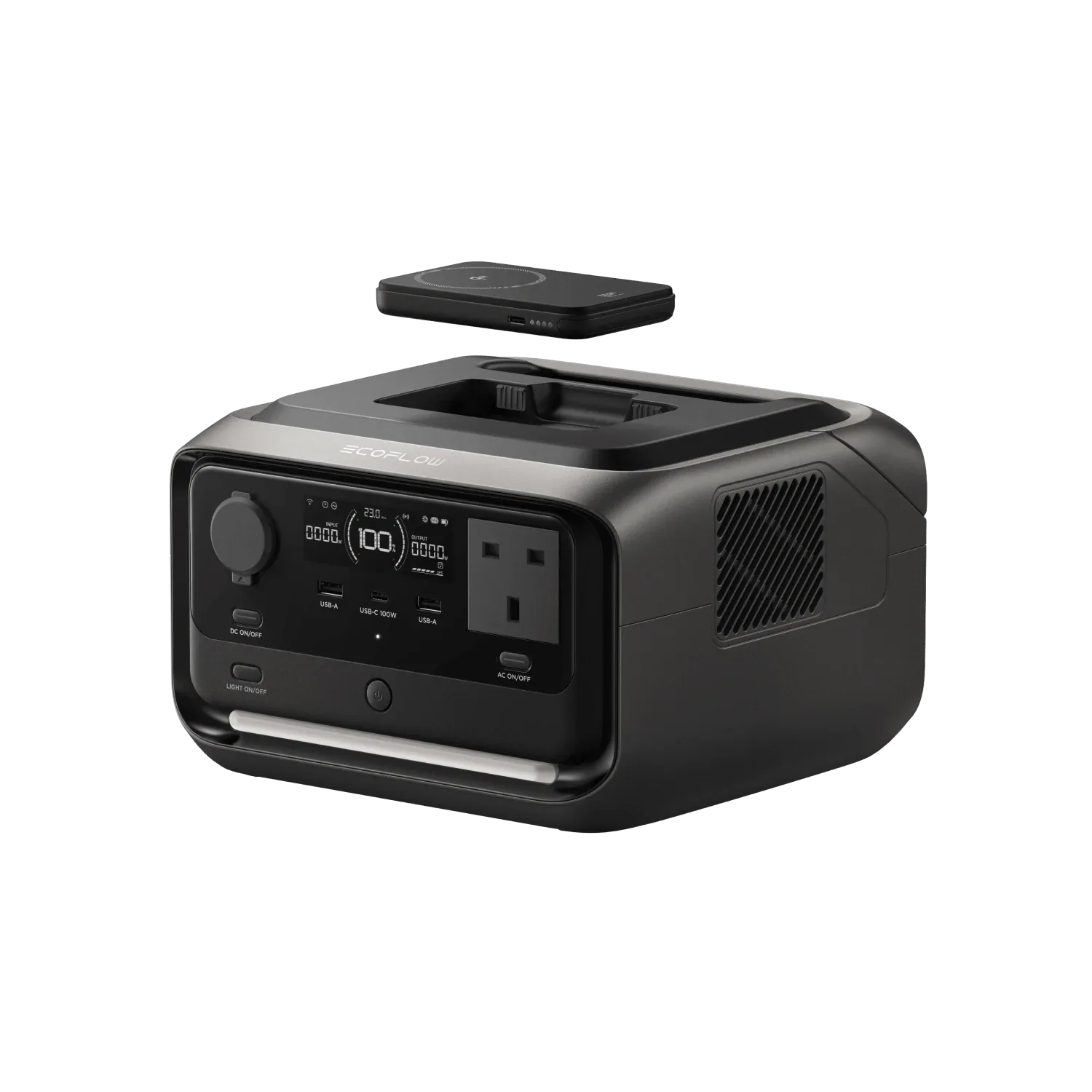
Introduction: The Wireless Feature Is the Point
The EcoFlow RIVER 3 Plus Wireless is easy to misunderstand. It is not a larger
RIVER 3 Plus, and it is not a new high-output power station. The main unit remains
a compact 286Wh LiFePO4 battery with a 600W inverter. What changes is the way you
use it away from a wall: the wireless bundle pairs the station with a detachable
magnetic 5,000mAh power bank that can travel with your phone while the main station
stays in the car, tent, or campsite.
EcoFlow product page (Manufacturer product image)
That is a better idea than it sounds. A conventional small power station is often
overkill for the most common outdoor job, which is topping up a phone while people
are walking around. Pulling a cable from the station works, but it leaves the bulky
box beside you and consumes a port. A removable wireless pack turns that task into a
normal pocket-charger experience. It also makes the RIVER 3 Plus more attractive to
campers and day-trip users than the standard model.
The important qualification is that the wireless accessory does not solve the
RIVER 3 Plus's central limitation. A 286Wh station is for electronics, lights,
routers, and carefully chosen medical or low-draw equipment. It is not a refrigerator
backup or a portable way to run a heater. Buy the Wireless version for the workflow
improvement, not because the word “wireless” implies more energy.
EcoFlow's official U.S. materials document a sales promotion beginning December 6,
2024 for the RIVER 3 Plus platform. That is the clearest primary-source launch timing
I could verify. EcoFlow does not publish a separate official launch date for the
Wireless Boost bundle, so this review treats it as a later bundle or variant of the
RIVER 3 Plus rather than assigning it an invented release day.
Design, Setup, and the Portable-Power Workflow
At 10.4 lb, the RIVER 3 Plus is genuinely portable rather than merely movable.
It can live under a desk, in a vehicle, or in a closet without becoming a piece of
emergency equipment that nobody wants to lift. The compact format is particularly
well matched to the wireless version: the station can stay near the tent or tailgate
while the small magnetic pack follows the person who needs a charge.
EcoFlow product page (Manufacturer product image)
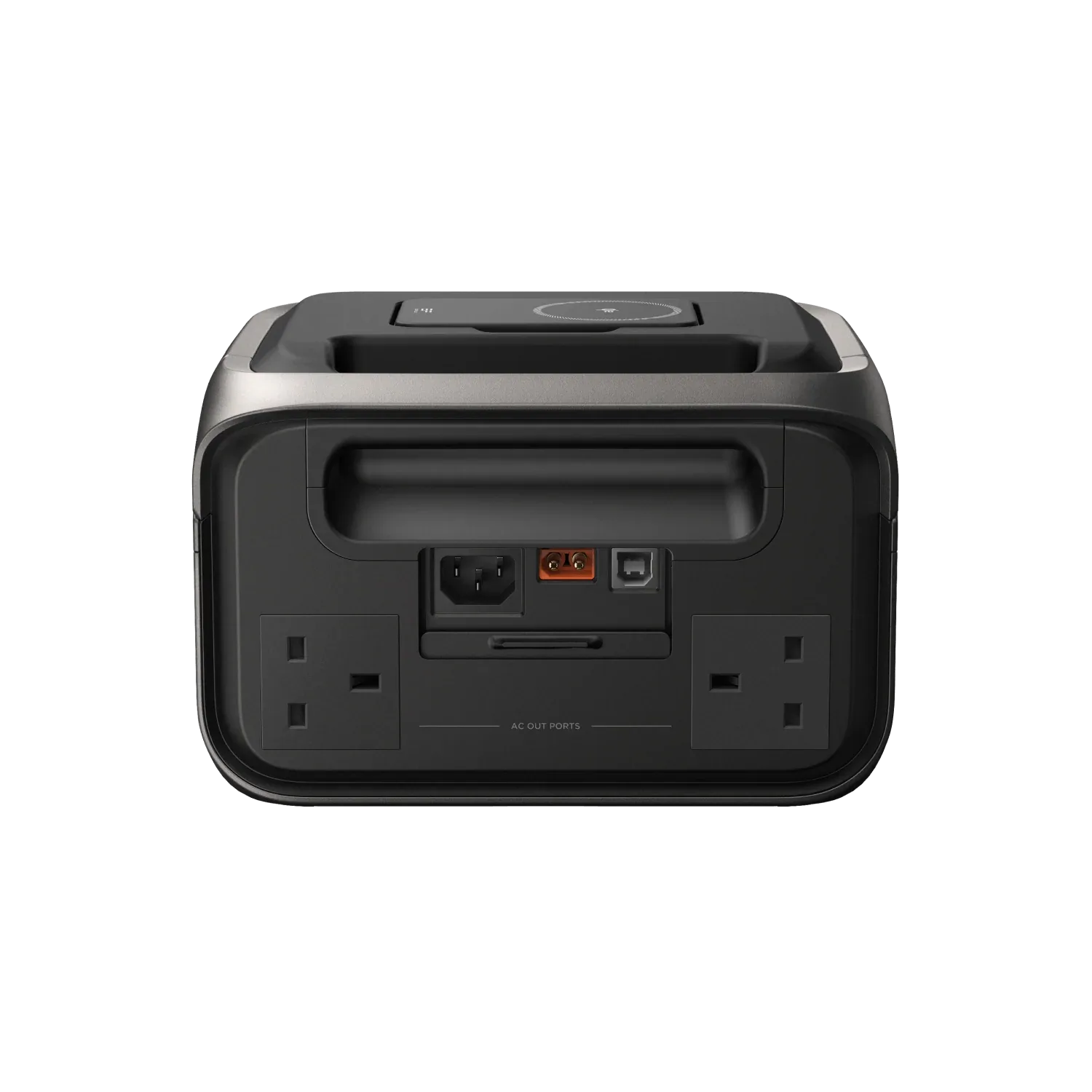
The main unit offers 7 outlets in total, including 3 AC outlets, USB ports, and a
12V car outlet. EcoFlow says all 3 AC outlets receive UPS protection. That layout
gives the station two distinct jobs. At home, it can sit beside a router, NAS, or
desktop and switch to battery in under 10ms. Outside, it can provide a shared power
source while the detachable pack handles the individual phone-charging duty.
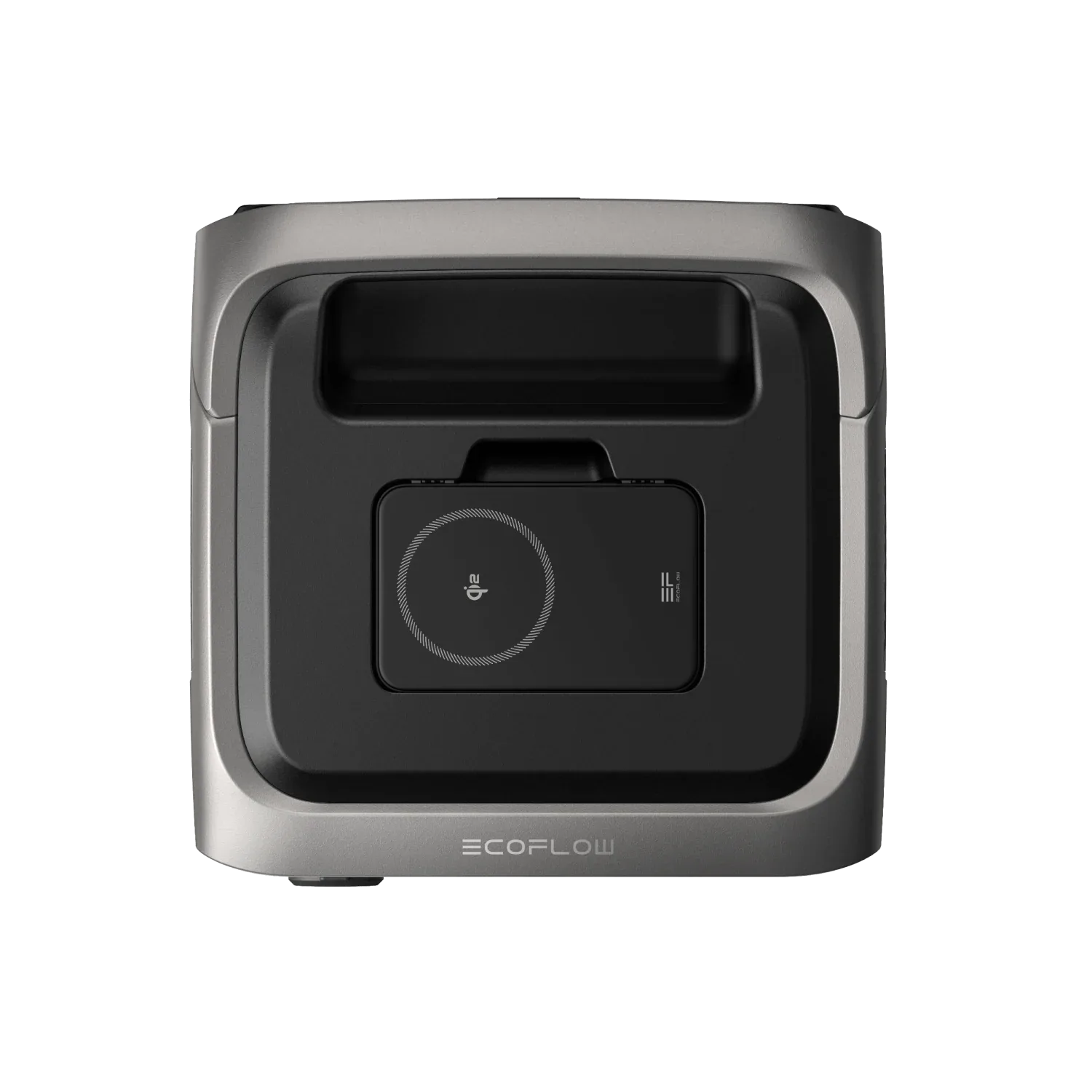
The wireless pack is the feature to inspect carefully before purchase. It is a
5,000mAh magnetic charger with a built-in cable option, so it is more flexible than
a wireless-only puck. It can be charged while docked on the station, and it can also
be carried separately. That means a day at the beach or a walk away from camp does
not require carrying the RIVER itself.
The tradeoff is accessory dependence. A magnetic charger is convenient only if your
phone supports the relevant alignment or you use a compatible case or ring. It is
also a small battery. The pack is an excellent personal charger, but it should not be
counted as a second 286Wh reserve when you plan an outage kit.
Performance and Charging
The RIVER 3 Plus's 600W rated output is appropriate for the category it occupies.
It can cover laptops, monitors, networking equipment, lights, chargers, and other
small electronics. EcoFlow quotes up to 35 hours for a 3W Wi-Fi router and at least
21 minutes for a 600W desktop; those are manufacturer runtime examples, not results
from independent testing, and actual runtime changes with conversion losses and the
connected device.
EcoFlow product page (Manufacturer product image)
EcoFlow also advertises X-Boost up to 1,200W. Treat that as a compatibility mode,
not as a 1,200W inverter. X-Boost can let some resistive appliances operate by
managing voltage, but it does not create twice the stored energy or guarantee that
every 1,200W device will work. Sensitive electronics and motor-driven equipment
should be judged against the 600W rating and the appliance's startup demand.
The strongest documented performance feature is the UPS response. EcoFlow specifies
an automatic switchover under 10ms, which is useful for a home office, router, or
storage device that cannot tolerate a visible interruption. It is still a compact
portable station, not a substitute for checking the power requirements of medical
equipment. Anyone relying on it for a CPAP or other essential device should confirm
the device's input requirements and keep a second backup plan.
Charging is similarly well matched to the battery size. AC charging takes about
1 hour from empty to full according to EcoFlow. The official page lists 220W maximum
solar input and quotes as fast as 1.5 hours under suitable conditions. That is enough
solar input to make sense for a 286Wh battery: a compact panel can refill the station
without turning the setup into a permanent installation. The quoted times are best
case manufacturer figures, so shading, temperature, state of charge, and panel
orientation will all make the real result slower.
Expansion and Ownership Costs
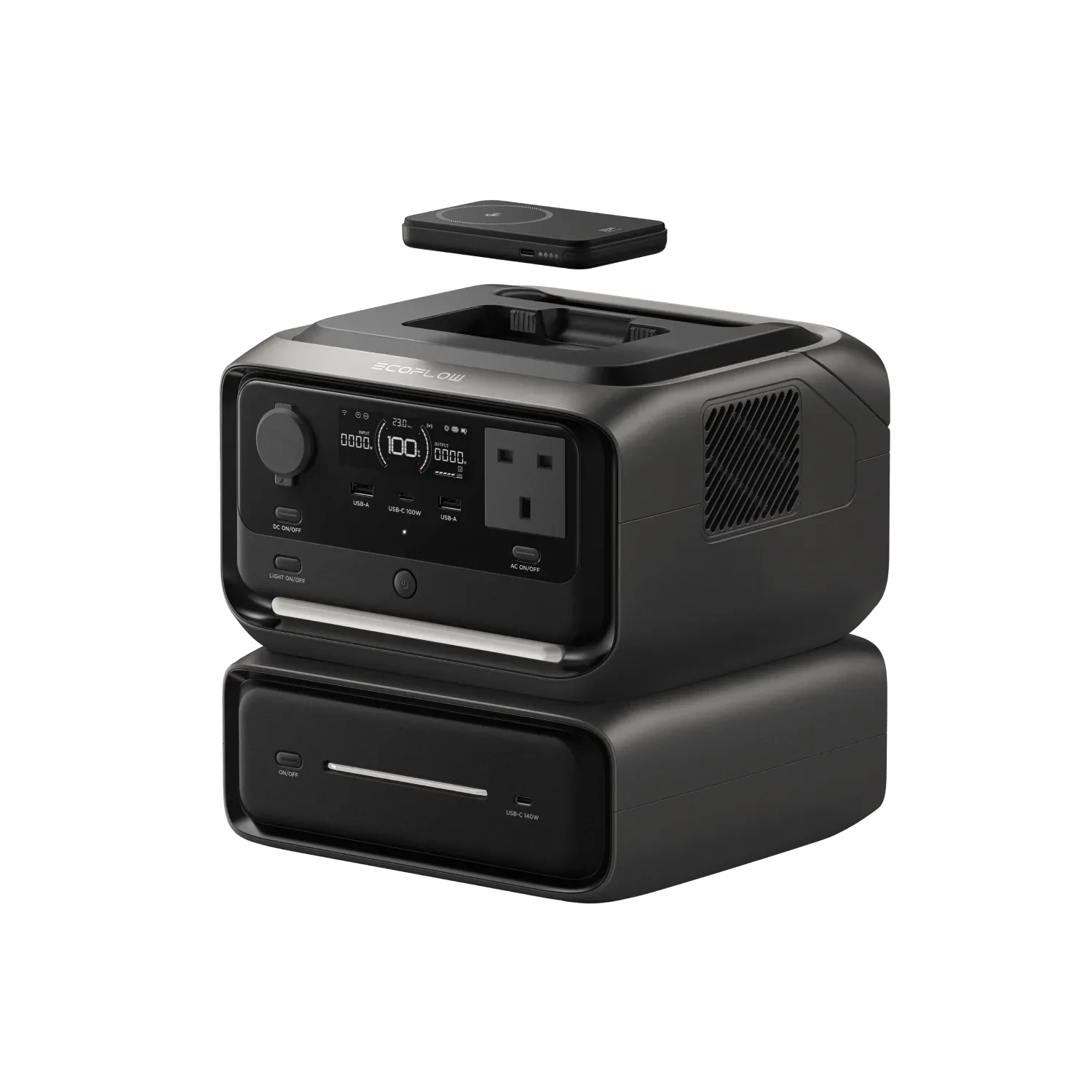
The RIVER 3 Plus can expand to 858Wh with EcoFlow's EB300 or EB600 batteries through
a wire-free connection. That is a more meaningful upgrade than the wireless pack.
The magnetic battery improves convenience; the expansion batteries improve runtime.
If the purchase is meant for multi-day camping or longer outages, budget for the
larger battery rather than assuming the phone accessory changes the station's class.
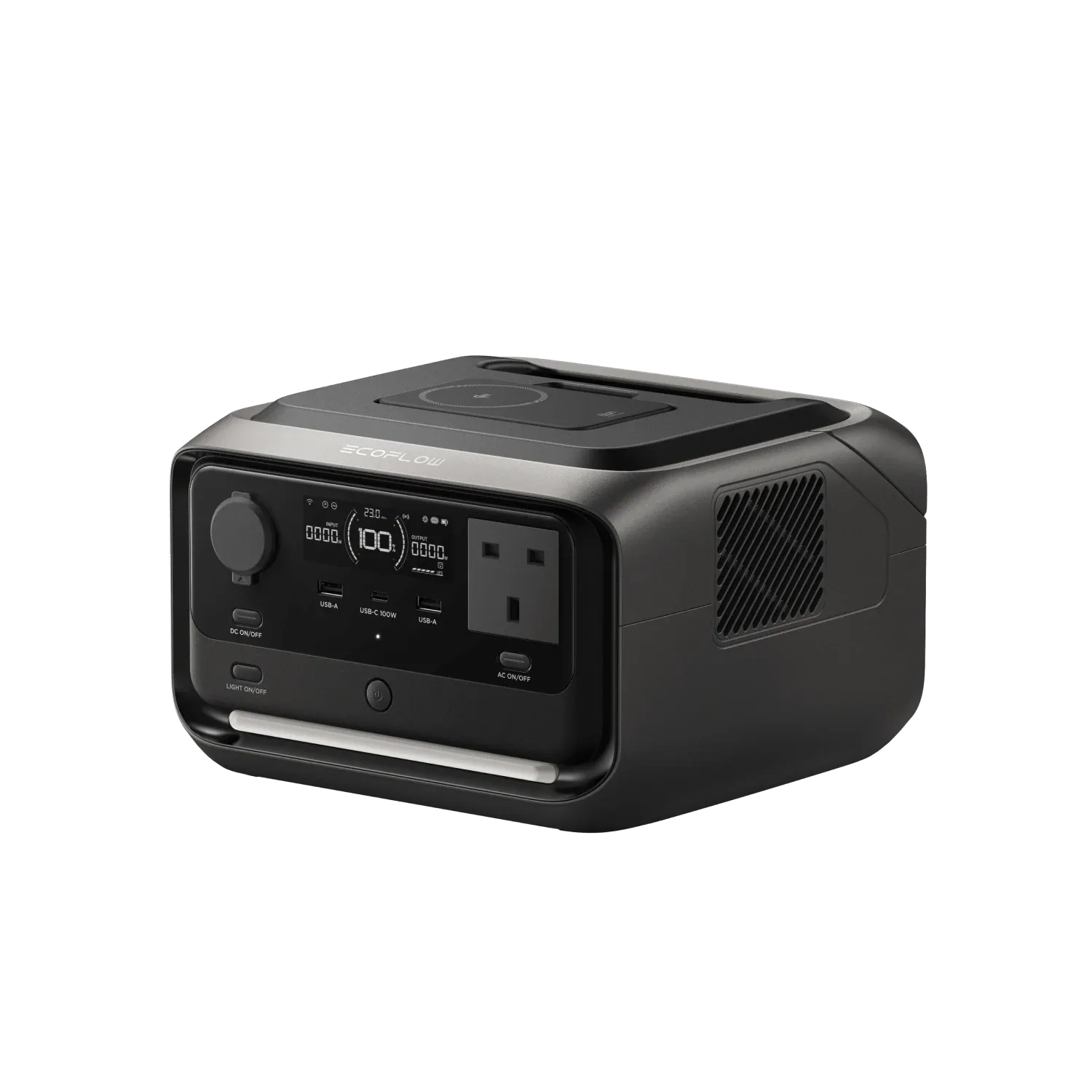
EcoFlow product page (Manufacturer product image)
EcoFlow lists a 5-year warranty and describes the LiFePO4 battery as lasting more
than 10 years before falling to 80% capacity. Those are manufacturer claims, not an
independent endurance result. They nevertheless make the platform more reassuring
than a disposable lithium power bank, provided the buyer is comfortable staying
inside EcoFlow's accessory ecosystem.
The current official store price for the base RIVER 3 Plus is $299. The Wireless
edition is not consistently listed as a separate product on EcoFlow's public U.S.
pages, so its bundle price can vary and should be checked at checkout. That lack of
clear edition-level pricing is a real value problem: if the wireless bundle costs
substantially more than the base station plus a good magnetic charger, the convenience
must justify the premium.
How It Compares
The DJI Power 500 is the more compelling alternative for buyers who want more
capacity and output immediately rather than a pocket-charging accessory. The DJI is
the better direction for laptops, camera batteries, and higher-demand electronics
when a larger single box is acceptable. The EcoFlow wins on its lighter, smaller
workflow and on the option to expand later.
The Anker SOLIX C300 is a closer rival for buyers who want a compact station with
modern USB charging. Anker's appeal is a straightforward, self-contained device
that does not ask you to understand EcoFlow's expansion lineup. EcoFlow's answer is
the under-10ms UPS behavior, wire-free growth, and detachable magnetic charger.
The BLUETTI AC70 belongs on the shortlist when the requirement is closer to
appliance power than personal electronics. Its larger class is less convenient to
carry, but it makes more sense for buyers who already know that 600W will be too
restrictive. The RIVER 3 Plus Wireless is the better everyday companion; the BLUETTI
is the more sensible tool when output headroom matters more than a pocket accessory.
Who Should Buy It
Buy the Wireless edition if you camp, travel, work outdoors, or keep a compact
backup station in a vehicle and regularly need to charge a phone away from the box.
The detachable pack removes the most annoying part of small-station ownership:
being tethered to a heavy battery for a low-power task. It is also a good fit for
renter households that want a router or desktop UPS without a large, permanent
installation.
The standard RIVER 3 Plus may be the better buy if the wireless bundle carries a
large premium or your phone does not benefit from magnetic charging. The station's
core capabilities are unchanged, and a separate wired power bank can be replaced
more easily than a proprietary bundle accessory.
Skip both versions if your first requirement is running a refrigerator for an
overnight outage, powering a space heater, or operating tools with high startup
loads. The 286Wh capacity and 600W inverter are the boundary, not a challenge to
work around. Move up to a larger station instead of treating X-Boost as a license
to connect anything with a 1,200W label.
The Verdict
The EcoFlow RIVER 3 Plus Wireless is a thoughtful variation on a small power station.
Its detachable magnetic 5,000mAh pack makes phone charging feel natural in places
where the main unit is useful but inconvenient to carry. Combined with a 10.4 lb
body, 600W output, under-10ms UPS switching, 220W solar input, and wire-free
expansion to 858Wh, it covers a coherent set of device-first jobs.
The verdict depends on the price of the bundle. At a modest premium, the wireless
accessory is worth having for camping and mobile work. At a large premium, buy the
base RIVER 3 Plus and a separate magnetic charger. Either way, the recommendation
is narrow but positive: choose it as a compact electronics UPS and outdoor charging
hub, not as a small generator for household appliances.
Frequently Asked Questions
What is different about the RIVER 3 Plus Wireless?
Plus platform. The main station remains a 286Wh, 600W unit.
Does the wireless pack increase the station to more than 286Wh?
station battery. For substantial extra runtime, use the EB300 or EB600 expansion
battery system.
When did the RIVER 3 Plus launch?
6, 2024. EcoFlow does not publish a separate official launch date for the Wireless
Boost bundle, so the bundle's exact release day is not confirmed here.
Can the RIVER 3 Plus run a CPAP?
machine, humidifier, heated hose, and outlet losses. Confirm the manufacturer's
power requirements and test the complete setup before relying on it overnight.
Is X-Boost really 1,200W?
inverter output is 600W. It should not be used to assume every 1,200W appliance will
operate normally.
How fast does it recharge?
page lists 220W solar input and quotes as fast as 1.5 hours in favorable conditions.
Can it replace a home UPS?
automatic switching under 10ms. It is not a universal replacement for a dedicated
UPS, especially for medical equipment or loads near the inverter limit.
How much capacity can I add?
wire-free connection. Check current compatibility and pricing before buying the
base unit on the assumption that an expansion battery will always be available.
Is the wireless bundle worth more than the standard model?
station will stay beside a desk or router, the standard RIVER 3 Plus provides the
same core power and UPS behavior for less money.
Can it run a refrigerator or space heater?
comfortable range, while a space heater can consume most of the 600W budget and
empty 286Wh quickly. A larger station is the safer choice for either job.