Introduction: What the RIVER 3 Is
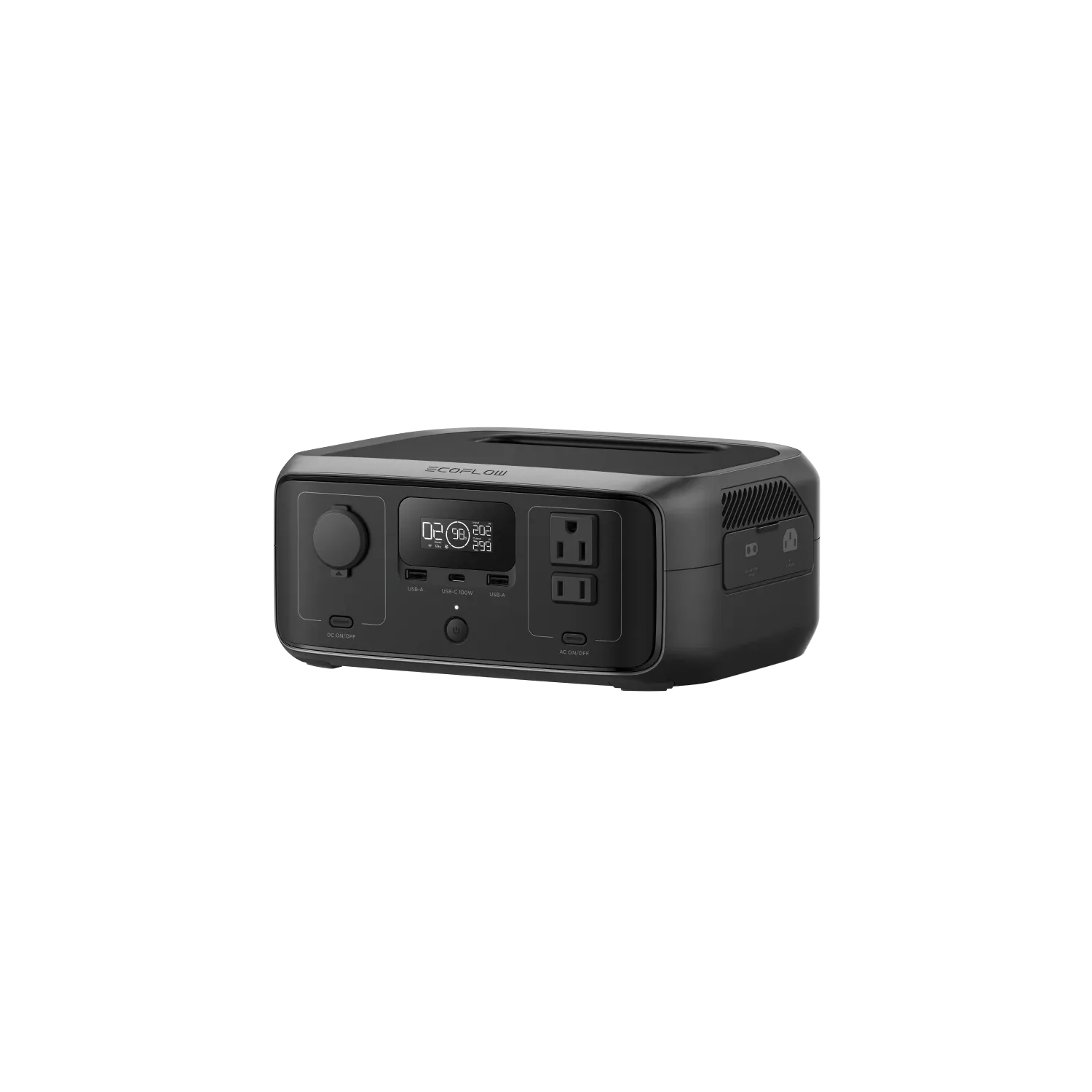
The EcoFlow RIVER 3 is a compact device battery with an AC inverter, not a miniature whole-home generator. That distinction is the key to buying it wisely. Its 245Wh battery, 300W rated inverter, 7.4-pound weight and 100W USB-C port make it a practical companion for phones, laptops, lights, routers and a CPAP machine. They do not make it a sensible way to run a refrigerator overnight or a space heater during a blackout.
EcoFlow product page (Manufacturer product image)
EcoFlow officially announced the RIVER 3 Series on September 3, 2024, and listed the RIVER 3 for purchase beginning September 10, 2024. That release date comes from EcoFlow's launch announcement, not from the discovery review used as a research lead. In 2026, the RIVER 3 is therefore an older entry-level model, but its small size and LiFePO4 chemistry still give it a clear use case.
The RIVER 3 is best understood as a quick-to-recharge reserve for low-wattage essentials. EcoFlow's launch material says the series uses X-GaNPower technology and is designed to extend runtime for appliances drawing under 100W. The independent Solar Lab review measured 83% efficiency at a 273W load and recorded a 58-minute full recharge after warming the unit to normal operating temperature. Those are useful results for this class, but they also underline the product's scale: this is a small station doing small-station work.
Design, Build and Everyday Carry
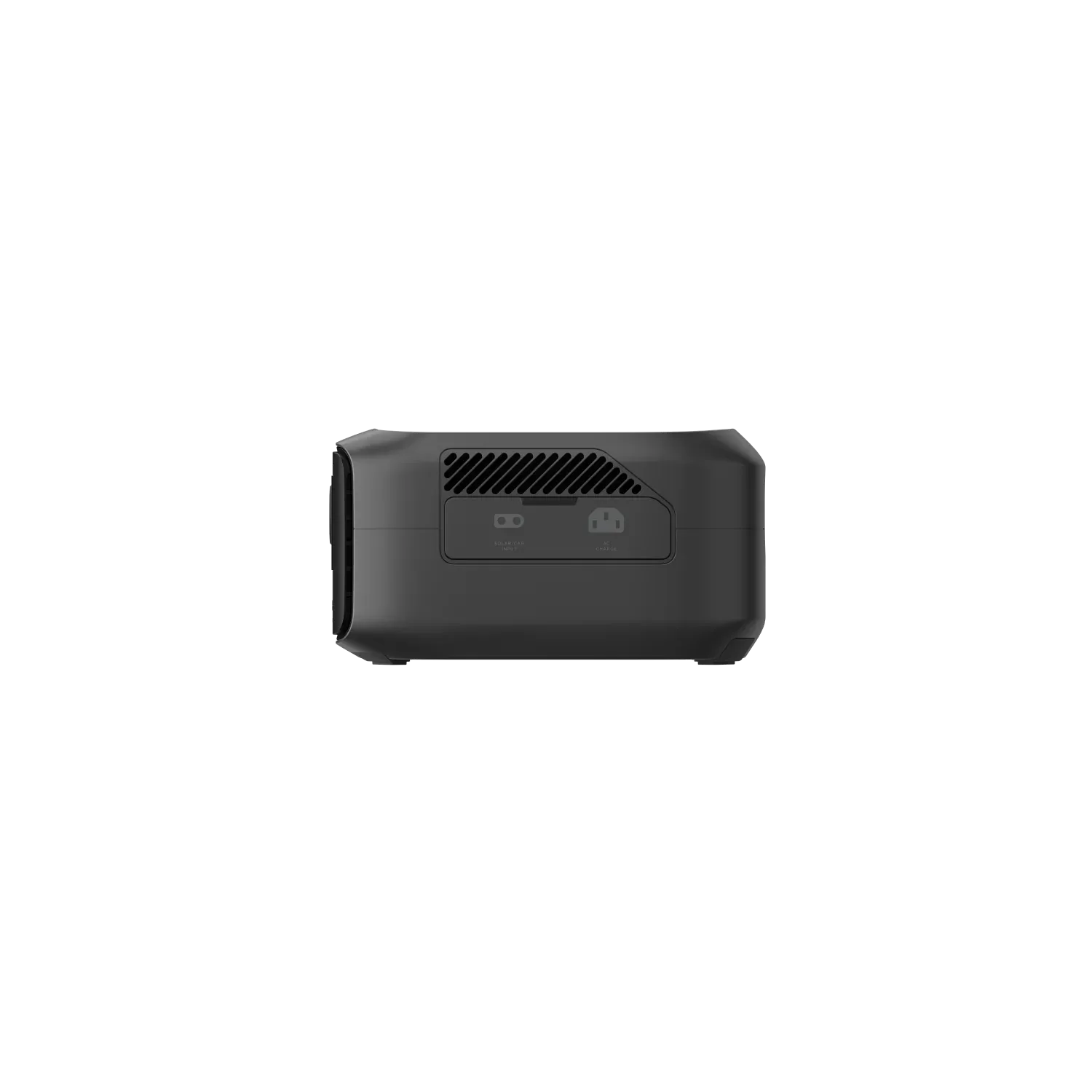
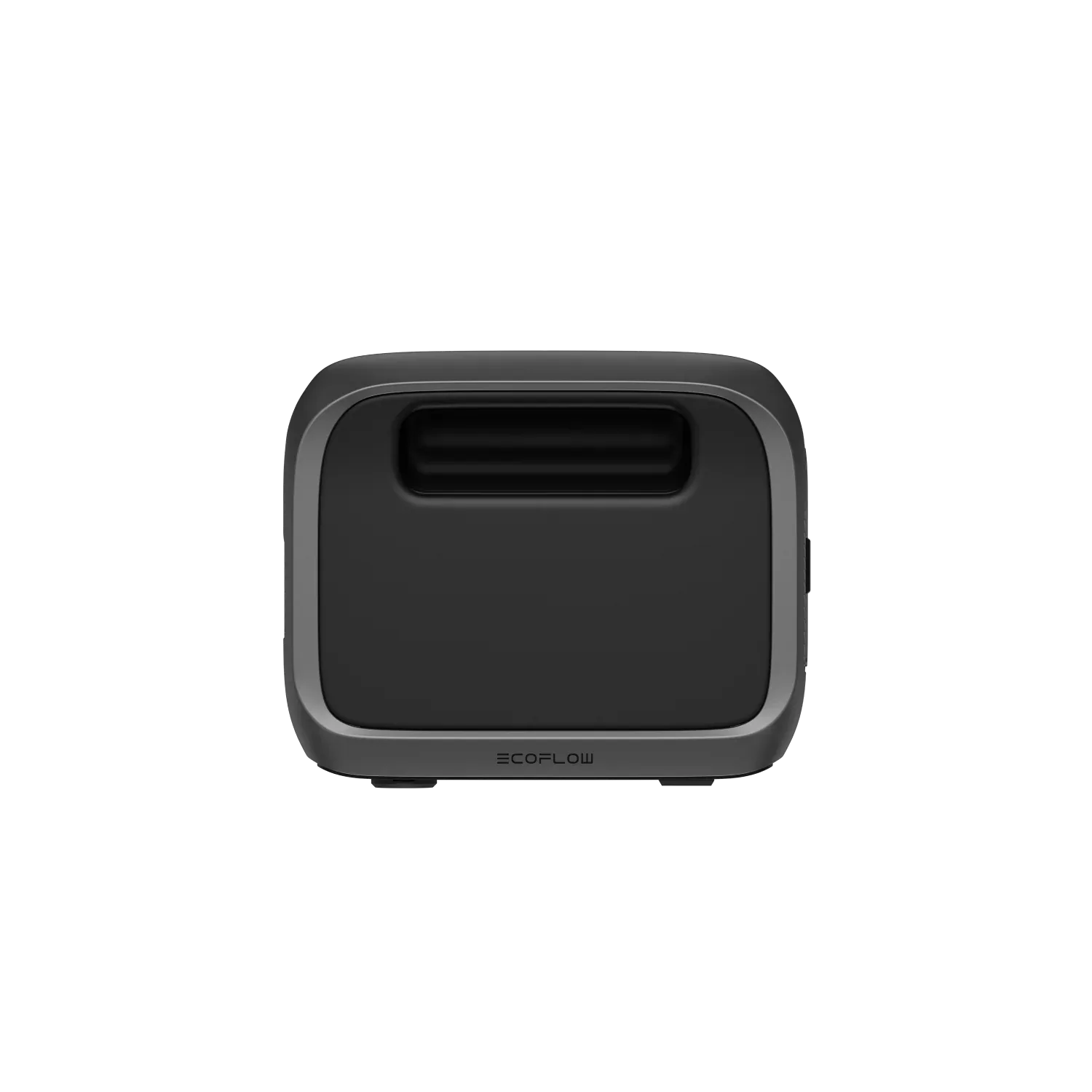
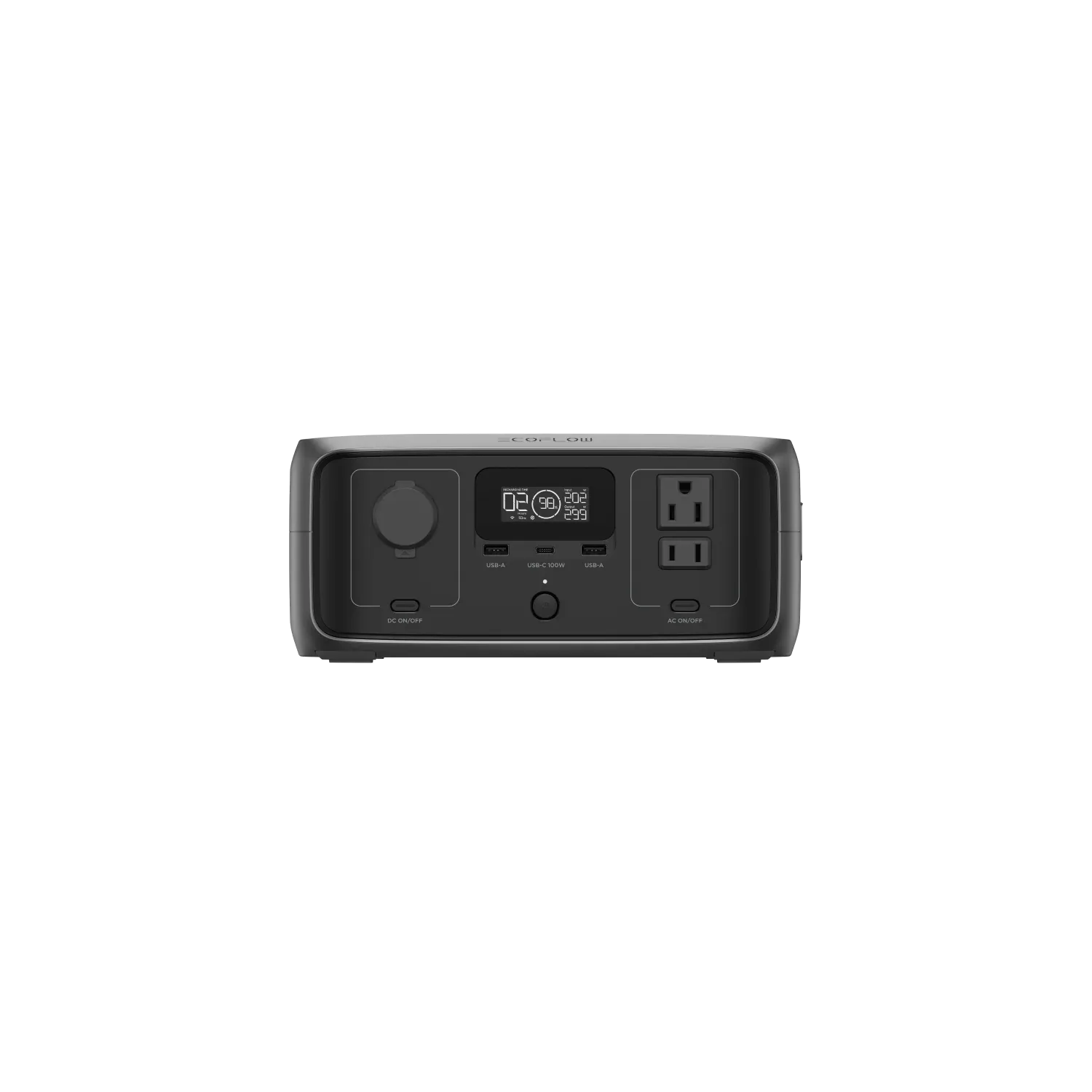
At 7.4 pounds, the RIVER 3 is easy to move from a desk to a car, campsite or bedside table. That matters more than a dramatic output headline for a station intended to be carried often. The compact enclosure has two 120V AC outlets, two USB-A ports, one 100W USB-C port and a 12V car outlet, giving the unit enough variety for a laptop-and-phone kit without requiring a power strip.
EcoFlow product page (Manufacturer product image)
The 100W USB-C port is the most useful connector on the front panel. It can charge many laptops and tablets without spending energy through the inverter, which avoids some conversion loss and keeps the setup tidy. The AC outlets remain useful for a charger, lamp or small monitor, but the 300W inverter is the hard ceiling for continuous AC loads.
The battery uses lithium iron phosphate, or LiFePO4, chemistry. EcoFlow does not publish a model-specific cycle-life figure in the sources used here, so there is no responsible number to quote. The important buyer-level point is that LiFePO4 is the longer-lived chemistry commonly preferred in current portable stations, while the small pack remains light enough to carry casually.
The display and physical controls keep basic operation understandable: turn on the output group you need, connect a device and watch the input or output reading. EcoFlow also supports app-based monitoring on products in this family, but the RIVER 3 remains usable without turning every charging session into a software project. That is an advantage over larger stations whose value depends heavily on a connected-home setup.
Performance and Charging
The RIVER 3 stores 245Wh, but the energy available to an AC appliance is lower after inverter and system losses. Solar Lab's independent test ran a 273W load for 45 minutes, which the publication calculated as roughly 83% efficiency. That is a respectable result for a small station, and it gives a more useful picture than treating 245Wh as a promise of 245 watt-hours at the wall outlet.
EcoFlow product page (Manufacturer product image)
The 300W inverter is enough for a laptop, monitor, router, camera chargers, lights and many small fans. It is not enough for most kettles, hair dryers, induction cookers or power tools. EcoFlow's X-Boost mode advertises up to 600W, but that figure should not be confused with a 600W clean-output inverter. X-Boost manages the load by reducing voltage so some higher-rated resistive appliances can operate at reduced power. A device may run, but not at the performance it gets from a wall outlet. Sensitive electronics should be kept on the normal 300W budget.
Charging is the RIVER 3's strongest practical trait. EcoFlow lists a 320W AC input and claims a full charge in under an hour. Solar Lab initially recorded about 80 minutes when the station was cold, then measured 58 minutes after warming it before the second attempt. That difference is a useful caveat: charge time depends on conditions, and the fastest result is not a universal guarantee.
The 110W solar input is well matched to the battery. A compatible folding panel can meaningfully refill a 245Wh pack during a good day, though clouds, panel angle, temperature and cable losses will reduce the harvest. This is a sensible small-camp configuration, not a substitute for a larger solar array.
Real-World Use and Limits
The RIVER 3 makes sense when the load is intermittent or modest. It can keep a router online during a short outage, charge a laptop at a remote work site, run LED lighting at camp and provide a convenient outlet for camera or drone batteries. A CPAP user may also find the capacity useful, but runtime depends on the machine's pressure settings, humidifier and whether the inverter or a direct DC connection is used. Confirm the expected draw before treating it as medical backup.
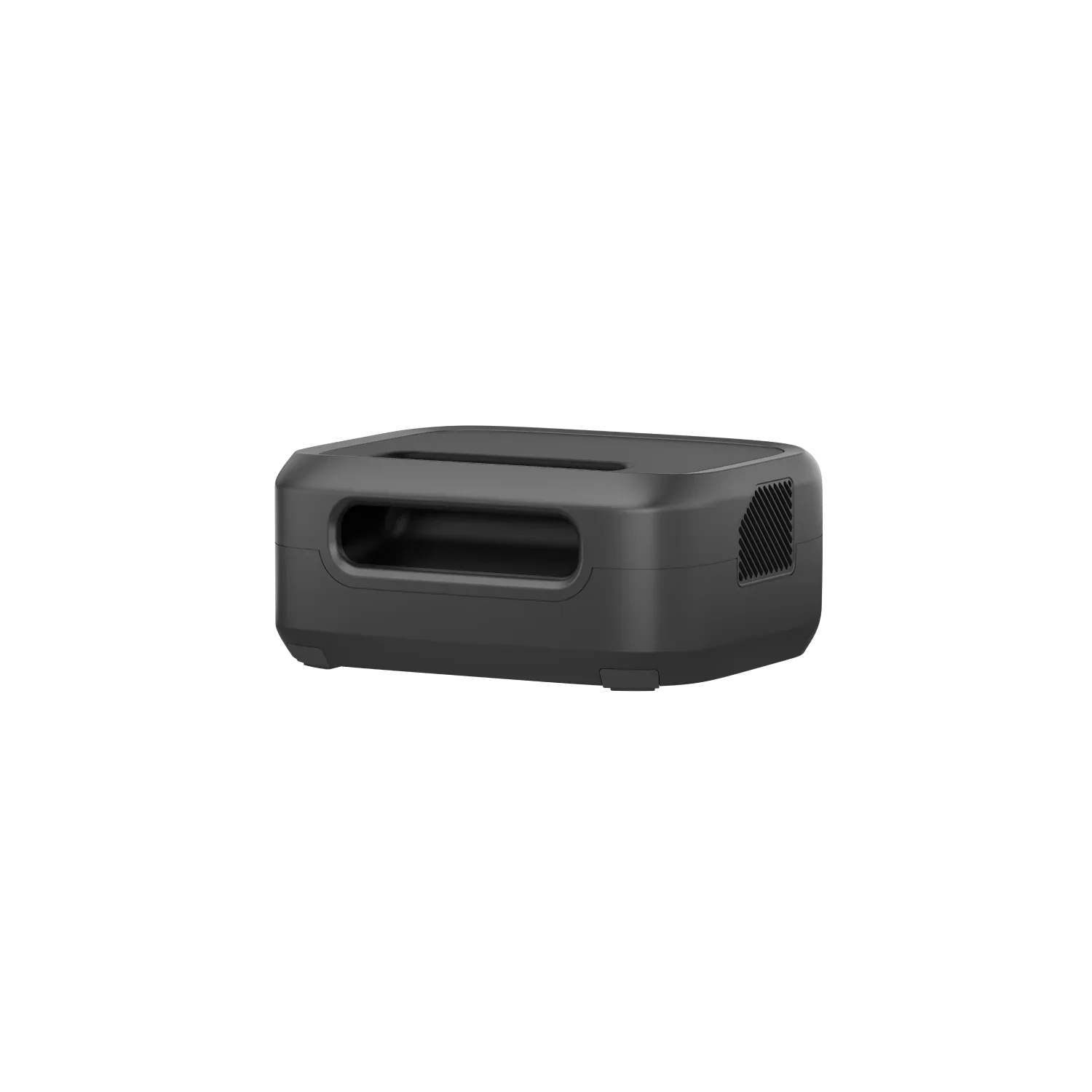
EcoFlow product page (Manufacturer product image)
Its weaknesses are just as clear. A 245Wh station cannot carry a refrigerator through a long outage, and a 300W inverter is not a realistic basis for electric cooking or heating. The advertised 600W X-Boost figure can make a product page look more capable than the hardware is in normal operation. Buyers should budget around 300W and treat X-Boost as a compatibility feature, not extra battery or extra clean power.
Noise, storage and maintenance are easier here than with a large station. There is less hardware to place, the unit can live in a closet or vehicle, and a compact solar panel is manageable. The tradeoff is that the smaller battery gives less margin for forgotten charging. Keep it topped up before a trip or storm rather than assuming a nearly empty station will solve an emergency.
EcoFlow RIVER 3 vs. the Alternatives
The EcoFlow RIVER 3 Plus is the most important internal alternative. It starts with a 286Wh battery and 600W rated output, supports up to 220W solar input and can expand to 858Wh with compatible extra batteries. It is the better choice for a buyer who expects needs to grow, while the regular RIVER 3 wins on lower weight and simpler ownership. Do not pay for the Plus expansion path unless you expect to use it.
The DJI Power 500 is a stronger single-box competitor. It offers 512Wh, a 1,000W inverter, up to 300W solar input and two 100W USB-C ports. That extra headroom is valuable for laptops, camera equipment and small appliances, but it also makes the DJI a less obviously tiny carry. Choose the RIVER 3 when portability and price discipline matter more than runtime.
The BLUETTI Elite 100 V2 belongs to a different size class, with a 1,024Wh battery and 1,800W output. It is a better home-backup tool and a worse casual carry. If the shopping list includes a refrigerator, power tools or several days of outage coverage, skip the RIVER 3 and start with a station in the BLUETTI's class.
Who Should Buy It
Buy the RIVER 3 if your normal loads are phones, a laptop, a router, lights, chargers or a small CPAP setup; you want something light enough to move frequently; and you value a fast wall recharge more than a large energy reserve. It is especially appealing to renters, weekend campers and remote workers who need a portable buffer rather than a permanent backup system.
Skip it if you need to run heating elements, refrigeration for many hours, workshop tools or a large entertainment setup. Also skip it if a 600W headline is the reason you are interested. The real product is a 245Wh battery behind a 300W inverter, and that is still the number that should drive the purchase.
Verdict
The EcoFlow RIVER 3 is a good small power station because it does not need to pretend to be a large one. It is light, quick to recharge, sensibly equipped and built around LiFePO4 chemistry. The 83% independent efficiency result and sub-hour warm-condition recharge support its value for low-wattage loads.
The decisive tradeoff is capacity. If you want a carryable reserve for devices, buy the RIVER 3. If you want appliance backup, spend more on a larger station or choose the expandable RIVER 3 Plus. That narrower recommendation is the honest reason to choose this 2024 model in 2026.
FAQ
Can the RIVER 3 run a refrigerator?
It may start some small refrigerators briefly, but 245Wh and a 300W inverter are not a reliable plan for extended refrigerator backup. Compressor startup can also exceed the continuous rating. Choose a larger station for outage coverage.
Is the RIVER 3 really a 600W power station?
No. Its normal inverter rating is 300W. X-Boost can let certain resistive loads operate at up to a claimed 600W by reducing voltage, but it does not provide the same performance as a true 600W inverter.
How long will it run a laptop?
Runtime depends on the laptop's charger and conversion losses. A laptop drawing 60W is a suitable use case, but the exact result will be shorter than a simple 245Wh divided by 60W calculation.
Can I charge it from solar?
Yes. EcoFlow lists a maximum solar input of 110W. Use a compatible panel and expect lower input in cloudy or poorly angled conditions.
Does it support a CPAP machine?
It can be used with a CPAP if the machine's draw and startup requirements fit the station. Humidification can increase consumption substantially, so confirm expected runtime and keep a second backup for medical needs.
Does the RIVER 3 have an expansion battery?
The regular RIVER 3 is the fixed-capacity model. EcoFlow's expandable option is the RIVER 3 Plus, which supports compatible extra batteries and reaches up to 858Wh.
How fast does it charge from a wall outlet?
EcoFlow claims under one hour using its AC input. Independent testing recorded 58 minutes after warming the unit, but a cold unit took about 80 minutes in the same publication's first attempt.
Is LiFePO4 worth choosing?
Yes, for most buyers who want a station to keep for years. LiFePO4 is the current long-life chemistry in this category, although EcoFlow does not provide a verified cycle-life number for this specific model in the sources used here.
Is the RIVER 3 good for a power outage?
It is useful for short outages affecting devices such as a router, phone or laptop. It is not a whole-home backup system and should not be selected to run heaters, cooking appliances or a refrigerator for an extended outage.
When did EcoFlow launch the RIVER 3?
EcoFlow announced the RIVER 3 Series on September 3, 2024, and said the RIVER 3 would be available for purchase starting September 10, 2024. That makes it a 2024 model, even though it remains available in the current entry-level market.