Introduction
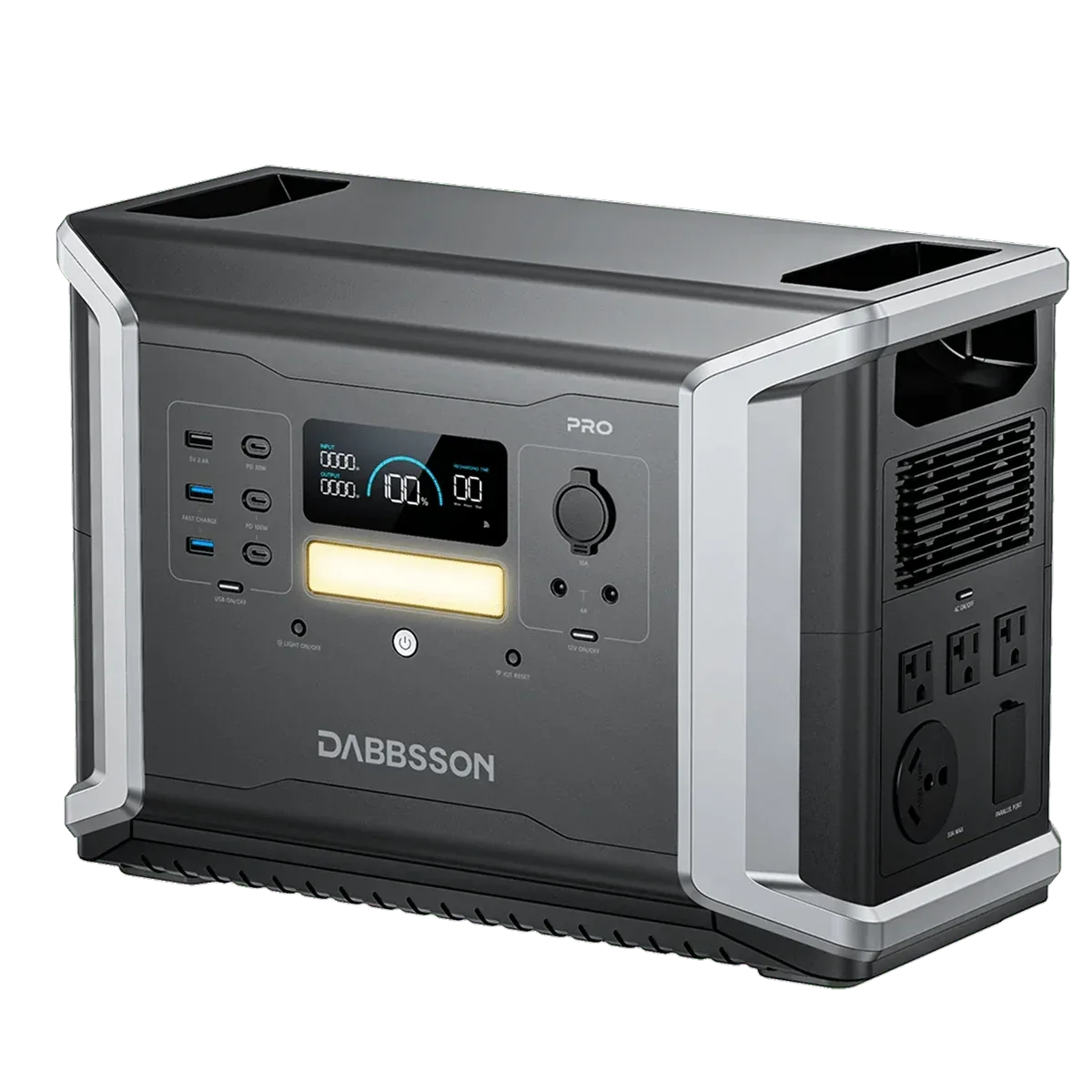
The Dabbsson DBS2100 Pro is the kind of power station that looks better the faster you read its specification sheet. It has 2,150Wh of storage, a 2,400W inverter, 1,200W solar input, 1,800W AC charging, an RV-style TT-30 outlet, app control, and a claimed path to 12,900Wh. Dabbsson's official storefront dates the product listing to August 22, 2024, and the station still looks aggressively equipped for its current $799-to-$1,399 bundle range.
The catch is that a power station is not a spreadsheet. The Solar Lab's independent review found that the DBS2100 Pro overheated during an initial sustained 2,150W discharge at an ambient 20°C (68°F), then completed a repeat at 18°C (64°F) while its display warned that the unit was close to overheating. That same review recorded 82% efficiency, slow final-stage charging, and voltage reduction when the station was pushed beyond its inverter rating. Those findings matter more than the battery chemistry headline.
My recommendation is therefore narrow: consider the DBS2100 Pro only if you need its capacity, RV port, or expansion plan and can buy it at a substantial discount from a seller with a dependable return policy. For outage-critical loads, sensitive electronics, or buyers who want a mature support ecosystem, EcoFlow, Anker, or Jackery are safer bets even when their headline capacity-per-dollar is less exciting.
What the DBS2100 Pro Actually Is
The core unit stores 2,150Wh in what Dabbsson calls an EV semi-solid-state lithium-iron-phosphate battery. The company claims 4,500 cycles before the pack retains more than 80% of its original capacity, plus a 15-year lifespan. Those are useful targets, but they are still manufacturer claims: no consumer review can verify a 15-year service life in 2026, and the chemistry label does not remove the need for sensible thermal management.
Dabbsson product page (Manufacturer product image)
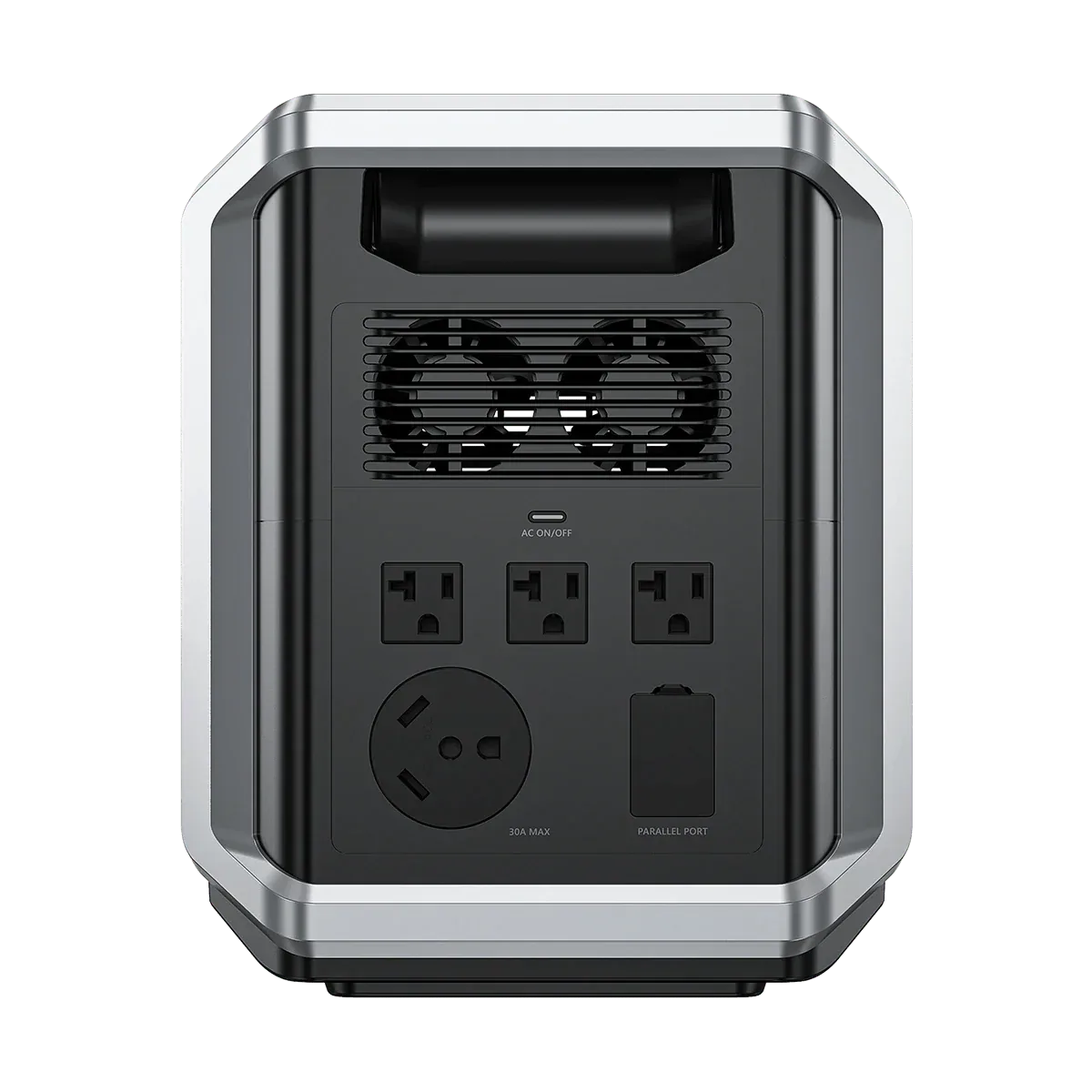
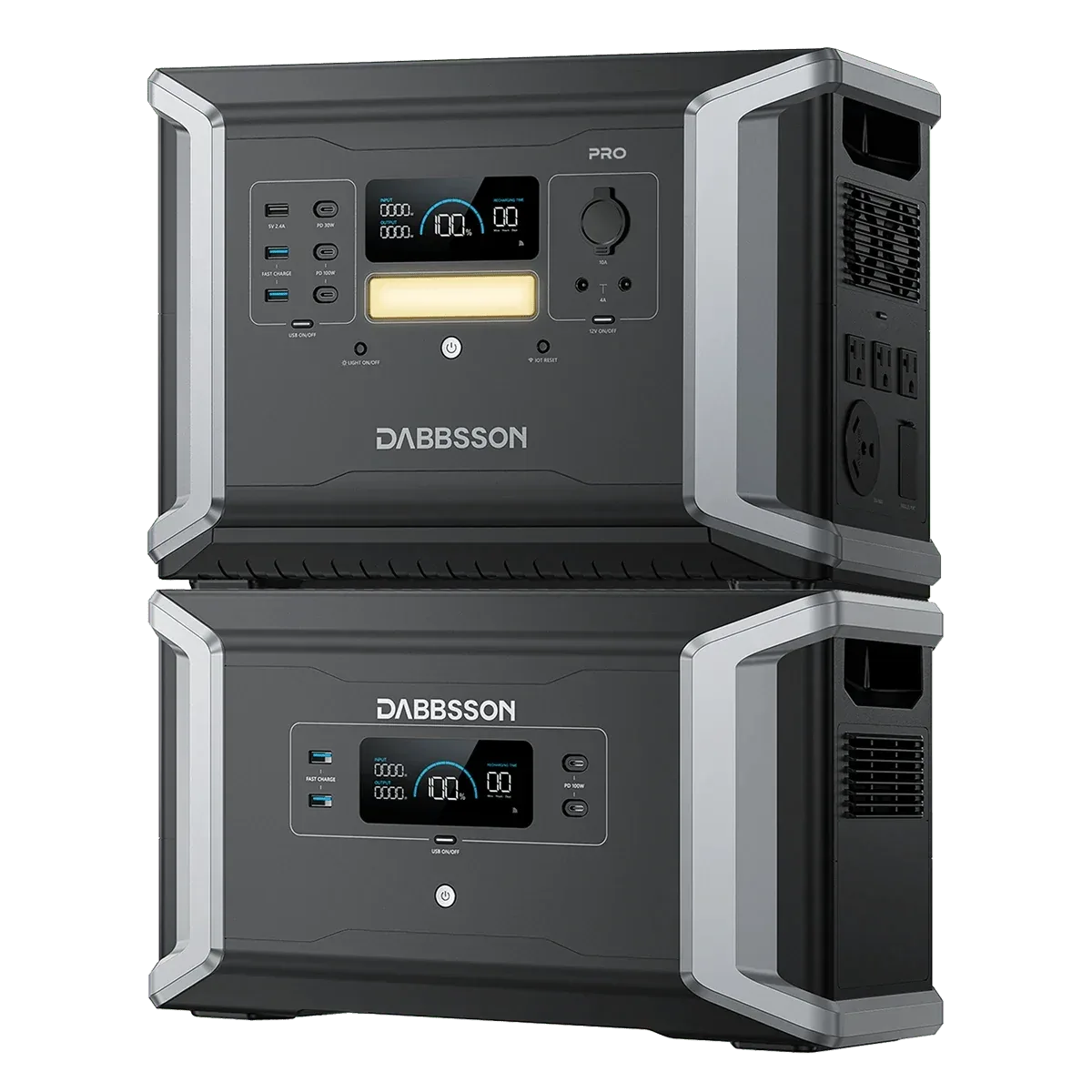
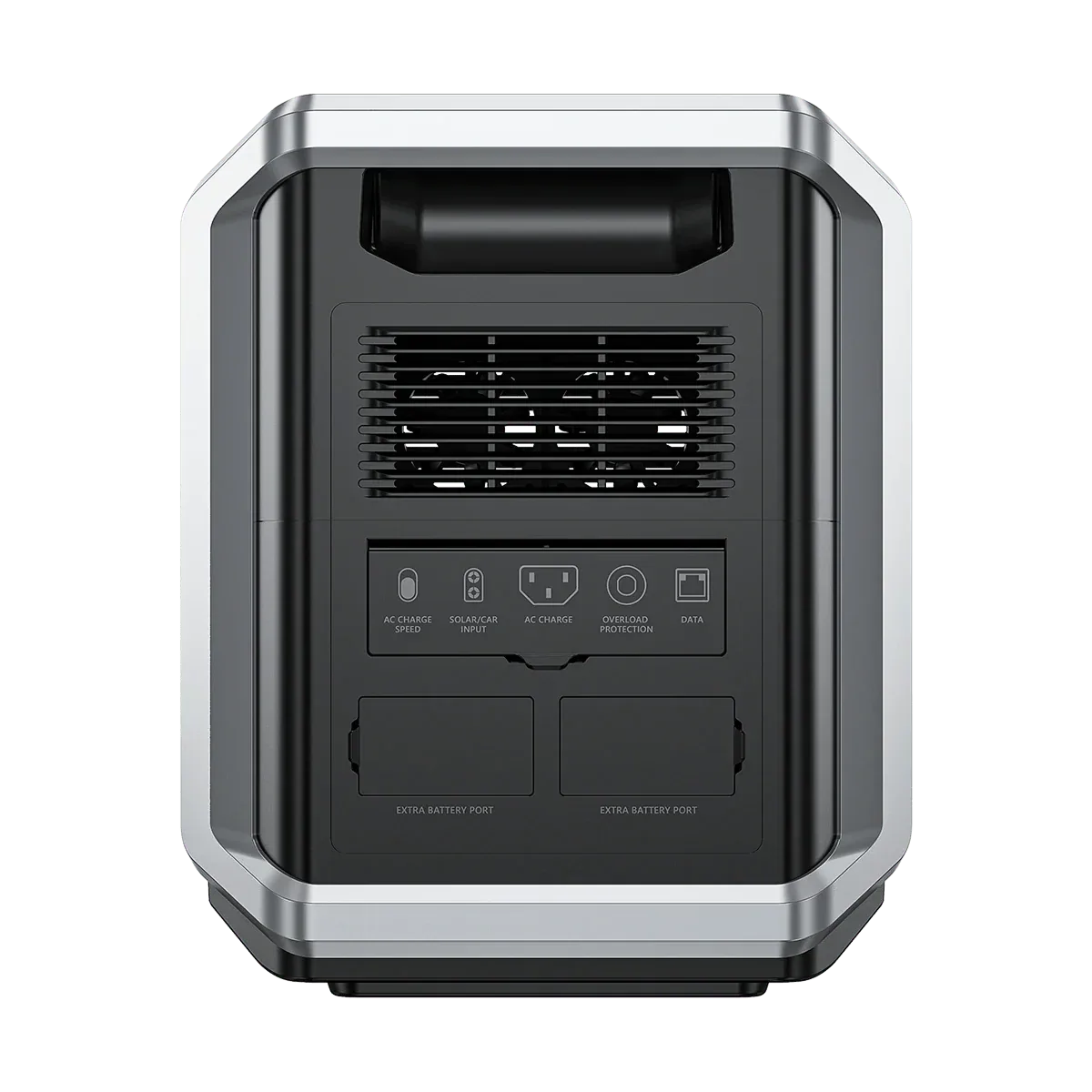
The output side is unusually versatile for a mid-sized station. There are three 120V AC outlets, a NEMA TT-30 receptacle for RV loads, three USB-C ports, three USB-A ports, a 12V car socket, and a barrel connector. Dabbsson rates the inverter at 2,400W continuously, advertises 3,600W in Power-Boost mode, and lists 4,800W surge capability. Two DBS2100 Pro units can be paralleled for a claimed 4,600W output, while DBS2100B expansion batteries raise the total system capacity to 12,900Wh when the full configuration is used.
That is a lot of flexibility in one 54 lb box. It can serve as a campsite power hub, an RV supplement, or a short-duration home-backup battery. It is not a whole-home generator by itself, and the TT-30 socket should not be confused with a 3,600W-capable 30A source: the continuous inverter rating remains 2,400W.
Design, Ports, and Everyday Handling
The tower-shaped enclosure is compact enough to place beside an RV dinette or in a garage, but 54 lb is still a two-handed carry for many people. The weight is reasonable for 2,150Wh, not genuinely light. Buyers who expect to move it from car to campsite every weekend should budget for careful lifting rather than imagining a portable battery that behaves like luggage.
Dabbsson product page (Manufacturer product image)
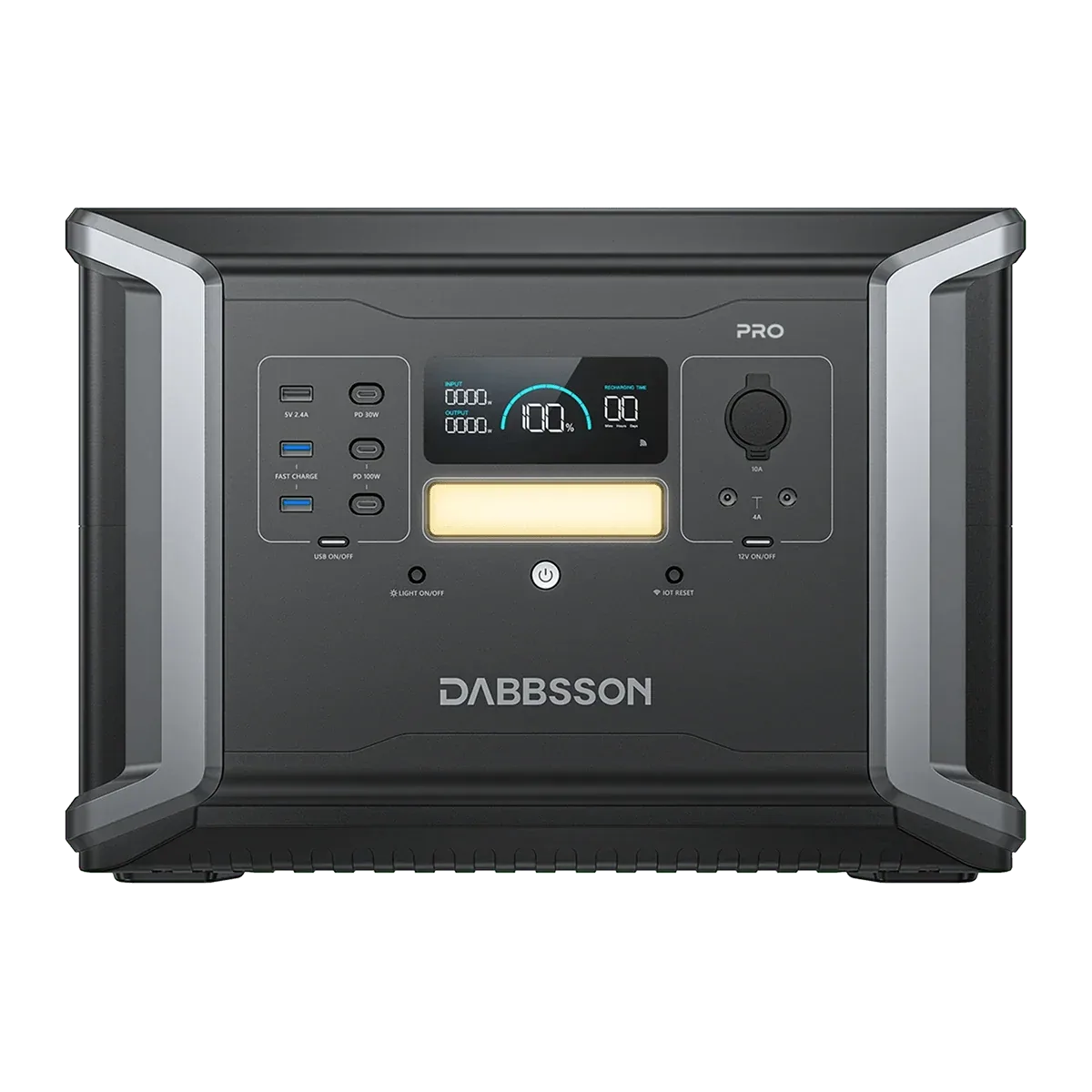
The port selection is the station's strongest physical argument. The TT-30 outlet is more useful to an RV owner than another pair of household sockets, and the three USB-C plus three USB-A ports cover a family of phones, laptops, cameras, and lights without immediately requiring a power strip. The front display shows the essential input, output, and state-of-charge information. The Solar Lab found the screen functional rather than impressive, and described the app in similar terms: usable for monitoring and settings, but less polished than EcoFlow's or Anker's software.
Dabbsson claims a 15ms UPS transfer time, which is a useful feature for a router, modem, NAS, or desktop that cannot tolerate a noticeable interruption. Treat that number as a specification rather than a guarantee for every device. UPS behavior depends on the operating mode, load, and the equipment connected to it; buyers who need medically critical or business-critical continuity should use a purpose-built UPS and follow its safety requirements.
Charging and Battery Behavior
On paper, charging is a strength. The 1,800W AC input should refill a large battery quickly, while the 1,200W solar ceiling is high enough to make a multi-panel setup worthwhile. Dabbsson says the station can reach 80% from AC in about 1.5 hours and fully recharge in roughly 2 hours. The company also lists four ways to recharge, including wall power, solar, and vehicle-related input options.
Dabbsson product page (Manufacturer product image)
The Solar Lab's results are more nuanced. Its test reached 80% in about 1 hour and 15 minutes, but the last 20% slowed considerably, putting the total near 2 hours. That is not a failure, but it is a reminder that “fast charging” usually describes the easy first part of the curve. Solar charging showed the same tapering behavior. A 1,200W maximum is valuable in strong sun, but real output varies with panel orientation, temperature, cabling, and cloud cover.
The more concerning result was sustained high-load heat. In an initial test at a 2,150W load and 20°C ambient temperature, the station shut down at around 30% remaining because it overheated. A repeat starting at 18°C completed the discharge, but the display was flashing red by the end. The reviewer measured 82% efficiency, which is respectable for a power station, yet the thermal warnings mean the DBS2100 Pro should not be treated as a carefree 2,400W appliance source in hot weather or an enclosed vehicle.
That result also changes how to read the capacity. At 82% conversion efficiency, the usable AC energy from a full 2,150Wh pack is meaningfully below 2,150Wh, before accounting for the load's own behavior. A 100W router-and-lighting setup will experience the product very differently from a 2,150W heater or induction cooktop. The DBS2100 Pro makes more sense for mixed moderate loads than for living at the edge of its inverter rating.
Surge Handling Is the Deciding Concern
Dabbsson's 4,800W surge figure sounds reassuring, but the independent test did not find clean high-surge behavior. When the reviewer pushed beyond the 2,400W continuous output, the station reportedly reduced voltage rather than simply absorbing a brief startup surge and returning to a stable 120V. The review specifically warns that voltage fell low enough to be harmful to sensitive electronics.
Dabbsson product page (Manufacturer product image)
That is not a minor technicality. A vacuum, refrigerator compressor, pump, or power tool can draw a startup surge, and a power station should either handle that transient within its design limits or shut down predictably. Delivering unstable voltage is a worse outcome for laptops, camera chargers, medical equipment, and other electronics that expect a normal supply. The DBS2100 Pro is therefore a poor choice for loads whose startup behavior you do not understand.
Pass-through charging is another caveat. The Solar Lab reported that, during a test charging the station while running a computer, the computer switched off before the station began supplying power. That is an awkward behavior for a device marketed for backup use. It does not prove every unit will reproduce the event, but it is enough reason to test your exact configuration during the return window rather than assuming UPS and pass-through claims guarantee seamless operation.
DBS2100 Pro vs. the Alternatives
The EcoFlow DELTA 2 Max is the closest mainstream comparison. It also targets the roughly 2kWh class and has a more mature app and broader review history. The Dabbsson counters with its RV TT-30 port and a potentially lower sale price, but EcoFlow is the better choice when software polish, predictable support, and established accessory availability matter more than maximum expansion ambition.
The EcoFlow DELTA 3 is a better fit for buyers who want newer platform features and a lighter-duty, more current ecosystem. It does not make the DBS2100 Pro's 2,150Wh capacity irrelevant, but it highlights the Dabbsson's age and basic interface. Choose the DBS2100 Pro only when its extra capacity or RV integration is genuinely useful.
The Anker SOLIX F2000 (often called the PowerHouse 767) is another practical alternative for home backup and camping. Anker's software and support reputation are stronger, and the product has a substantial independent owner base. Dabbsson offers more ambitious 12,900Wh expansion on paper, but Anker is easier to recommend when the station will protect expensive electronics or be used by a family that needs straightforward controls.
The Jackery Explorer 2000 Plus is worth considering for buyers who prioritize a familiar brand, straightforward operation, and an expansion path. Its ecosystem and retailer availability reduce ownership friction. The DBS2100 Pro is more interesting for an RV user because of the TT-30 outlet and for a bargain hunter who can buy below MSRP, but the Jackery is the less speculative purchase.
Who Should Buy It—and Who Should Skip It
Buy the DBS2100 Pro if you want a 2,150Wh battery for moderate camping or RV loads, specifically value a built-in TT-30 receptacle, can use the app for remote status checks, and are comfortable testing the unit thoroughly during the return period. A price around $799 makes the risk easier to justify than the original $1,799 MSRP cited by The Solar Lab, though current bundles and availability change.
Skip it if you need dependable full-load operation, clean behavior with compressor or motor surges, or a proven support organization. Skip it too if you will routinely carry the station alone, because 54 lb becomes tiring quickly. Buyers in hot climates should be especially cautious: the independent overheating result occurred in a mild 20°C garage, not an extreme desert test.
Expansion deserves its own warning. Reaching 12,900Wh requires four DBS2100B batteries and two DBS2100 Pro stations, plus the appropriate parallel hardware. That is a large, expensive system, not a small add-on. Before choosing Dabbsson as an ecosystem, price the batteries, connector, shipping, warranty coverage, and replacement path together. A cheap base unit can become a poor value if the expansion hardware is difficult to source later.
Verdict
The Dabbsson DBS2100 Pro has a credible feature list but an unearned reputation problem. Its 2,150Wh pack, 1,200W solar input, TT-30 outlet, app, and 12,900Wh expansion ceiling are genuinely useful. The trouble is that independent testing found overheating under sustained load, voltage reduction during surge stress, and unreliable pass-through behavior. Those are not cosmetic complaints; they affect whether the station can be trusted when the power is already out.
At a deep discount, it can be a reasonable campsite or RV battery for moderate loads, provided you validate the exact unit and keep a return option. At full or near-full price, I would buy the EcoFlow DELTA 2 Max, Anker SOLIX F2000, or Jackery Explorer 2000 Plus instead. The DBS2100 Pro's best feature is its price-to-capacity ratio. Its biggest flaw is that the situations where you most want a power station—high load, hot conditions, and backup switching—are exactly where the evidence makes me least comfortable recommending it.
FAQ
Does the DBS2100 Pro have a LiFePO4 battery?
Yes. Dabbsson describes it as an EV semi-solid-state LFP battery. The company claims 4,500 cycles to more than 80% remaining capacity, but that is a specification claim rather than a demonstrated 15-year ownership result.
How much power can it continuously deliver?
The continuous inverter rating is 2,400W. Dabbsson lists 3,600W in Power-Boost mode and 4,800W surge, but independent testing found voltage behavior concerning above the continuous rating. Do not size a critical load from the headline surge number alone.
Can it run an RV air conditioner?
It has a NEMA TT-30 outlet designed for RV-style connections, but whether it runs a particular air conditioner depends on the compressor's startup demand and the unit's running wattage. Because surge handling was problematic in testing, verify the exact appliance during the return period.
How many expansion batteries can it use?
Dabbsson's full system description reaches 12,900Wh with four DBS2100B expansion batteries and two DBS2100 Pro stations connected with the appropriate parallel equipment. The base station by itself remains a 2,150Wh unit.
Is the DBS2100 Pro waterproof?
The product information reviewed for this article does not establish a waterproof or outdoor ingress rating. Keep it dry, protected from rain, condensation, and standing water, and follow the current manual rather than treating the station as weatherproof.
Does it support solar charging?
Yes. The official listing specifies up to 1,200W of solar input. Actual charging depends on panel voltage, current, sunlight, temperature, and cabling. Solar charging also slows as the battery approaches full.
Is it safe for a refrigerator or freezer?
It may run a refrigerator within its load limits, but compressor startup is the important variable. The independent surge test reported voltage reduction above the inverter's continuous rating, so test your appliance before relying on it for food preservation during an outage.
How long is the warranty?
Dabbsson advertises five-year coverage for purchases from its official website, described as a three-year base warranty plus a two-year extension. Confirm the terms, exclusions, registration requirements, and seller-specific policy before buying elsewhere.
Can it act as a UPS for a computer?
Dabbsson claims a 15ms UPS transfer time. However, The Solar Lab reported a computer shutting off during a pass-through test. Use it for non-critical electronics only after testing your own computer, monitor, and operating mode.
Is the app required?
No. Basic operation is available from the station's controls and display. The app is useful for remote monitoring and settings, especially for backup use, but its interface is less polished than leading alternatives according to independent review observations.
How heavy is it to carry?
The listed weight is 54 lb. That is manageable for short moves with two hands, but it is not an effortless portable device. If you will move it often, plan where it will live and how you will lift it before purchase.
Should I buy the DBS2100 Pro at MSRP?
I would not. The Solar Lab cited a $1,799 MSRP and observed street prices as low as $999, while Dabbsson's current storefront shows lower bundle-dependent prices. The product only makes sense when the discount compensates for the thermal, surge, support, and ecosystem risks.