Introduction
The AFERIY P210 looks like the kind of portable power station that could tempt buyers with a simple promise: 2,048Wh, 2,400W output, six AC outlets, and enough ports to power a small cabin or a campsite without a tangle of adapters. On paper, it has the right ingredients for a value play. The catch is that the specs are not the whole story, and The Solar Lab's September 2026 review is a useful reminder that budget stations can look impressive while still failing in the ways that matter most.
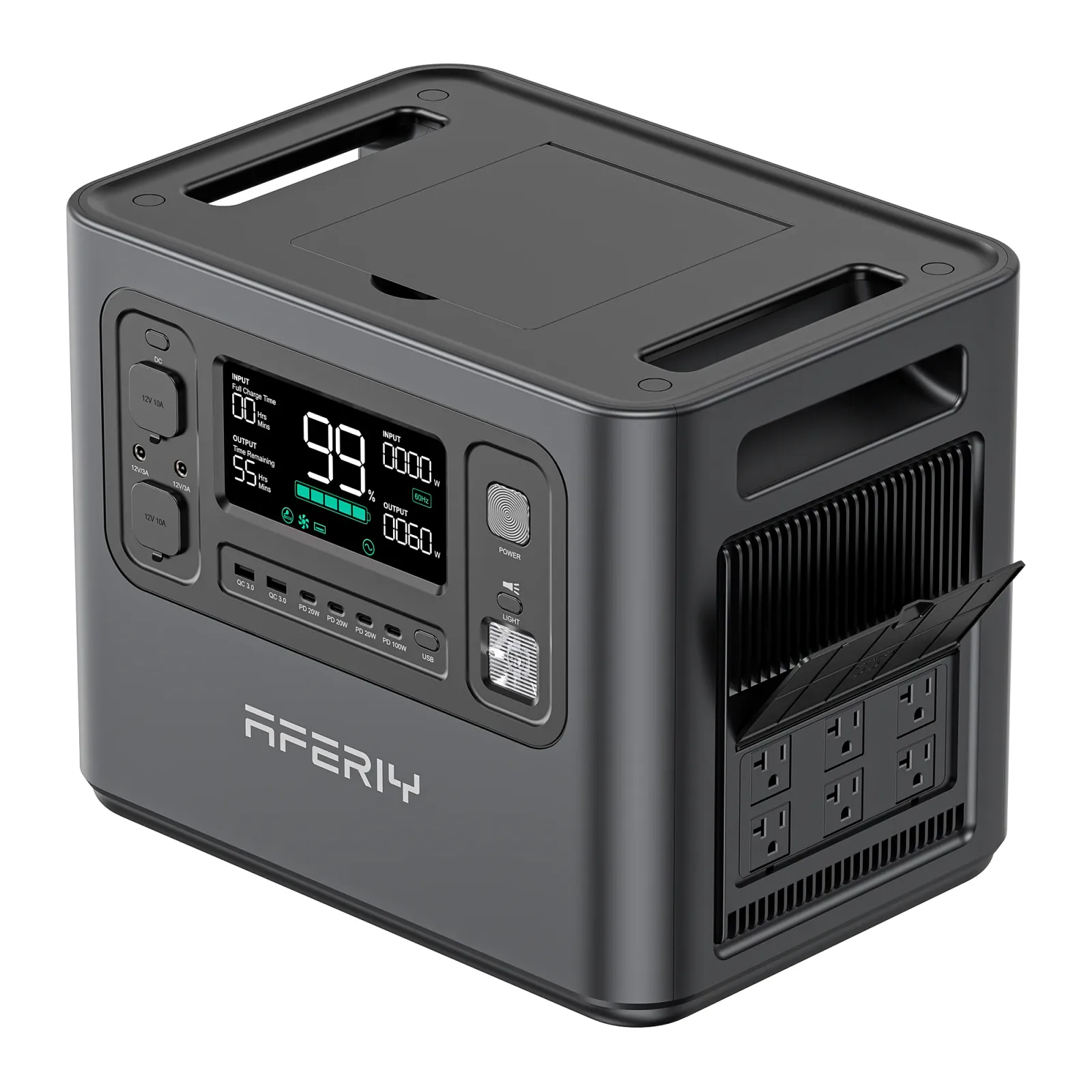
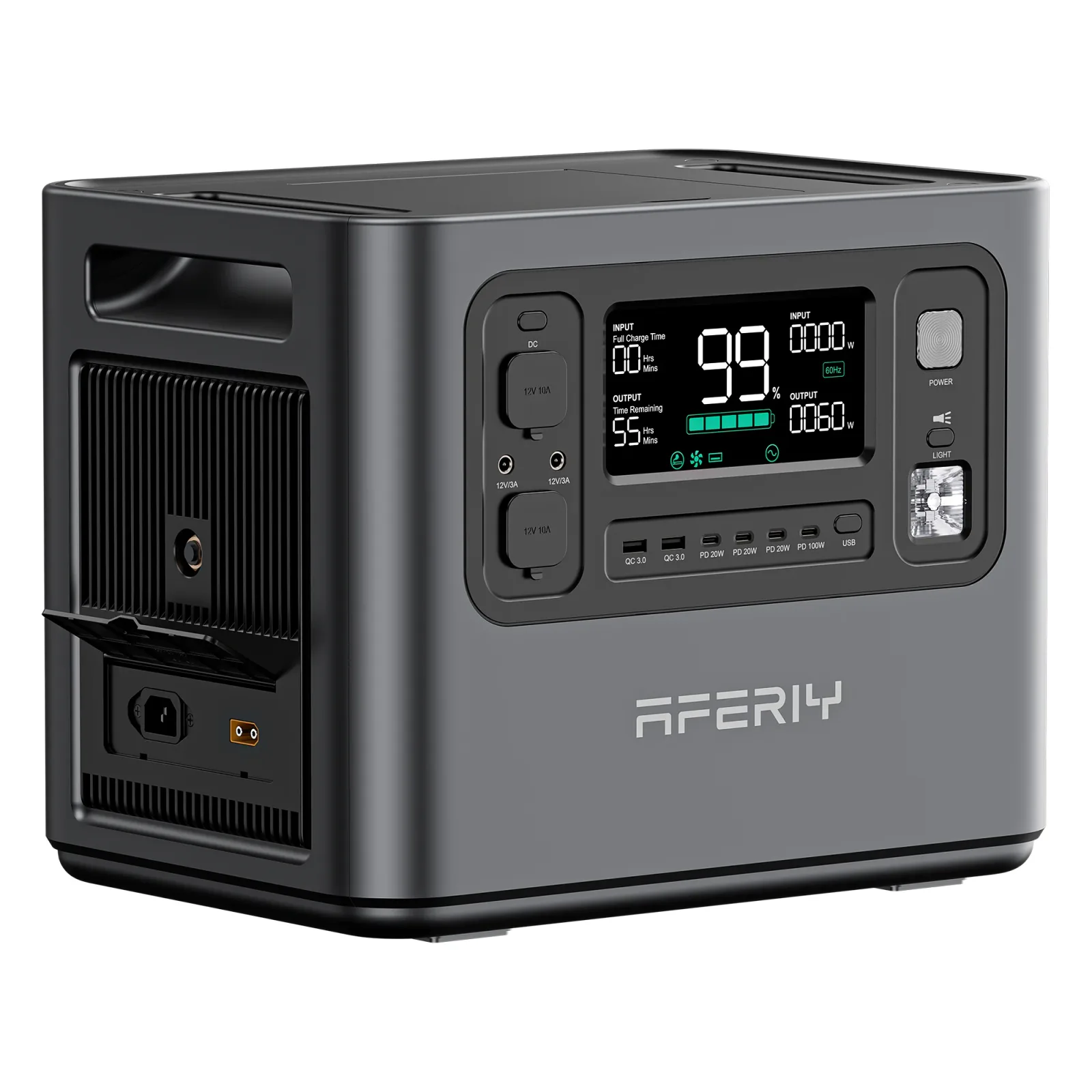
According to the review, AFERIY markets the P210 as a 2,048Wh unit with a 2,400W pure sine inverter and 4,800W surge capability. The port count is genuinely generous: six 120V outlets, four USB-C ports, two USB-A ports, an XT60 solar port, two barrel connectors, and even a 12V cigarette-lighter socket. For anyone who wants one box to run a router, lights, a fridge, and a few smaller electronics, the raw layout looks compelling.
The problem is that the P210's real-world behavior under load undercuts the marketing. The Solar Lab review measured an efficiency of roughly 78% while driving a 2,245W load, meaning the unit delivered only about 43 minutes instead of the 55 minutes it should have delivered using a simple 2,048Wh capacity estimate. That is not catastrophic, but it is exactly the kind of number that makes a buyer pause when the station is supposed to be a serious backup battery. The bigger red flag is the voltage-limiting issue at surge: the review says the output voltage fell from 120V to as low as 85.2V under test, which is not a harmless corner case. In a power station, that is a problem.
Design and Port Layout
The P210 is a large, tower-style unit that feels built for a garage, cabin, or campsite table rather than a car trunk. At 48.5 pounds, it is not a station you will happily carry across a yard every time you need to move it. The handles are functional, and the overall form is straightforward enough to understand quickly, but this is not a lightweight or elegant “grab and go” design. It is more like a workhorse that stays put once it has reached its destination.
AFERIY product page (Manufacturer product image)
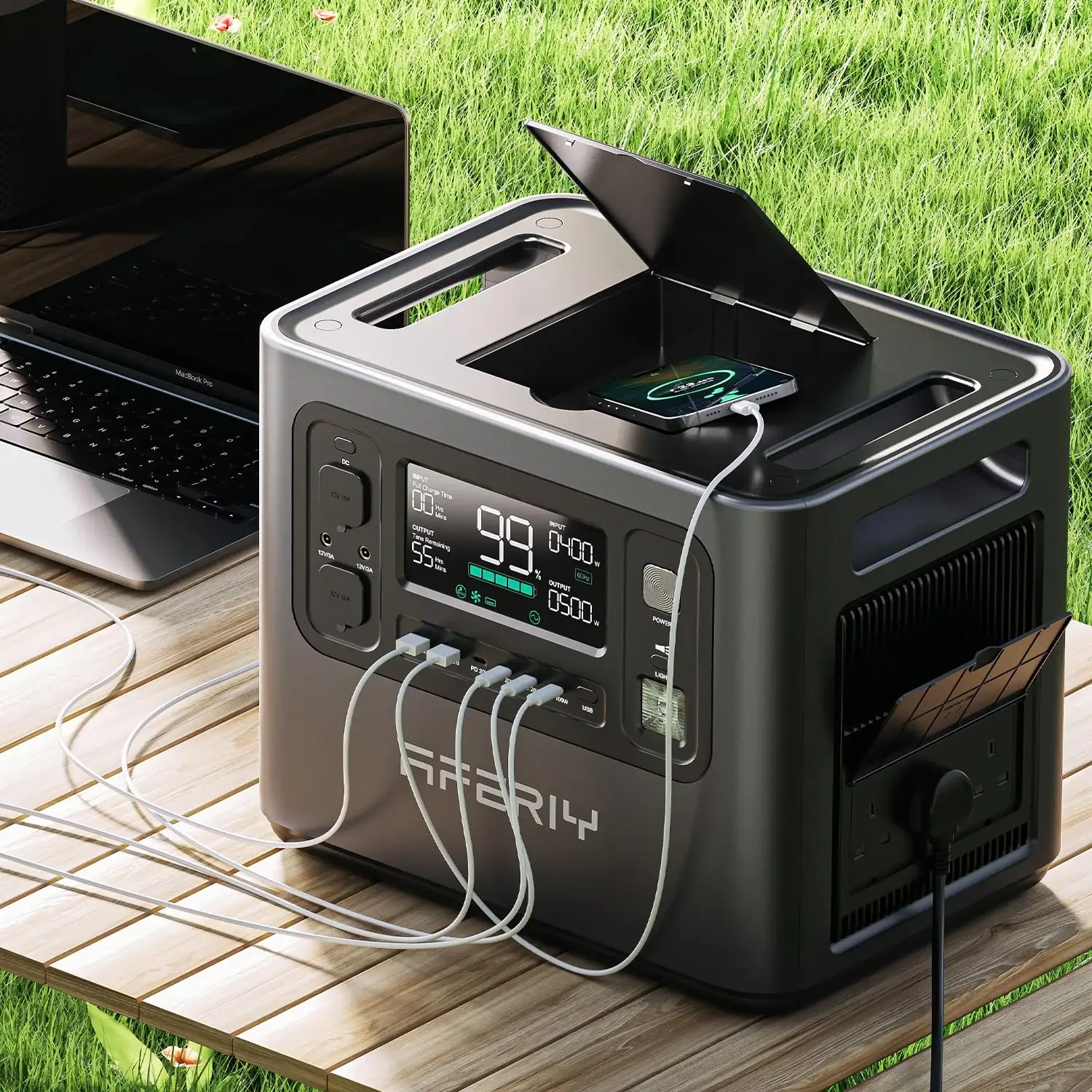
The port layout is the strongest argument in the P210's favor. Six AC outlets are generous in a category where many stations push you toward a power strip. The mix of USB-A and USB-C ports, plus the solar and 12V options, makes it flexible for a wide range of loads. The review also mentions the built-in light, cable storage area, and port doors that stay open while in use. Those details are small, but they matter when you are trying to use the station in the dark or in a hurry.
That said, the design does not hide the fact that the P210 is a budget-first machine. It is practical rather than refined, and it telegraphs the compromise directly: plenty of functionality, but not much in the way of polish or premium feel. For many buyers, that trade is acceptable. For anyone expecting a premium, quiet, high-trust experience, the P210 may feel like a cheaper product in a more expensive wrapper.
Performance and Real-World Output
The headline numbers are the part that get people interested, but the real issue is how consistently the P210 can deliver them. At 2,400W continuous output, it is in the league of the bigger portable stations, which is why the spec sheet grabs attention. But the Solar Lab test makes the operating limits much clearer: the unit is not simply a workhorse, it is a station that has to be treated carefully when pushed hard.
AFERIY product page (Manufacturer product image)
The 2,245W load test is the key example. The review estimated that the unit should have run for about 55 minutes if it delivered the capacity it claims. Instead, it ran for about 43 minutes, giving it a rough efficiency of 78%. That is a normal range for many stations, but it is not a good sign for a unit that markets a lot of output and a lot of battery capacity. It means the inverter and battery management system are converting power less efficiently than the ideal, and that matters when you are running a fridge, a fan, or a window AC unit for an extended period.
The more serious concern is surge behavior. The review says the unit let voltage sag to 85.2V during a stressed load, which is not the same thing as tripping a protection circuit and shutting down safely. Instead, it appears to keep feeding a lower-than-normal voltage into attached gear, which risks upsetting electronics and appliances that expect a stable 120V supply. That is the kind of design flaw that moves a station from “budget value” to “dangerous compromise.”
For small loads and modest appliances, the P210 still looks usable. A router, lights, laptop charging, phone charging, and even a small fridge for a limited stretch could be within its comfort zone. But the broader story is that the unit's output is more attractive on paper than it is in real-world operating conditions.
Charging, Solar, and the Cost of Convenience
The P210's AC charging input is rated at 1,100W, which means it can refill from empty to full in roughly two hours and 17 minutes in the Solar Lab test. That is decent, but it is not a standout figure when the battery is large and the station is priced like a mid-tier mainstream option. If the goal is “almost full in under two hours,” this falls short of the more polished midrange machines that have better charging behavior and more mature battery management.
Solar charging is where the compromise becomes harder to ignore. The review says the P210 tops out at a 500W solar input, which is a weak ceiling for a 2kWh battery pack. Under ideal conditions, the review estimates roughly 4.5 hours to charge from the sun, and under real conditions it was closer to 300W input because of the sun angle. In other words, the solar story is a “works in theory” rather than a “works with confidence” proposition.
This matters because portable power buyers often think in terms of the whole system, not just the battery pack. A 500W solar limit is fine for a smaller unit, but it feels underpowered when the station's battery is so large and the buyer is likely considering off-grid use. It also makes the P210 a more expensive, more awkward station to live with when the sun is not perfect or when the user wants a truly flexible off-grid setup.
Competitive Position
The P210's strongest competitor is not the cheapest station on the market; it is the station that feels more trustworthy under load. The Solar Lab review essentially positions the P210 behind more established alternatives, including the OUPES Mega 5, the Pecron E1500LFP, the EcoFlow DELTA 2 Max, and the Anker F1500. Those are not identical products, but they have the common virtue of being easier to trust as a serious backup solution.
Compared with those options, the P210 wins on sheer port count and on the feeling that it is built to do a lot at once. It also has a seductive price-to-spec ratio for buyers who are skimming the spec sheet and not looking at the load curves. The problem is that price and output are not the same as reliability. And for a station that will be used during outages, a voltage collapse is a deal-breaker, even if the port count is impressive.
The Anker F1500 is a useful example of the alternative direction. It costs more, but it tends to feel like a more mature system with a cleaner premium profile and more confidence in its power quality. The EcoFlow DELTA 2 Max is another station that buyers often view as the safer “do less but do it better” choice. The OUPES and Pecron lines are also worth a look because they are often more consistent in value and less likely to raise the sort of red flags that the P210 triggers.
Who Should Buy It
The P210 is not a terrible idea if your needs are narrow and your budget is tight. It may make sense for a buyer who wants one box to run small electronics, basic lighting, and occasional power tools on a campsite or a job site. The port layout is good, the AC output is substantial, and the design is practical enough that it can be placed in a garage or cabin without much fuss.
It is a weaker choice if you care about long-term reliability, clean power quality, or a clean, proven operating envelope. If you plan to run a fridge, HVAC, or other high-draw appliance for hours at a time, the P210 becomes harder to recommend. The same is true if you expect a premium support experience or a battery station that is simple to live with when conditions are less than ideal.
The right buyer is someone who sees the P210 as a budget-focused, port-rich station with a few compromises and accepts them. The wrong buyer is someone who treats the spec sheet as a guarantee and assumes that a large battery plus a large inverter is all that matters.
Verdict
The AFERIY P210 is a classic example of why a spec sheet is not the same as a good buying decision. It offers a lot on paper: 2,048Wh, 2,400W output, six AC outlets, and a broad port mix. For a buyer who skims only the headline specs, that is enough to get attention. The trouble is that the actual power quality and load-handling behavior matter more than the box score. The Solar Lab review found voltage sag, efficiency issues, and a weak solar story, all of which push this station into “interesting but risky” territory.
I would not call the P210 a bad station in every use case, but I would call it a poor fit for anyone who wants a dependable, premium, low-drama backup battery. If the price is the only consideration, it can be tempting. If power quality, support confidence, and real-world reliability matter, the better move is almost certainly to spend more on a more established alternative.
Frequently Asked Questions
Is the AFERIY P210 worth buying?
Only if you are comfortable with a value-first compromise. It offers a large battery and a lot of ports, but the real-world concerns raised by the Solar Lab review are serious enough that a buyer should not assume it matches the reliability of more established power stations.
Can it run a refrigerator?
It may be able to run some fridges for a while, but that is not the same as being a good choice for fridge duty. The issue is not just the 2,400W continuous output; it is the voltage behavior under load and the limited efficiency. A fridge is a load that punishes a weak inverter design, and this is where the P210's compromises appear most clearly.
What is the biggest problem with the P210?
The voltage-limiting behavior under surge is the most important concern. When the station lets voltage fall to 85V under stress, it is no longer behaving like a safe, stable AC source. That is the kind of flaw that can damage gear or at least make everyday loads behave unpredictably.
How fast does it charge?
The review measured roughly 2 hours and 17 minutes from empty to full on AC input. That is acceptable, but not especially strong for a 2kWh station. It does not embarrass the product, but it also does not stand out as a huge advantage.
Is the solar input competitive?
Not really. A 500W ceiling is modest for a 2,048Wh station, and the review suggests real-world charging is slower than the rating implies. Buyers who are planning to power the station regularly from panels should probably look elsewhere.
How portable is it?
It is large and heavy at 48.5 lb. It is portable in the sense that it has handles, but it is not a casual carry-around station. This is a fixed-location or vehicle-based product, not a backpacking solution.
Does it have enough ports?
Yes, and that is one of the best parts of the design. The six AC outlets, four USB-C ports, and 12V extras make it flexible for a wide range of camping, outage, and workshop setups. The port count is a real plus.
Is it a good value?
It is only a good value if the buyer accepts the risk profile. The large capacity and generous outlets are appealing, but budget buyers should weigh the potential reliability issues against the cost of a more established alternative.
Does it have a smart app?
No smart app was mentioned in the review, which makes it feel behind the more polished current generation of power stations. That is not a deal-breaker, but it is another sign that the P210 is more utility-first than premium.
Should I buy it instead of a more established brand?
That depends on how much you value the spec sheet versus the support and trust that come with a better-known station. If you want a safer recommendation for outage use or long-term ownership, a more established option is the easier call.