Introduction
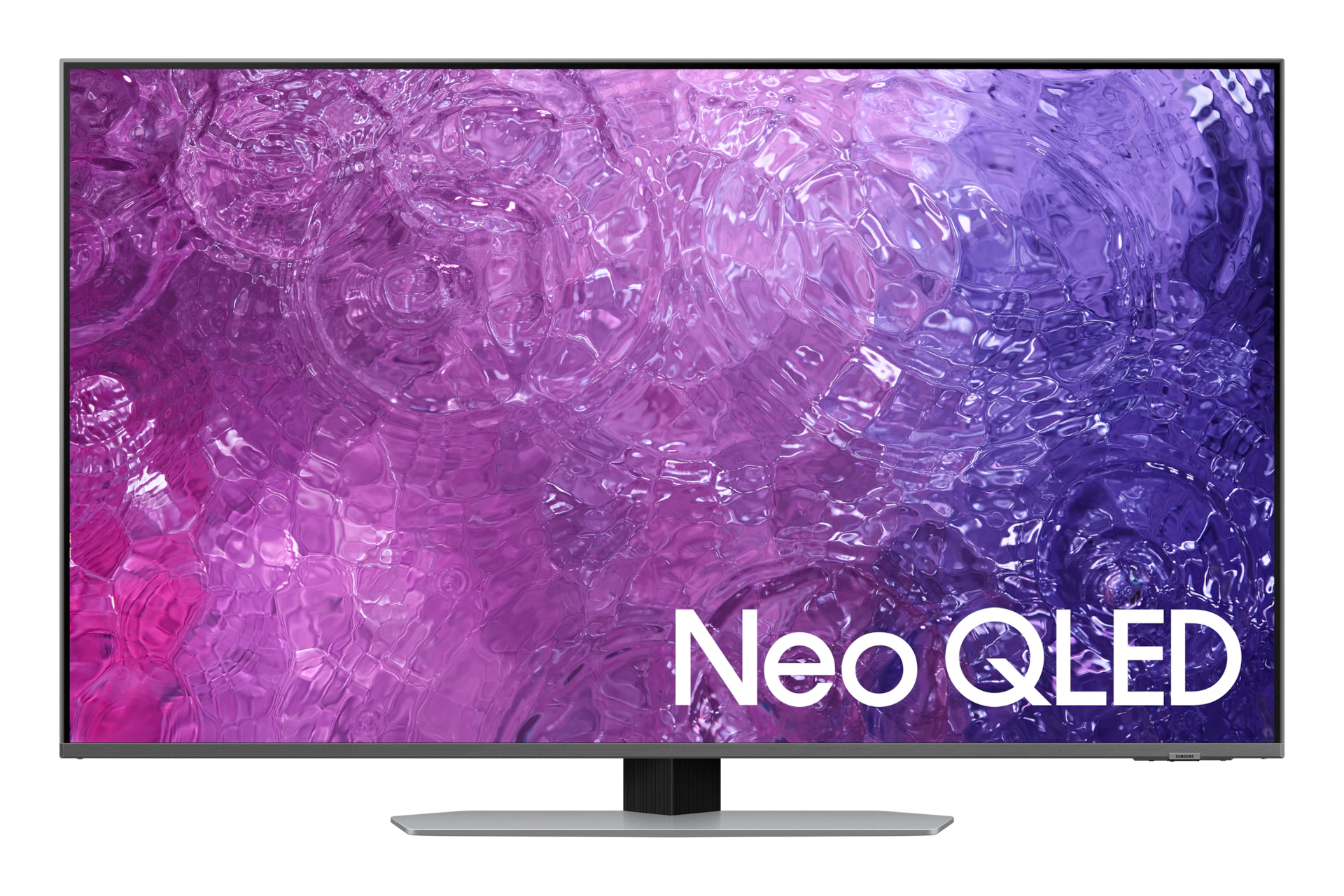
Samsung's Neo QLED line has always represented the premium tier of what LCD technology can achieve. With the QN90C — the flagship consumer Neo QLED model for 2023 — Samsung delivers a television that excels in precisely the circumstances where OLED struggles: bright, sunlit rooms. At its 65-inch configuration with Quantum Matrix Technology Pro backlight control and independent testing showing peak brightness of approximately 2,000 nits, this TV wins the ambient-light game decisively.
Across light-controlled screening-room use and south-facing living rooms with afternoon sun exposure, the QN65QN90CAFXZA's strengths are striking — though for very different reasons.
The QN90C is Samsung's answer to the OLED question: instead of perfect blacks, offer blinding whites. Instead of one-size-fits-all contrast, offer a high-performance Mini LED backlight with 792 individual local dimming zones capable of surgical brightness control. The approach is different; in many real-world scenarios, it is equally compelling.
Picture Quality
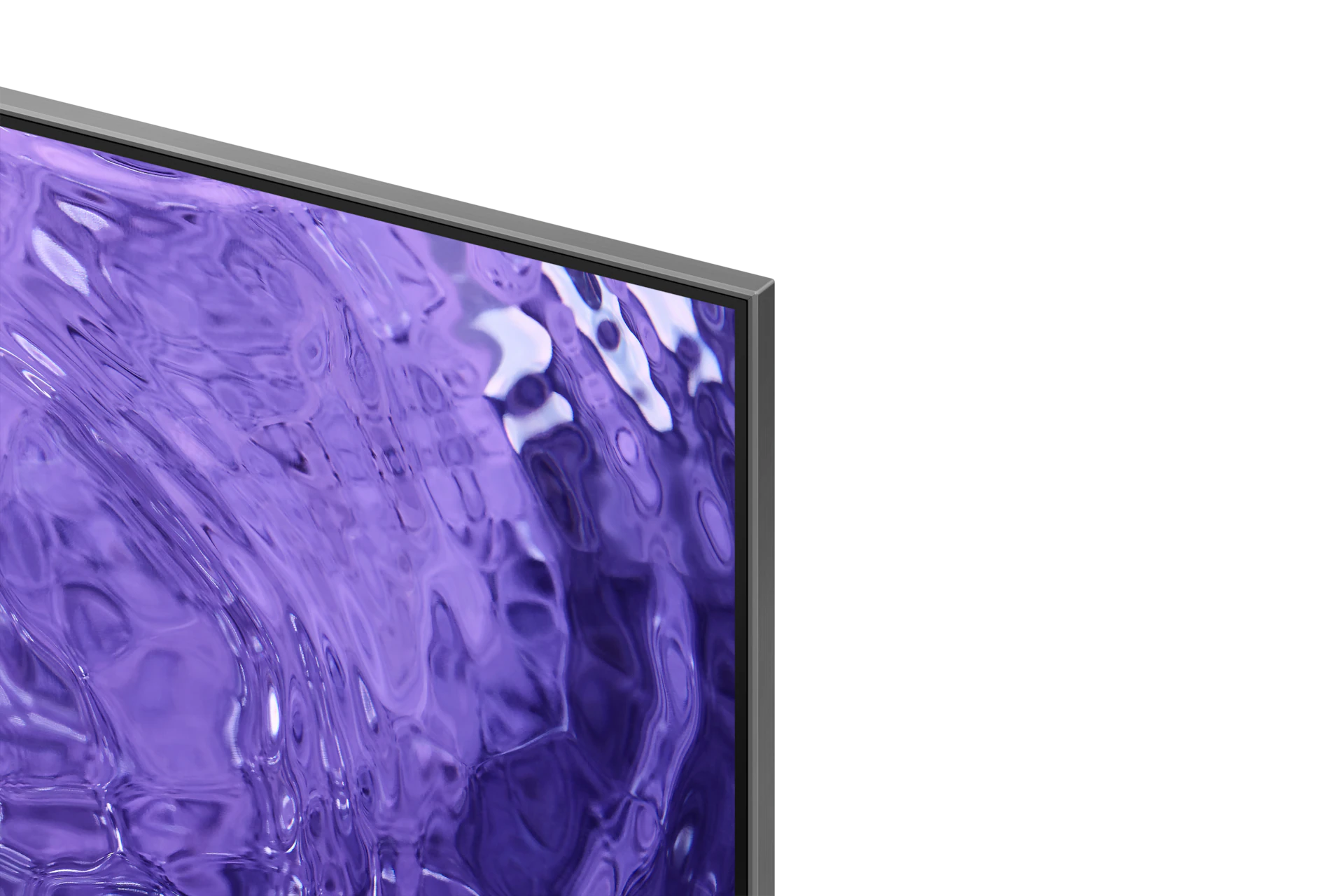
The headline specification is real: reviewers have measured approximately 2,000 nits of peak HDR brightness on a 10% white window in Cinema or Dynamic mode. Across larger portions of the screen, the television can sustain around 1,400 nits before thermal management begins gently rolling back output. These are numbers that simply do not exist on OLED panels.
Samsung Electronics / Samsung.com (AE region) (Manufacturer product image)
What does that mean on screen? In a bright room, HDR content on the QN90C genuinely pops in a way that OLED cannot replicate. Specular highlights — sunlight glinting off water, lightning flashes, lens flares — have a physical intensity that pulls you into the content. Samsung's HDR10+ processing dynamically adjusts tone mapping per scene, and while it lacks the near-universal Dolby Vision compatibility of LG's C4, HDR10+ content (Amazon Prime Video, Samsung TV Plus) looks exceptional.
Quantum Matrix Technology Pro provides fine-grained backlight control through 792 local dimming zones on the 65-inch panel. By Mini LED standards, this is very good. But the physics of LCD mean that some haloing — a faint halo of light around bright objects set against dark backgrounds — remains visible in carefully chosen test content. In real viewing conditions, it is rarely distracting.
Color performance is strong. Samsung's Quantum Dot filter covers 100% of the DCI-P3 color space and reaches approximately 87% of Rec. 2020. The Neo Quantum Processor 4K's upscaling engine brings respectable 1080p and 720p content up to near-4K quality, aided by a Neural Quantum Processor that has been trained on diverse content types.
One genuine weakness: viewing angles. The QN90C uses a VA (Vertical Alignment) panel, which sacrifices off-angle performance for deeper blacks. Direct viewing is stunning, but at 30+ degrees from center the image shifts noticeably. Households where multiple viewers sit at wide angles may find an IPS or QLED IPS panel more forgiving.
Gaming Features
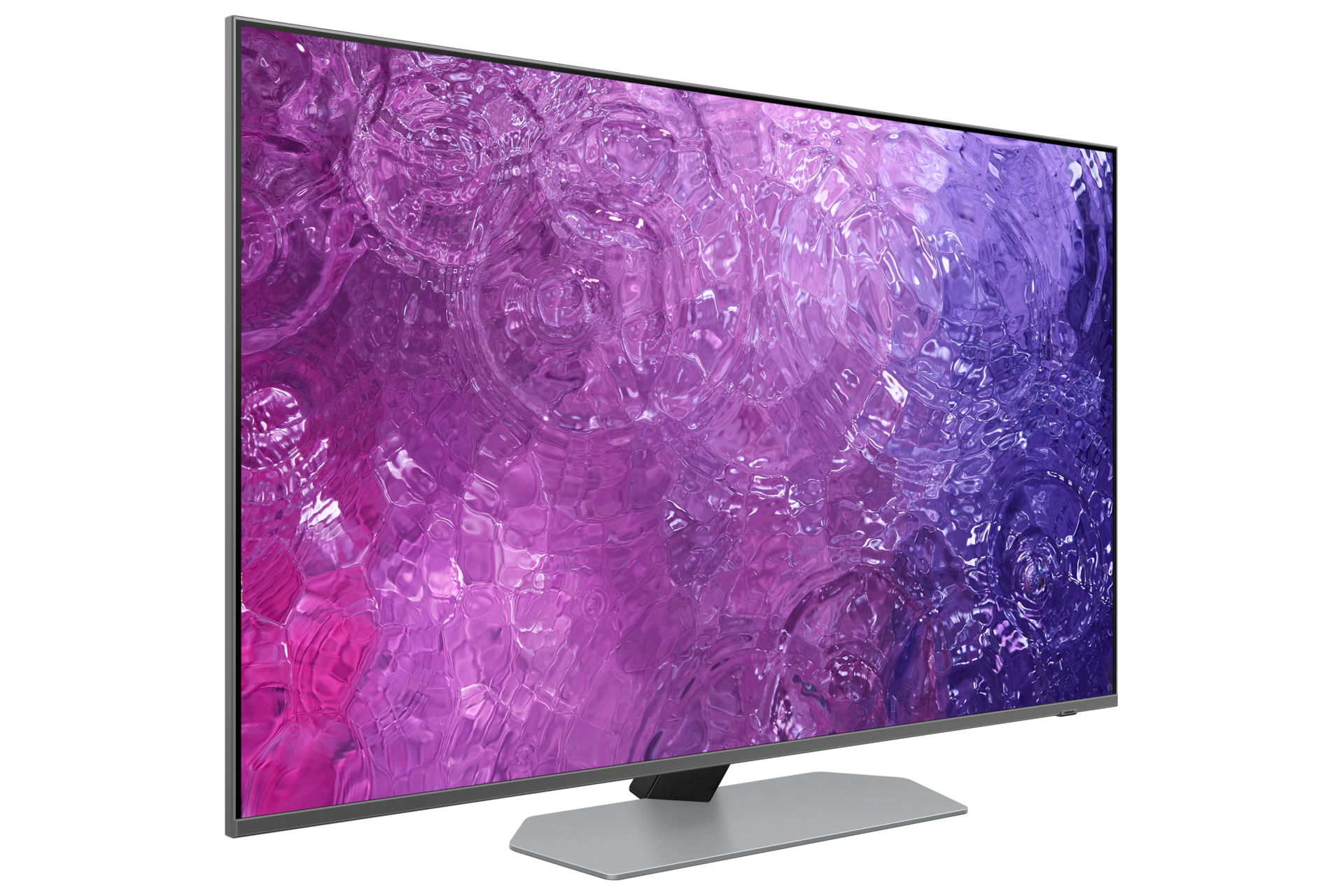
Samsung has built a comprehensive gaming suite into the QN90C that competes directly with LG's Game Optimizer. The Game Bar overlay — accessible with a button press during gameplay — provides a heads-up display for input lag mode, VRR status, refresh rate, and black equalizer.
Samsung Electronics / Samsung.com (AE region) (Manufacturer product image)
AMD FreeSync Premium Pro support is certified and functional, with a VRR range spanning 48 to 144Hz. At 144Hz (on the two HDMI 2.1 ports), the QN90C is one of the few TVs to support this higher ceiling for PC gamers with capable GPUs. Reviewers measure input lag at 4K/120Hz at approximately 4 milliseconds — not OLED-class, but firmly below the threshold of perceptibility for the vast majority of players.
The key caveat: only two of the four HDMI ports are full-bandwidth HDMI 2.1. The other two ports max out at HDMI 2.0 (18Gbps), which limits connected devices to 4K/60Hz. With multiple modern consoles and a gaming PC to connect, you may find yourself juggling ports. This is a meaningful shortcoming that LG has solved by providing four full HDMI 2.1 ports on the C4.
Auto Game Mode (ALLM) is supported and works reliably across PlayStation, Xbox, and PC. The Black Equalizer feature brightens dark shadow areas specifically for gaming — useful for competitive shooters where hiding in shadows is a gameplay mechanic.
Smart TV
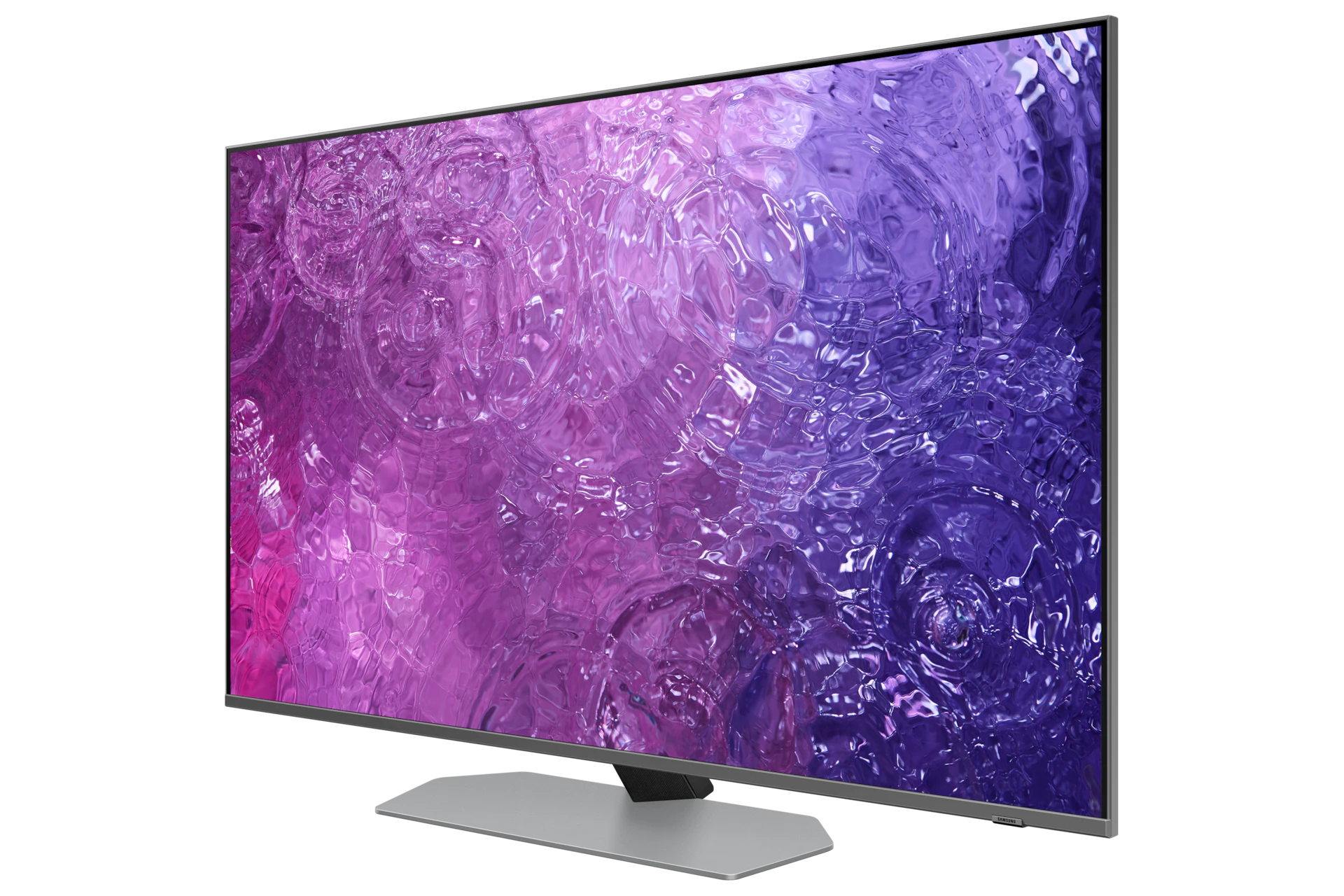
Tizen 7.0 is arguably the most polished smart TV platform available. The home screen layout is clean and customizable, the Universal Guide aggregates content across streaming services intelligently, and performance is snappy — the Neo Quantum Processor handles UI animations without stutter. Samsung's ambient mode, which displays artwork or information on the screen when not in active use, is a genuinely useful feature that sets it apart from the competition.
Samsung Electronics / Samsung.com (AE region) (Manufacturer product image)
Voice assistant integration covers Bixby (native), Amazon Alexa, and Google Assistant. SmartThings integration allows the QN90C to serve as a hub for Samsung ecosystem devices — Galaxy phones, SmartThings sensors, compatible appliances. AirPlay 2 and Tap View for Android devices are both present.
The app library is comprehensive: Netflix, Disney+, Apple TV+, Prime Video, HBO Max, Peacock, Hulu, YouTube are all available. Samsung's proprietary Samsung TV Plus provides free ad-supported content. The main criticism mirrors LG's: Samsung's home screen serves promotional content that some users find cluttered.
Audio
The QN90C's 60W, 4.2.2-channel Object Tracking Sound+ system is a genuine step above the category average. The speaker array is distributed behind the panel to physically track and localize sound to whatever is happening on screen — explosions sound like they come from where you see them, dialog tracks with moving characters. Dolby Atmos decoding is handled natively, and vertical channel simulation from the up-firing elements creates a modest but real sense of ceiling-height audio.
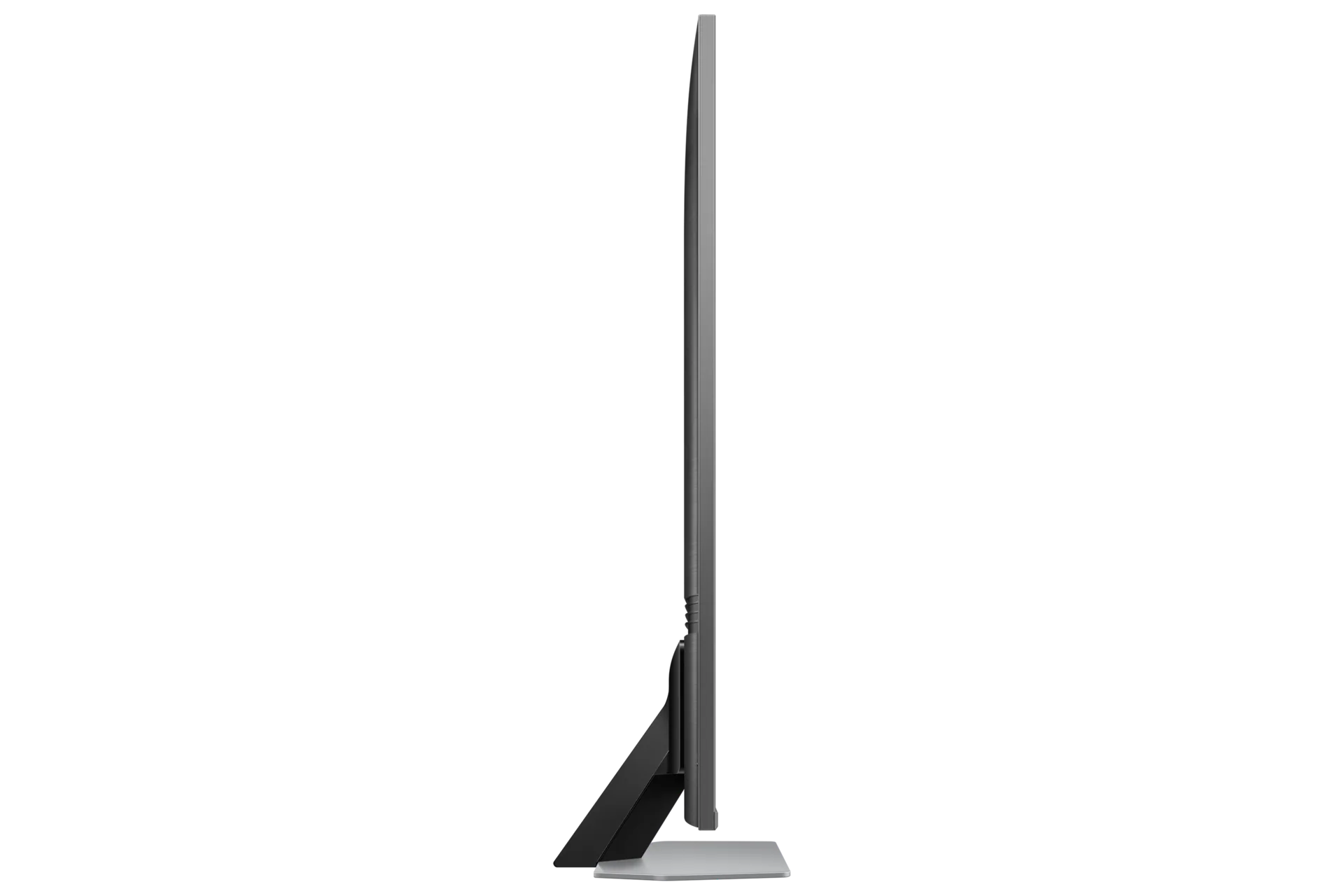
Samsung Electronics / Samsung.com (AE region) (Manufacturer product image)
It is still not a substitute for a dedicated soundbar or surround sound system in a large room, but it is the best built-in audio arrangement on any television in this price range. The eARC-enabled port (HDMI 3) allows lossless audio passthrough to compatible soundbars and receivers.
Who Should Buy It?
The Samsung QN90C is the right choice in several specific scenarios where the OLED competition falls short:
- Bright room viewers who deal with windows, overhead lighting, or sunlight — 2,000 nits laughs at ambient light that would wash out any OLED
- PC gamers with AMD graphics who want 4K/144Hz with FreeSync Premium Pro certification and top-tier brightness
- Samsung ecosystem users who benefit from SmartThings integration, Tap View, and Bixby continuity
- Buyers who want usable built-in audio without committing to a soundbar purchase
The QN90C is a harder sell for dedicated dark-room home theater setups, households with wide-angle seating arrangements, or gamers who want to connect three or more HDMI 2.1 devices simultaneously.
Verdict
The Samsung QN90C Neo QLED is not the best TV you can buy — but it may well be the best TV for your living room. Its brightness performance is class-leading, its Tizen platform is excellent, and its gaming credentials are strong. The HDMI 2.1 port limitation and lack of Dolby Vision are real compromises at this price, but the QN90C's real-world performance in challenging viewing environments is something no current OLED can match.