Introduction
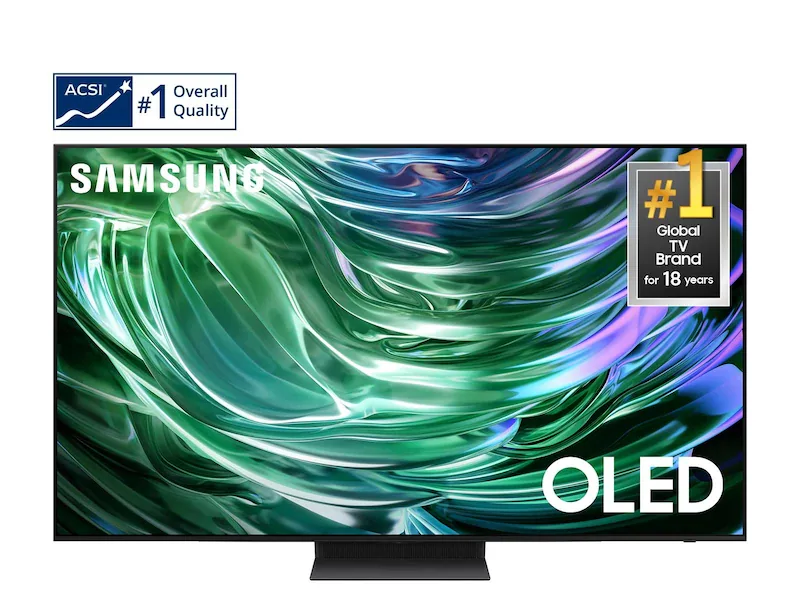
The Samsung S90D represents a significant moment in consumer television history: for the first time, QD-OLED technology — the same fundamental panel architecture used in the Sony A95L flagship — is available at a price that approaches the mainstream premium. At $1,299 for 55 inches, the S90D costs the same as the LG C4 OLED and considerably less than any previous QD-OLED offering, yet delivers peak brightness numbers that set new records for self-emissive displays.
Against the LG C4 and Samsung's 2023 S90C, the QN55S90DAFXZA reads as a meaningful step forward in almost every measurable dimension — brighter, faster, and more refined. Its omission of Dolby Vision and its single HDMI 2.1 port are real limitations that affect specific buyers, but for the majority of users, the S90D delivers QD-OLED performance at a price that was previously unimaginable.
Picture Quality & HDR
Independent testing has measured Samsung's third-generation QD-OLED panel in the S90D at approximately 1,400 nits peak brightness on a 10% HDR window — a figure that outstrips the Sony A95L's second-gen panel by a measurable margin and supports its status as the brightest self-emissive consumer TV independently measured at launch. This is not a minor incremental improvement; it is the kind of leap that makes the panel's HDR highlights genuinely dazzling in the way that early Mini-LED demos were dazzling: spectral light sources in HDR content now pop with an intensity that was previously the exclusive domain of LED backlights.
Samsung Electronics / Samsung.com (Manufacturer product image)
Sustained full-screen brightness runs to approximately 220 nits — again meaningfully higher than traditional WOLED and slightly above the Sony A95L, though Samsung's ABL (Automatic Brightness Limiter) still engages in sustained bright scenes as it does on all OLED technologies. Black levels are, as with any self-emissive technology, perfect — pixels that should be black are completely off.
Color coverage is extraordinary. Samsung's quantum dot layer converts the blue OLED emission to precise red and green primaries with exceptional efficiency, resulting in DCI-P3 coverage that approaches 100% with remarkable gamut volume at high luminance. The NQ4 AI Gen2 processor applies Samsung's Neural Quantum Processor algorithms to upscaling and noise reduction, delivering clean results on 1080p and even 720p source material.
The one significant picture quality caveat: the S90D does not support Dolby Vision. Samsung has been firm in its commitment to HDR10+ as its premium HDR format, and the S90D implements HDR10+ Adaptive — which uses a built-in light sensor to dynamically adjust tone mapping based on ambient conditions. For HDR10+ mastered content (a growing library, particularly on Amazon Prime Video and Samsung's own platform), this delivers excellent results. For Dolby Vision content on Netflix or Apple TV+, the S90D tone-maps in HDR10 — technically correct but not using the dynamic metadata that Dolby Vision provides. For most viewers this will be an acceptable trade-off. For enthusiasts who have calibrated expectations for Dolby Vision tone mapping, it is a genuine limitation.
Gaming Performance
The S90D's 144Hz native panel is a significant differentiator versus the 120Hz ceiling of most competing OLEDs. In practice, 144Hz benefits apply primarily to PC gaming — where a GPU can be pushed beyond 120fps — and certain current-generation console titles as more games patch in 120fps modes. The extra headroom means the VRR window is effectively 48–144Hz, giving adaptive sync more room to work cleanly at the top end.
Samsung Electronics / Samsung.com (Manufacturer product image)
FreeSync Premium Pro certification covers variable refresh across the full range. The S90D does not hold NVIDIA G-Sync Compatible status, which means it will not appear in Nvidia GPU menus as a verified G-Sync display. In practice, FreeSync generally functions correctly on Nvidia hardware via HDMI VRR in compatible titles, but it is not the seamless certified experience G-Sync Compatible provides.
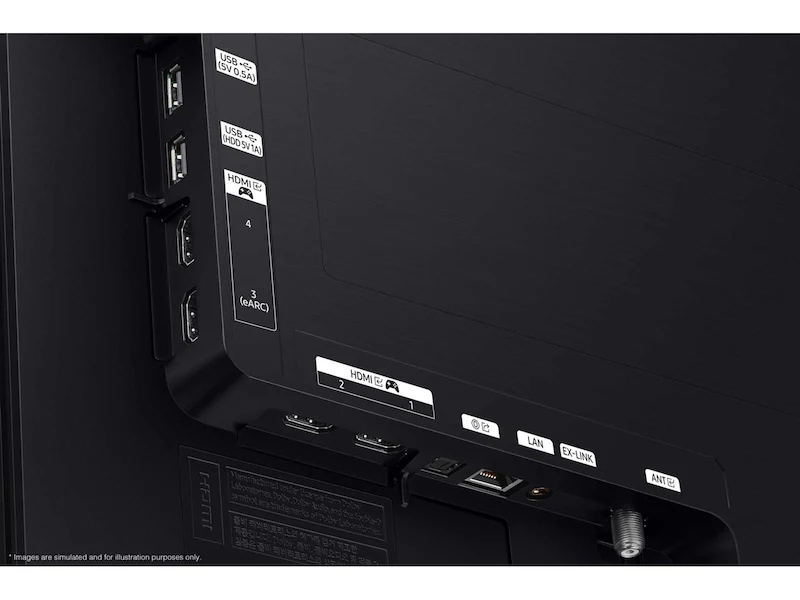
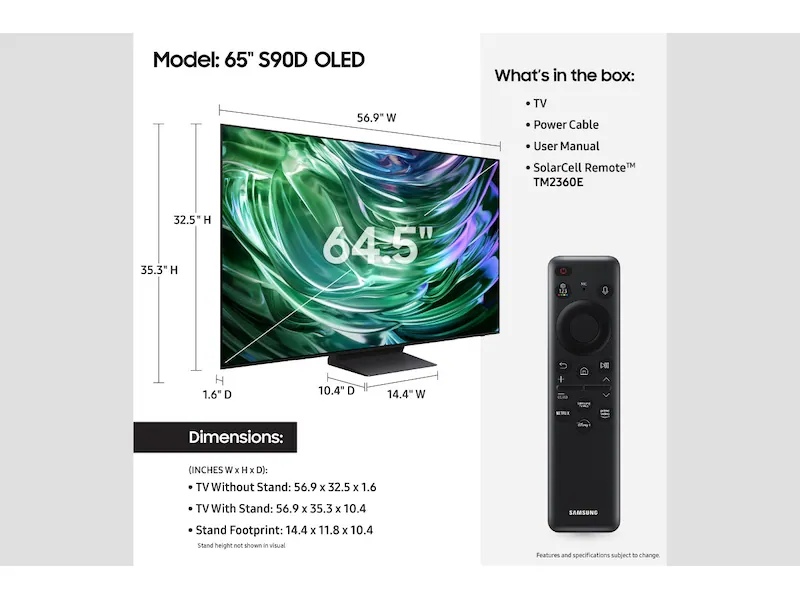
Reviewers have measured input lag in Game Mode at approximately 5.8ms at 4K/120Hz — lower than the Sony A95L, significantly lower than most LCD gaming TVs, and impressively responsive for any use case including competitive play. The single HDMI 2.1 port is the real gaming limitation: only one device can output 4K at 120Hz or above at a time. With a PS5, an Xbox Series X, and a gaming PC in the mix, two of those three will be running at 4K/60Hz maximum.
ALLM switches the TV into Game Mode automatically when a console handshake is detected. Samsung's Game Bar — a quick-access HUD available by holding the Play button — shows current refresh rate, VRR status, input lag, and aspect ratio without leaving the game. It is a genuinely useful feature that competing smart TV platforms have not replicated as elegantly.
Smart TV & Interface
Tizen OS is one of the most polished smart TV platforms on the market, and it shows most clearly in its responsiveness. The S90D's menus open instantly, apps launch fast, and the home screen reorganizes content intelligently based on viewing habits. Samsung's universal guide aggregates live TV listings, streaming recommendations, and ambient mode content into a unified interface.
Samsung Electronics / Samsung.com (Manufacturer product image)
The app library is essentially complete — every major streaming service has a native Tizen app, and Samsung's SmartThings integration allows the TV to serve as a hub for controlling compatible smart home devices. Samsung Gaming Hub, included on S90D, provides direct access to cloud gaming services including Xbox Game Pass and NVIDIA GeForce Now without a connected console.
Samsung's Ambient Mode, which displays artwork, photo slideshows, or informational widgets when the TV is idle, transforms the S90D into a display piece when not in active use. The QD-OLED panel's extraordinary color makes artwork mode particularly striking.
Dolby Atmos is supported via passthrough and processing, though the absence of Dolby Vision on the picture side remains a thematic gap. Samsung's built-in voice assistant works alongside Bixby, and both Amazon Alexa and Google Assistant are available for users who prefer either ecosystem.
Audio
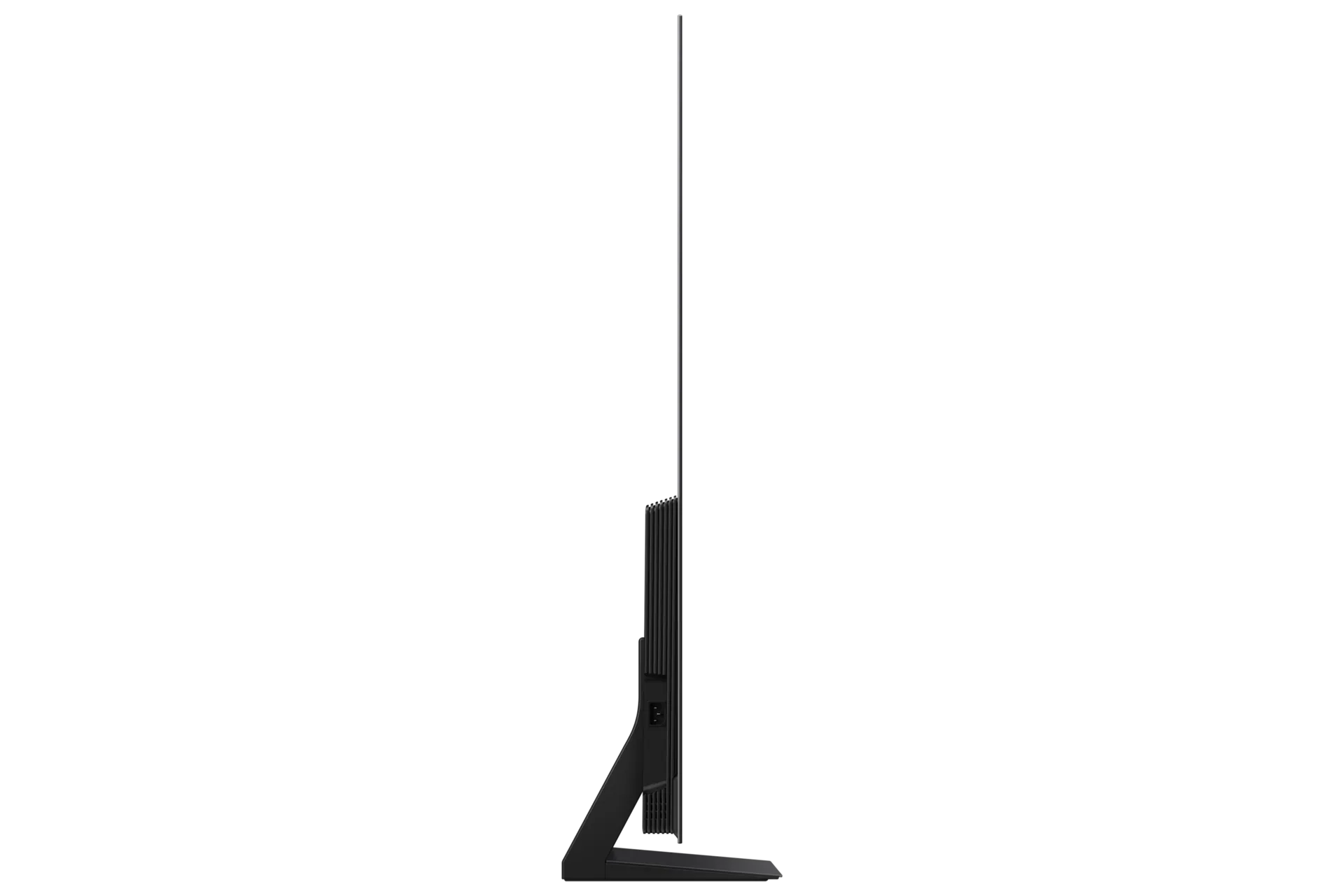
The S90D's 40W, 2.1-channel speaker system is an average performer for a television at this price point. The dedicated woofer — Samsung's Object Tracking Sound Lite implementation — adds some directional audio processing, tracking on-screen movement to adjust the speaker emphasis. It is a meaningful improvement over stereo-only arrangements, but the physics of a thin-cabinet OLED enclosure limit bass extension and overall dynamic range.
Samsung Electronics / Samsung.com (Manufacturer product image)
For movie watching and casual streaming, the built-in audio is perfectly adequate. For music, action films, or immersive gaming audio, a soundbar upgrade is strongly recommended. The S90D's eARC-enabled HDMI port (HDMI 1) supports lossless audio passthrough, and Samsung's Q-Symphony feature allows compatible Samsung soundbars to integrate with the TV's built-in speakers to produce a unified multi-source audio field. Paired with a Samsung HW-Q990C, the S90D becomes a genuinely impressive audio-visual system.
Who Should Buy It?
The Samsung S90D sits in a compelling position: it delivers QD-OLED performance — the best picture technology available — at a price that matches the LG C4 OLED. The buyers who should consider it:
- Picture quality enthusiasts on a C4 budget who want the superior brightness and color volume of QD-OLED over traditional WOLED without paying Sony A95L prices
- Samsung ecosystem users already invested in Tizen apps, SmartThings devices, and Samsung soundbars
- PC gamers on AMD hardware who will benefit from FreeSync Premium Pro and the 144Hz ceiling
- Bright room viewers who want OLED's contrast but need more peak brightness than traditional WOLED can provide
The S90D is a harder sell for PlayStation-primary households (who will miss the Sony A95L's Auto HDR Tone Mapping), buyers with multiple 4K/120Hz devices (who need more than one HDMI 2.1 port), and enthusiasts who specifically require Dolby Vision tone mapping.
Verdict
The Samsung S90D is the television that makes QD-OLED accessible. Its third-generation panel sets brightness records for self-emissive displays, its 144Hz native rate gives it a unique advantage over 120Hz OLED competitors, and its $1,299 price makes the premium picture technology attainable for a much wider audience than the Sony A95L reaches. The absence of Dolby Vision and the single HDMI 2.1 port are real compromises, but neither is disqualifying for the majority of buyers. If you want the best picture quality possible at $1,299 and can live without Dolby Vision, the S90D is the television to buy.