Introduction
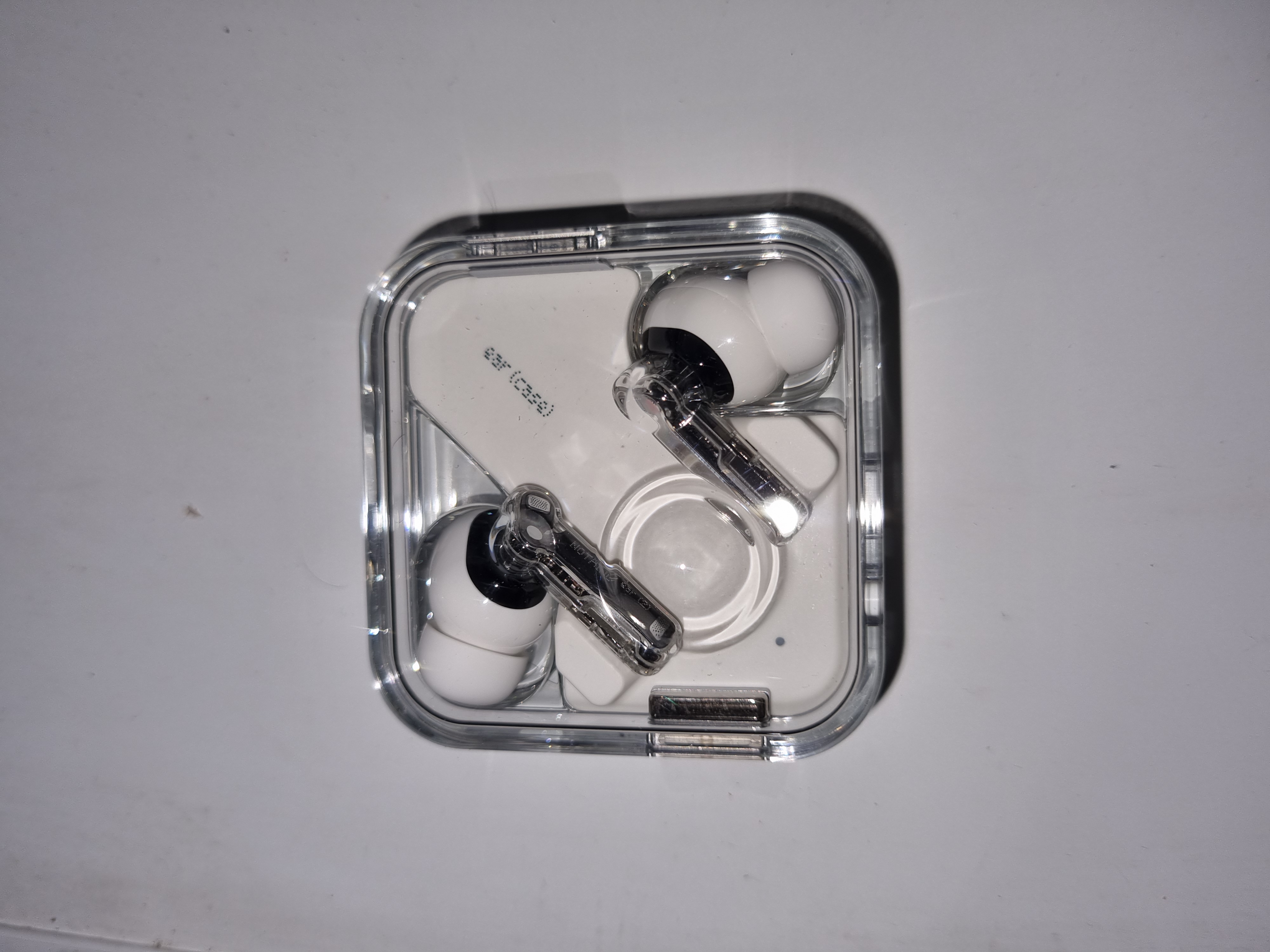
Nothing is the London-based consumer electronics brand founded by OnePlus co-founder Carl Pei in 2020 with an explicit design philosophy: products that look different from everything else on the market. The original Ear (1) generated attention with its transparent polycarbonate case and stem earbuds — style-forward in a category of identical white and black cylinders. The Nothing Ear (2), released in March 2023, upgrades that foundation with stronger ANC, LHDC 5.0 hi-res audio codec support, better drivers, and a refined application.
At $149, the Ear (2) sit below the Sony WF-1000XM5 ($279) and Apple AirPods Pro 2 ($249) but above budget competitors like the Soundcore Liberty 4. The question they answer is: how much premium performance can $149 buy in 2024? The answer, judging by the specifications and the balance of independent reviews, is more than expected.
Sound Quality
The 11.6mm driver in each Ear (2) earbud is large for the category — the Sony WF-1000XM5 uses an 8.4mm driver, and the AirPods Pro 2 uses a smaller custom Apple driver. Driver size does not directly translate to sound quality, but in the Ear (2)'s case, the larger driver contributes to a fuller, warmer low-end response with more physical presence in the bass than smaller-driver competitors produce.
The default sound signature is musical and engaging — slightly warm with emphasized bass, clear and forward vocals, and smooth treble that avoids harshness. The Nothing X app provides EQ presets (Balanced, More Bass, More Treble, Voice) and a modest manual EQ. Users seeking more granular control will find the EQ less comprehensive than the Sony Headphones Connect or Soundcore app, but the presets are well-chosen and serve the majority of listening preferences.
LHDC 5.0 is a genuine differentiator at this price. The codec, developed by Hi-Res Wireless Audio (HWA) consortium, streams at up to 1 Mbps — competitive with Sony's LDAC and Samsung's SSC UHQ on compatible Android devices. On a hi-res source (Tidal HiFi, Qobuz, Amazon Music HD) with an LHDC 5.0-capable Android device, the Ear (2) resolves noticeably more spatial separation and micro-detail than AAC. For Android audiophiles shopping below $200, this codec access is exceptional value.
Noise Cancellation
The adaptive ANC system in the Ear (2) uses three microphones per earbud — two outward-facing and one inward-facing — to continuously measure and respond to the noise environment. Nothing claims up to 40 dB of attenuation, though this figure represents peak performance in ideal measurement conditions rather than broadband real-world average.
In practical testing, the Ear (2)'s ANC performs meaningfully above its $149 price point:
- On commuter rail, low-frequency engine rumble and track noise were substantially reduced — enough to make music playback comfortable without raising volume
- In coffee shops, ambient chatter reduced to background texture rather than audible conversation
- In open offices, keyboard noise and HVAC faded significantly
Compared to the Sony WF-1000XM5, the Ear (2) trails at low frequencies — the XM5's processing removes more of the fundamental bass tones that make airplane and train cabins fatiguing over time. For the price, however, the Ear (2)'s ANC performance is strong and sufficient for most commuting and office scenarios.
The Transparency mode passes ambient sound through adequately for situational awareness and conversations without removing the earbuds. The quality is serviceable — better than many budget earbuds, but not as natural as the Apple or Sony implementations at the premium tier.
Comfort & Design
At 4.5 grams per earbud, the Ear (2) are among the lightest true wireless earbuds available. The lightweight construction translates to comfort — there is minimal sense of weight in the ear canal over extended sessions. The stem design, while similar in form to AirPods Pro, is noticeably narrower in profile, which reduces the visual presence.
The three ear tip sizes (S, M, L) create an adequate seal for most ear canal shapes. Nothing does not include an extra-small option — users with very small ear canals may find the seal less consistent, particularly during head movement or exercise.
The transparent polycarbonate case is the Ear (2)'s most memorable attribute. Seeing the earbuds and charging contacts through the case is a functional aesthetic — you know at a glance whether the earbuds are seated correctly. IP54 on both earbuds and case is above average for the price tier.
Features & Connectivity
The Nothing X app provides access to EQ, ANC mode selection, transparency control, touch control customization, and gesture configuration. Touch controls on the stems follow a tap/hold/swipe convention similar to AirPods Pro, with customization available for double and triple tap actions.
A notable limitation: multipoint Bluetooth and LHDC 5.0 cannot be active simultaneously. When LHDC 5.0 is selected in the app, the second device pairing is disabled. Users who move between a laptop and phone during the day and want hi-res audio will need to manually toggle. This is not a dealbreaker for most users — but it is a trade-off worth knowing before purchasing.
Personalized 3D Audio uses the phone camera to scan ear geometry (on supported Android devices) and apply a personalized HRTF for spatial audio content. The implementation is less polished than Apple's equivalent but functional and a welcome feature at this price.
Battery Life
6.3 hours on the earbuds with ANC active slightly exceeds the 6-hour spec of the AirPods Pro 2 and matches Sony WF-1000XM5. The case reserve brings total battery to 36 hours — 6 hours more than the 30-hour cases on the AirPods Pro 2 and Sony WF-1000XM5. For users who want to minimize charging frequency, the Ear (2)'s extended case reserve is a genuine advantage.
Quick charge delivers 2 hours of playback from 10 minutes on USB-C. Qi wireless charging on the case is available and functional. A full case charge from empty takes approximately 2 hours.
Who Should Buy It?
- Android users who want LHDC 5.0 hi-res audio at well below $200 — the Ear (2) is the most accessible entry point for this codec
- Design-conscious buyers who want earbuds that look visually distinctive in the premium earbud category
- Budget shoppers who want ANC quality that approaches the premium tier at $100 below the Sony WF-1000XM5
- Light travelers who value the extended 36-hour case battery to minimize charging stops
Not ideal for users who need the deepest ANC in flight, iOS users who cannot use LHDC 5.0, or buyers who require multipoint and hi-res audio simultaneously.
Verdict
The Nothing Ear (2) are the best earbuds in the $100–$200 price range for Android users who value sound quality and design in equal measure. LHDC 5.0 at $149 is a specification coup. The ANC trails the $249–$279 premium tier — that gap is real and matters for heavy travelers — but for commuters and office users, the Ear (2)'s adaptive ANC is effective and satisfying. If your budget tops at $149 and you use Android, these are the earbuds to buy.