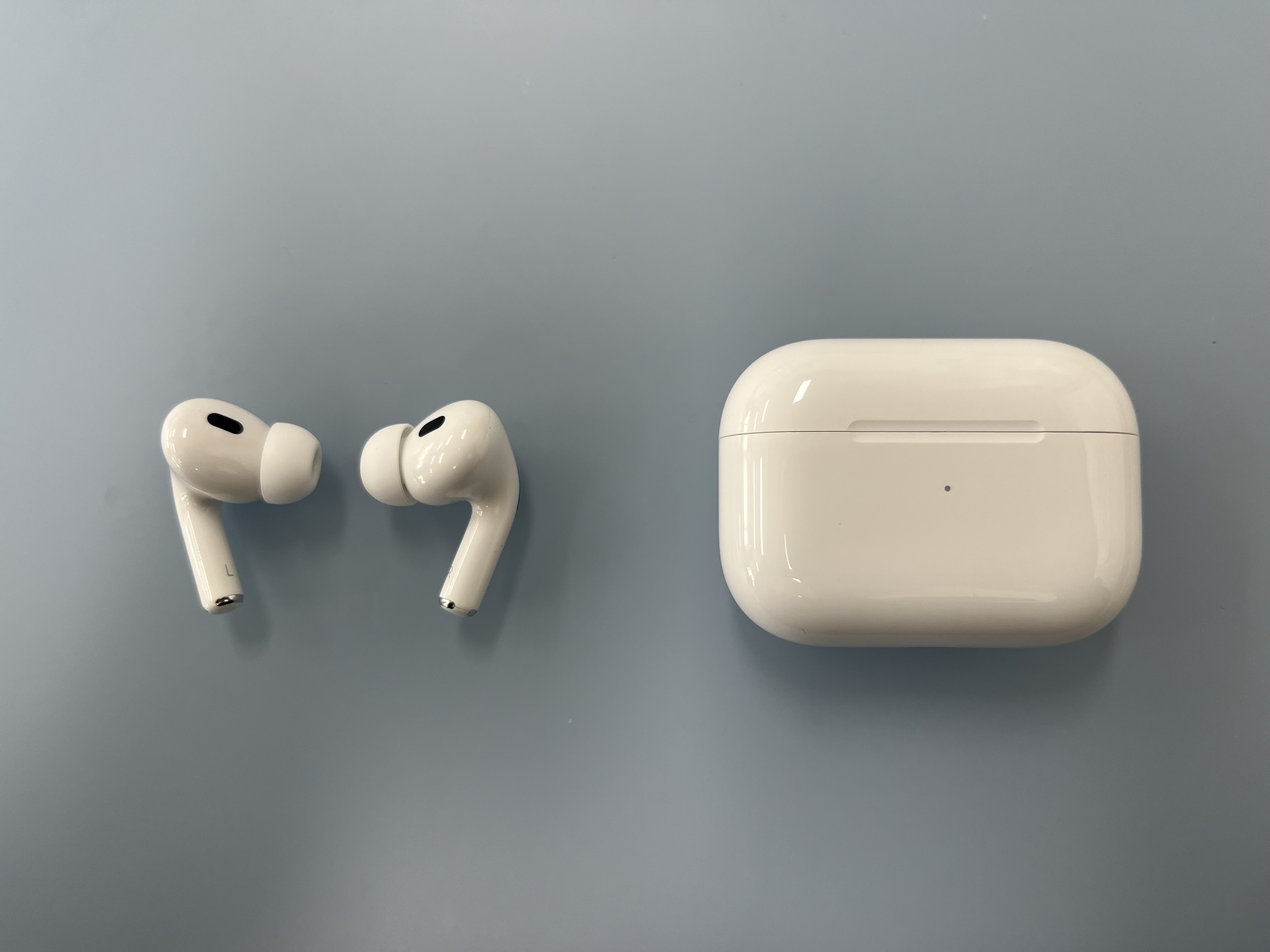
Overview: Apple’s most complete earbuds still have a narrow audience
The AirPods Pro 2 are not the most universally flexible wireless earbuds you can buy; they are the most convincing earbuds for people who live with an iPhone. Apple’s advantage is not one headline feature, but the way the H2 chip, strong noise cancellation, Adaptive Transparency, Find My, spatial audio, and frictionless pairing remove the small annoyances that make other earbuds feel like accessories instead of part of the phone.
That also explains the main warning. At 249 USD, these earbuds make sense only if you benefit from Apple’s ecosystem. Android buyers can pair them over Bluetooth, but losing Personalized Spatial Audio, automatic Apple-device switching, Siri integration, Precision Finding, and the best setup flow turns a premium product into a merely competent pair of AAC earbuds. If you want LDAC, aptX, a brighter studio-style sound, or simultaneous multipoint with two non-Apple devices, buy something else before you pay Apple’s price.
For iPhone owners, though, the package is unusually complete. Each earbud weighs 5.3g, the buds carry an IPX4 rating, the case supports MagSafe and Qi charging, the battery is rated for 6 hours with ANC on, and the case stretches total listening time to 30 hours. Those numbers are not exotic on their own. The reason the AirPods Pro 2 feel special is that the core features are tuned for daily situations: a train platform, a desk call, a walk through traffic, a movie on an iPad, or the panic of finding one missing earbud under a couch.
Design, build, and setup: small choices that reduce friction
Apple kept the familiar stem design because it still works. The stem moves weight below the ear canal instead of packing the whole mass into the outer ear, and at 5.3g per earbud the AirPods Pro 2 are light enough for long sessions without the plugged-in pressure that heavier buds can create. The silicone ear tips come in XS, S, M, and L sizes, which matters more than the product photos suggest. A correct seal is the difference between excellent ANC and a thin, leaky sound; buyers with smaller ears should start with XS rather than assuming the medium tips are the default.
The controls are better than they look. Squeezing the stem for play, pause, skip, and ANC mode changes is more deliberate than tapping a flat touch surface, especially with gloves or sweaty fingers. The swipe gesture for volume is the important addition because it solves the old AirPods problem of reaching for the phone just to nudge audio up or down. The limitation is customization. Sony, Samsung, and Jabra give power users more control over what each gesture does. Apple gives you a smaller set of actions that are hard to trigger accidentally.
Setup is where these earbuds start separating from generic Bluetooth models. Open the case near an iPhone and pairing is effectively handled for you; the same Apple ID then carries the connection across iPad, Mac, and Apple Watch. That is not true multipoint Bluetooth in the standard sense, and the distinction matters if you regularly switch between a Windows laptop and an Android tablet. Inside Apple’s world, the automatic handoff is smoother than normal multipoint. Outside it, the AirPods Pro 2 become much less interesting.
The charging case deserves more credit than it usually gets. Depending on the revision, charging is Lightning or USB-C, and the 2023 USB-C case also keeps MagSafe and Qi wireless charging. A 5 minutes top-up is rated for about 1 hour of playback, which is the difference between leaving for a commute with dead earbuds and making it through the trip. Find My with Precision Finding is another practical advantage: the case can guide you toward a lost set instead of merely showing the last approximate location. For a product this easy to misplace, that feature has real value.
The IPX4 rating is enough for sweat and rain, including workouts and wet commutes, but it should not be confused with rugged waterproofing. The case and earbuds can handle moisture exposure; they are not swim headphones. If your use includes heavy rain, water sports, or a history of destroying earbuds in gym bags, Samsung Galaxy Buds3 Pro or sport-focused Jabra models have a stronger durability argument.
Performance and real-world testing: ANC, transparency, calls, and sound
Noise cancellation is the headline capability, and it earns that status. Apple rates the ANC as up to a 2x improvement over the first AirPods Pro, with roughly 25 dB measured attenuation cited in the product information. In actual commuting and office use, the improvement feels most obvious with low, steady noise: train rumble, bus engines, airplane cabin drone, and HVAC systems fade into the background without the heavy pressure sensation that some stronger ANC systems create.
The AirPods Pro 2 are especially good at making ANC feel automatic rather than dramatic. The microphones listen both outward and inward, and the H2 chip adjusts cancellation to the fit and the surrounding environment. That matters because earbud ANC can collapse when the seal shifts. With the included XS, S, M, and L tips, most iPhone owners should be able to find a fit that keeps the low-frequency reduction consistent. If none of the tips seal well, do not force the purchase; a great ANC algorithm cannot fix the wrong ear shape.
Adaptive Transparency is the feature I would miss most if I switched away. Standard transparency modes pipe the outside world through the microphones, which is useful but sometimes harsh. Apple’s version keeps voices and traffic awareness natural while suppressing sudden loud sounds such as train screeches, construction bursts, or a passing motorcycle. The effect is not a substitute for hearing protection, but it makes city use less fatiguing because you do not have to choose between isolation and awareness every time you leave a building.
Sound quality is warm, polished, and easy to like. The custom Apple dynamic driver, high-excursion driver assembly, and dedicated amplifier produce bass with more body than the first generation while keeping vocals clear. These are not analytical earbuds. If you want a bright treble edge, aggressive detail retrieval, or the option to chase a particular audiophile curve, Sony’s WF-1000XM5 is the more satisfying playground. Apple’s tuning is aimed at the listener who wants pop, podcasts, movies, calls, and Apple Music to sound consistently good without touching an EQ.
Codec support is the biggest audio ceiling. The AirPods Pro 2 support AAC and SBC, not LDAC or aptX. On an iPhone, that is less damaging than it sounds because Apple’s AAC implementation is stable and Apple Music commonly delivers a good AAC experience. But lossless-service subscribers should be clear-eyed: these earbuds do not turn wireless listening into hi-res playback. If the purchase is about extracting every bit from Tidal or Amazon Music HD, the AirPods Pro 2 are the wrong tool.
Personalized Spatial Audio is more than a party trick when the source material is right. With head tracking enabled, movies on an iPad or Apple TV content can feel anchored to the screen rather than stuck inside your skull. Dolby Atmos music is more variable because mixes differ wildly, but the best tracks gain a real sense of space. This is one of the clearest reasons to buy AirPods over platform-neutral rivals; competitors can imitate spatial processing, but Apple controls the phone, earbuds, scanning process, and services tightly enough to make it feel coherent.
Call quality is strong for daily use. The microphone system combines inward-facing and outward-facing microphones with ML-based Voice Isolation, so speech stays intelligible in many street and office conditions. The system is not magic in heavy wind, and a dedicated headset microphone will still beat any earbud for long professional calls. For walking calls, quick meetings, and voice messages, the AirPods Pro 2 are reliable enough that you stop thinking about which microphone is active.
Battery life is competitive and predictable. The earbuds are rated for 6 hours with ANC on, 7 hours with ANC off, and 30 hours total with the case. At moderate volume, sessions around 5.5 to 6.5 hours on the buds are realistic, which matches the rating closely enough for travel planning. The 30 hours case reserve is the more important number: it lets you handle several workdays, flights, or gym sessions before looking for a cable.
AirPods Pro 2 vs Sony, Samsung, Google, Jabra, and Bose alternatives
Against the Sony WF-1000XM5, the AirPods Pro 2 win on iPhone integration, Adaptive Transparency, case tracking, and everyday convenience. Sony is the better choice for listeners who want deeper app controls, more flexible sound shaping, and stronger platform neutrality. If you use Android or care deeply about codec options, Sony makes Apple’s closed approach feel restrictive.
Samsung Galaxy Buds3 Pro are the more natural rival for Galaxy phone owners. Samsung’s ecosystem features, stronger water-resistance positioning, and Android-first behavior make more sense there than paying 249 USD for AirPods features you cannot fully use. The AirPods Pro 2 remain the safer iPhone recommendation because pairing, switching, Find My, and spatial features are built around Apple devices rather than layered on afterward.
Google Pixel Buds Pro 2 are similar: they are easier to justify for Pixel users who rely on Google Assistant and want Android-native behavior. The AirPods Pro 2 have better Apple-device continuity, but they do not become Google earbuds just because Bluetooth connects. If voice assistant quality and Android settings integration matter, Google should be on the shortlist.
Jabra Elite 10 and Bose QuietComfort Ultra Earbuds complicate the decision for buyers who are not locked into one phone brand. Jabra tends to appeal to people who want multipoint and practical controls; Bose is the obvious name for listeners who care primarily about isolation and a rich noise-canceling experience. The AirPods Pro 2 are less about winning every isolated category and more about reducing friction across 10 daily moments. That is a fair trade only if those moments happen on Apple hardware.
Who should buy the AirPods Pro 2 — and who should skip them
Buy the AirPods Pro 2 if your phone is an iPhone, your other devices are mostly Apple, and you want earbuds that disappear into your routine. Commuters get excellent ANC and the safety of Adaptive Transparency. Travelers get a pocketable case with 30 hours total listening time. Apple Watch users get easy handoff and charging flexibility. People who lose small objects get Find My and Precision Finding, which is not glamorous but may save the purchase the first time a case slips between car seats.
They are also a strong upgrade for owners of aging first-generation AirPods Pro if battery life has faded or ANC no longer feels competitive. The 6 hours earbud rating, 7 hours ANC-off rating, H2 processing, and Adaptive Transparency are meaningful daily improvements, not cosmetic changes.
Do not buy them if you use Android as your main phone. Do not buy them for swimming, heavy rain abuse, or a work setup that requires simultaneous Bluetooth connection to two non-Apple devices. Do not buy them expecting hi-res wireless audio, because AAC and SBC are the codec list. And do not buy them if you dislike warm tuning; these are pleasing earbuds, not miniature studio monitors.
Verdict: the default premium earbud for iPhone owners
The AirPods Pro 2 justify their reputation because they solve the problems iPhone users actually encounter. The ANC is excellent, Adaptive Transparency is genuinely useful, the 5.3g earbuds are comfortable, the case is easy to charge, the battery numbers hold up, and the H2 chip makes the product feel integrated rather than merely connected. The weaknesses are just as clear: no LDAC, no aptX, no standard multipoint for two non-Apple devices, limited control customization, and only IPX4 protection.
That makes the verdict simple. For iPhone owners who want premium earbuds at 249 USD and plan to use Apple’s ecosystem features, the AirPods Pro 2 are still the safest recommendation. For everyone else, their best features are locked behind a door you may not want to enter.