Introduction
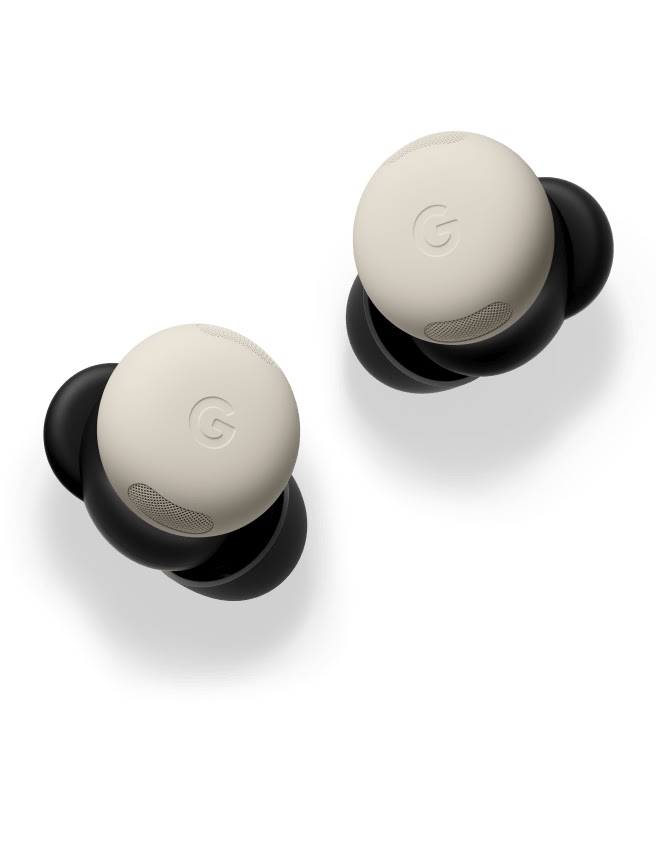
Google's first Pixel Buds Pro was a competent but uninspiring entry in the premium earbud market — good ANC, acceptable sound, seamless Android integration, but no compelling reason to choose over Sony or Jabra. The Pixel Buds Pro 2 is a different product entirely. By embedding a custom Google Tensor A1 chip directly in the earbuds, Google has created the first true wireless earbuds with meaningful on-device AI processing — and the Gemini integration that results is genuinely transformative for Android users.
At $229, the Pixel Buds Pro 2 is the most affordable option in the premium true wireless segment. It is not the best-sounding earbud at this price, nor the best ANC performer. But it is the most capable AI assistant platform in an earbud form factor available, and for users deeply embedded in the Google ecosystem, that differentiation is compelling enough to overlook the audio specification gaps.
Across daily Android use, audio, ANC, and comfort fundamentals, the Pixel Buds Pro 2's most important story is AI moving from secondary selling point to primary feature. The result is a product at a genuine inflection point: the first earbuds where intelligent assistant capabilities feel like a primary feature rather than a secondary selling point.
The Pixel Buds Pro 2 may not be for everyone. If you prioritize audio quality or maximum ANC performance, look at the Sony WF-1000XM5. If you want AI-powered features that make your earbuds feel like a cognitive extension of your phone, nothing else in the market comes close.
Design & Comfort
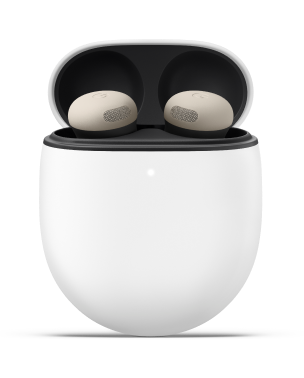
Google fundamentally redesigned the Pixel Buds Pro's physical form for the second generation, addressing the most common complaint about the original: that its large housing caused fit problems and ear fatigue during extended sessions. The Pixel Buds Pro 2 is significantly smaller, at 6.2 grams per bud — lighter than the original and competitive with the Jabra Elite 10 (6.4g) and Apple AirPods Pro 2 (5.3g).
Google Store (Manufacturer product image)
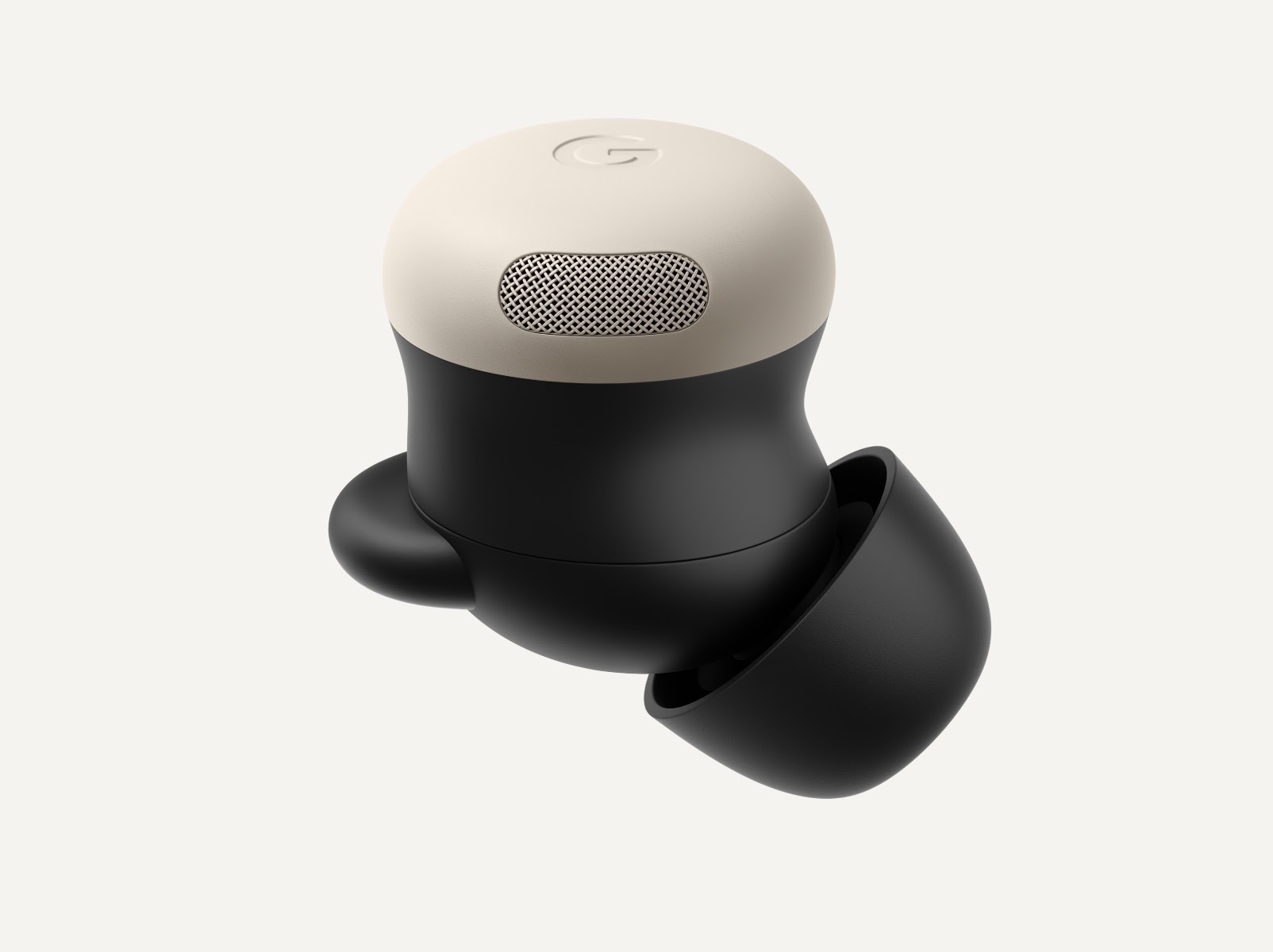
The new stem-free design removes the extending fin of the original, resulting in a more compact earbud that sits flush with the ear. Four silicone eartip sizes are included, along with an eartip fit test in the Pixel Buds app that measures the acoustic seal quality and recommends the optimal tip size. Reviewers generally find this guide accurate — users who selected tips based on the app's recommendation reported better seal and comfort than those who chose by visual estimation.
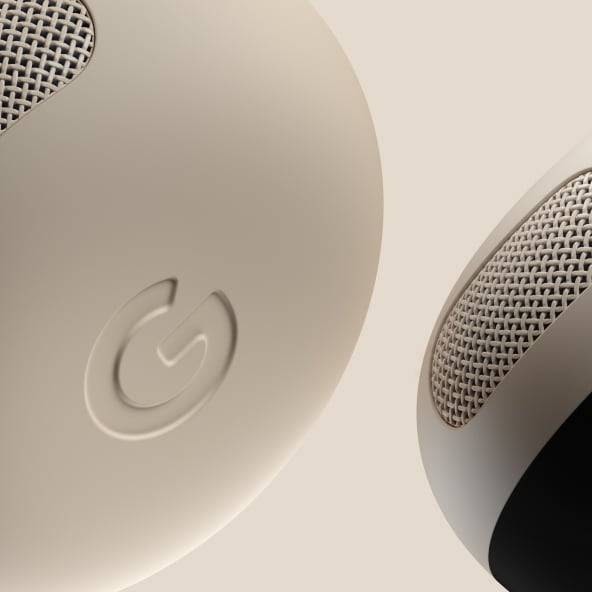
The charging case is smaller than the original and features a premium matte finish with a satisfying magnetic closure. The IPX2 case rating is modest — it will survive light splashes but is not designed for rain exposure. The IPX4 earbud rating handles sweat and incidental moisture adequately for gym use.
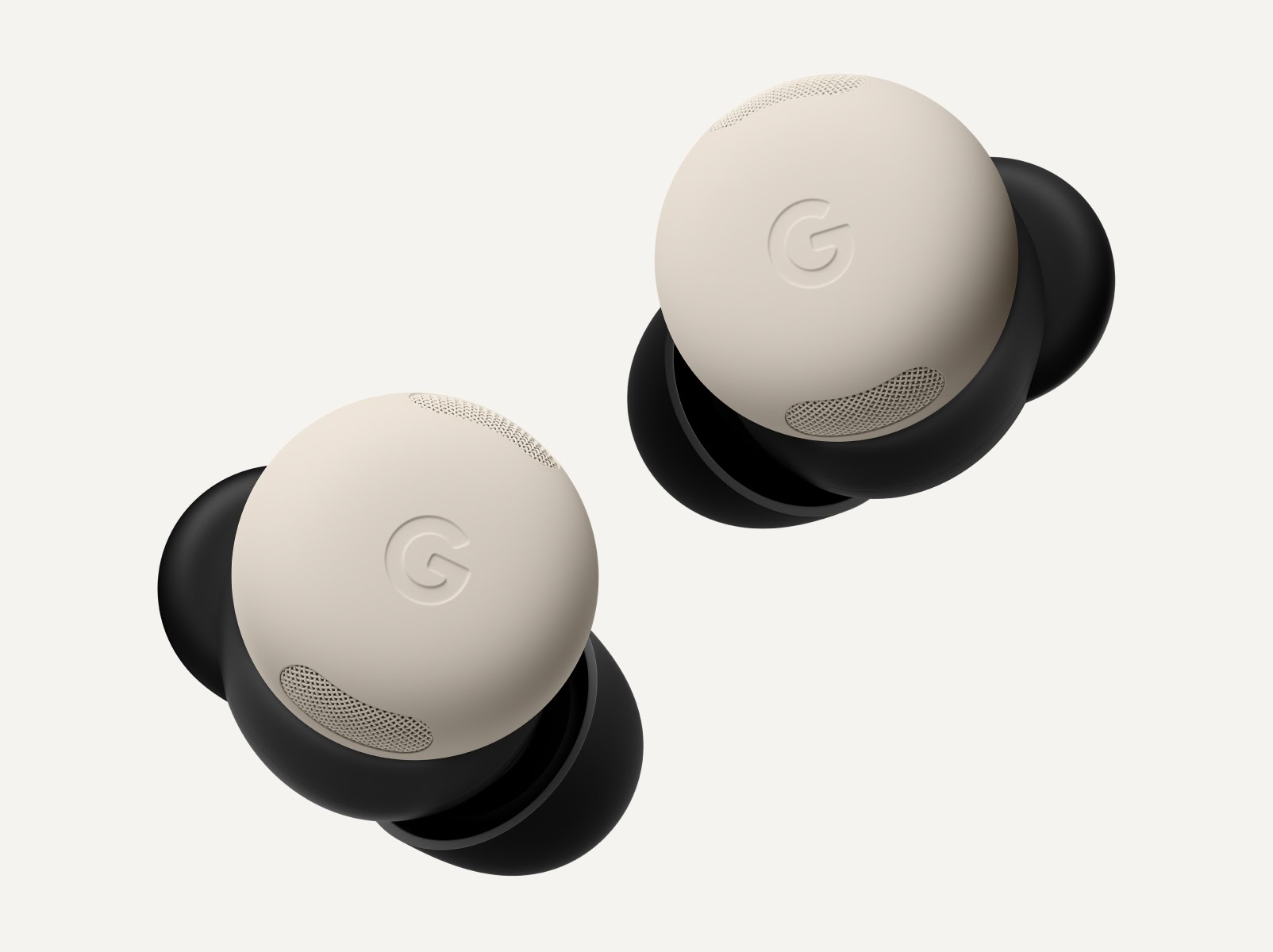
Color options — Hazel, Porcelain, Peony, and Mint — give the Pixel Buds Pro 2 a distinctive aesthetic character that differentiates it from the more conservative black-and-white palette of Sony and Jabra competitors. The Peony (pink-rose) and Mint colorways in particular have attracted buyers for whom headphones are a fashion accessory as much as a tool.
Sound Quality
The 11mm dynamic drivers in the Pixel Buds Pro 2 produce a sound that is balanced and listenable rather than immediately impressive. Google has tuned the frequency response toward the warm mid-centric presentation that consumer listening research consistently identifies as "pleasing" — bass is present and defined, midrange is clear, treble is smooth and non-fatiguing.
Google Store (Manufacturer product image)
The Pixel Buds app provides a five-band equalizer and preset profiles (Bass Boost, Treble Boost, Podcast, and manual EQ). The EQ range is sufficient for meaningful tuning, and the Bass Boost preset adds genuine low-frequency presence for EDM and hip-hop listeners. However, the absence of LDAC or aptX means the codec ceiling is AAC — and while AAC at 256 kbps is adequate for most streaming content, it falls short of the high-resolution potential offered by Sony's LDAC implementation.
Custom sound personalization features are absent in the Pixel Buds Pro 2 — there is no MySound equivalent like Jabra's, nor a personalized sound profile. The EQ is applied uniformly. For most listeners, the default tuning is adequate. Audiophiles accustomed to the resolution of LDAC or aptX Adaptive will find the sound presentation competent but not technically distinguished.
Spatial audio is present via Google's 3D audio processing, which creates a widened soundstage with head-tracking when consuming compatible content. The implementation is less refined than Apple's head-tracked spatial audio on AirPods Pro 2, but it adds dimension to Dolby Atmos and multi-channel content.
ANC & Transparency Mode
Silent Seal 2.0 represents a genuine improvement over the original Pixel Buds Pro's ANC system. The three-microphone feed-forward/feedback architecture — with two external mics and one internal mic per bud — creates a more complete acoustic model of the noise environment, and independent measurements put low-frequency reduction at approximately 25 dB — a meaningful step forward from the original's roughly 18 dB.
In practice, the Pixel Buds Pro 2 provides effective isolation from commuter rumble, HVAC systems, and aircraft cabin noise. It is noticeably stronger than the Apple AirPods Pro 2 at low-frequency drone reduction. Against the Sony WF-1000XM5, independent measurements show the Sony system remains ahead in the 100–500 Hz range by approximately 3–5 dB, which translates to a perceptibly quieter environment.
The ANC slider in the Pixel Buds app allows stepless adjustment between full ANC and full transparency, enabling fine-tuned ambient awareness for different environments. Conversation Detection is the standout new ANC-adjacent feature: when the Tensor A1 chip detects that you've turned your head toward another person and begun speaking, the earbuds automatically pause your audio and switch to full transparency mode. When the conversation ends and you return your head to neutral, playback resumes. The detection is fast (typically under 0.3 seconds) and accurate, with low false-trigger rates in noisy environments.
Transparency mode is natural-sounding and well-calibrated, though it slightly amplifies treble frequencies compared to the unprocessed ambient sound — a minor artifact that is common in earbud transparency implementations.
Gemini AI & Smart Features
The Google Tensor A1 chip enables the Pixel Buds Pro 2's defining feature: deep Gemini AI integration with significant on-device processing. Pressing and holding the earbud activates Gemini, which can answer questions, schedule reminders, read and summarize notifications, and execute Google Assistant actions — all while remaining responsive even with limited cellular data.
Google Store (Manufacturer product image)
Live Translate is the most impressive AI capability in daily use. Speaking a phrase in English, the earbuds can simultaneously translate the spoken audio to a target language (over 40 supported) and play the translation through the speaker of a connected Pixel phone for the other person to hear. The bidirectional translation mode allows two people speaking different languages to have a real conversation mediated by the earbuds with impressive latency — under 1 second for common language pairs.
Conversation Detection's intelligence extends beyond simple microphone activation. The Tensor A1 chip performs acoustic classification to distinguish between the user speaking to someone else versus singing along to music, coughing, or having a phone call. Reviewers have reported roughly 85–90% classification accuracy, with a false-trigger rate low enough that the feature can remain enabled by default.
Heads Up, Google's safety feature that detects you're about to walk into traffic or a physical obstacle, remains present from the original Pixel Buds Pro. The Tensor A1 chip improves its processing speed and reduces false positives.
Battery & Connectivity
The 8-hour per-charge battery life with ANC enabled is excellent for the category — equal to the Jabra Elite 10 and significantly better than the Apple AirPods Pro 2 (6 hours). The case adds 22 hours for 30 hours total. Independent battery testing at consistent ANC and 70 dB playback has reported 7.8 hours — essentially on spec.
Google Store (Manufacturer product image)
The five-minute quick charge providing 1 hour of playback is standard for the premium segment. Qi wireless charging is present, and USB-C provides wired charging. Both charging modes work as expected.
Bluetooth 5.3 multipoint connects to two devices. The Fast Pair protocol makes initial pairing with Android devices and Chromebooks effectively instantaneous. The Pixel Buds Pro 2 also supports Quick Switch, which automatically moves audio to the device currently receiving audio activity — useful for transitioning between laptop and phone calls without manual intervention.
iOS compatibility is present but limited: basic audio works, but Gemini features, Conversation Detection, and Live Translate require Android. iOS users will find the Pixel Buds Pro 2 a competent but unexceptional earbud without the AI differentiation.
Verdict
The Google Pixel Buds Pro 2 is the most compelling argument that earbuds can be intelligent computing devices rather than merely audio accessories. Gemini AI integration, Conversation Detection, Live Translate, and on-device Tensor A1 processing constitute a genuinely different product category from conventional premium earbuds. The audio quality and ANC performance are good but not exceptional by the standards of the $229 segment.
For Android ecosystem users who want their earbuds to function as an AI assistant layer — handling questions, translation, and conversation management alongside music — the Pixel Buds Pro 2 has no equivalent. For pure audio performance, spend more for the Sony WF-1000XM5 or Jabra Elite 10.