Introduction
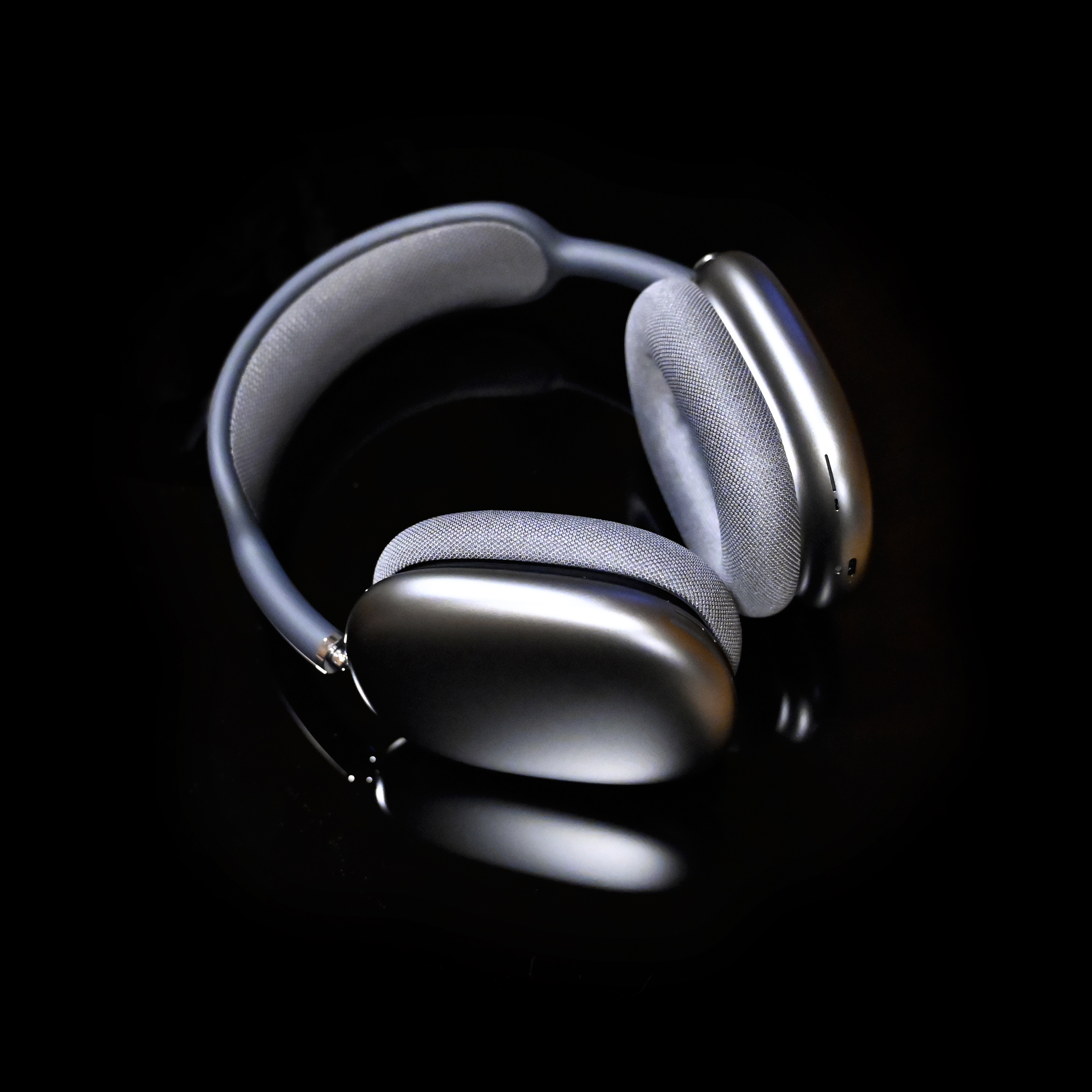
The Apple AirPods Max arrived in December 2020 as a statement product — a $549 over-ear headphone that signaled Apple's intent to compete at the top of the premium audio market. In 2024, Apple refreshed the lineup with new colors and a USB-C charging port, bringing the case and cable up to current standards. The fundamentals, however, remain unchanged: extraordinary hardware construction, Apple H1 processing, and the deepest Apple ecosystem integration available in an over-ear form factor.
The AirPods Max occupy a strange market position. They are priced $200 above the Sony WH-1000XM5 and $270 above the Bose QuietComfort 45, yet offer shorter battery life and no hi-res codec support. Understanding why someone should buy them — and why someone absolutely should not — requires engaging honestly with what Apple built and for whom.
Across daily commuting, long-haul air travel, desk work, and evening listening, the AirPods Max are defined by top-tier ANC, premium hardware, and Apple ecosystem integration.
Sound Quality
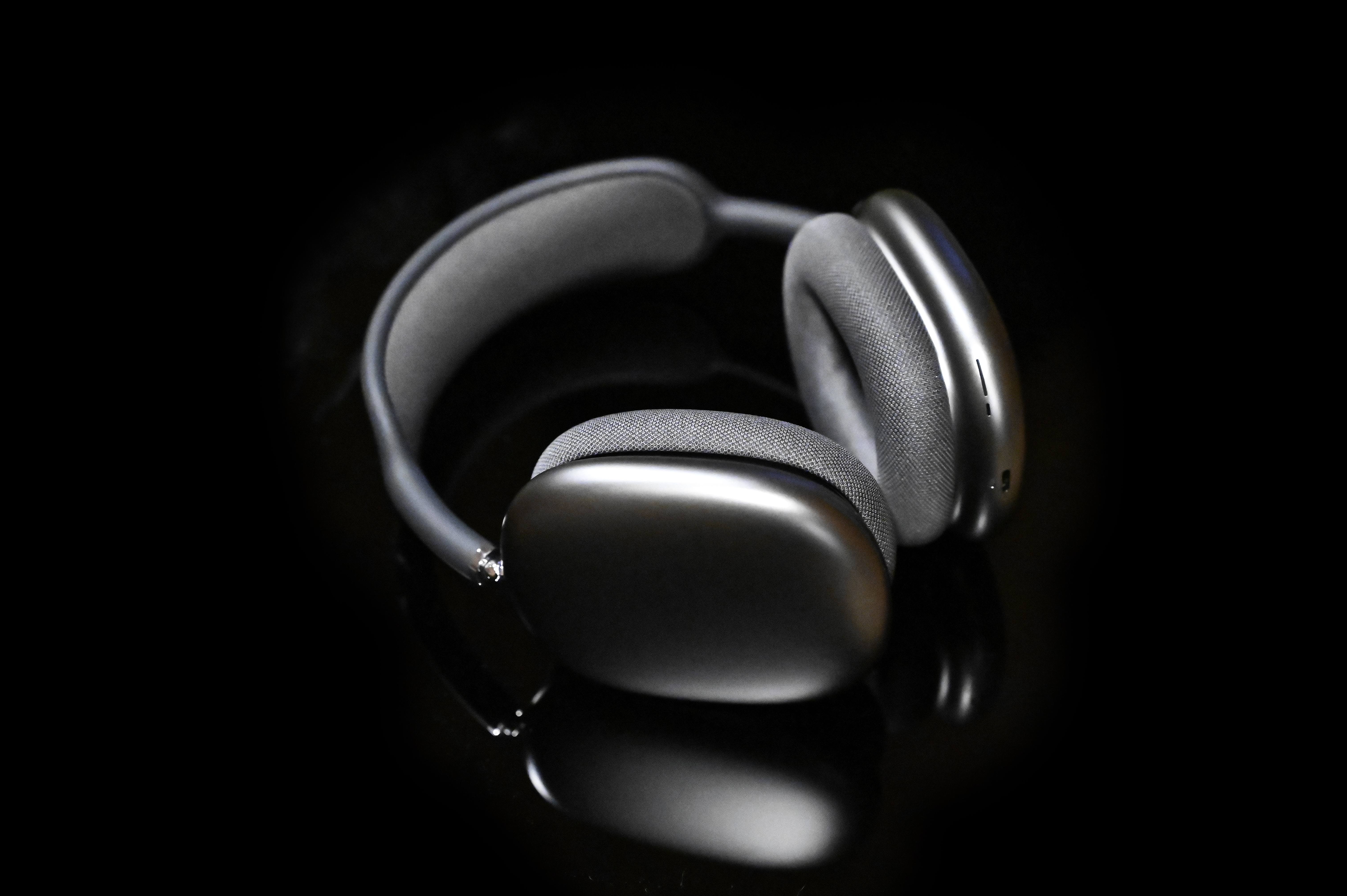
The AirPods Max sound excellent. Apple's custom 40mm dynamic drivers — designed entirely in-house — deliver a balanced, detailed sound signature with a slight warmth in the low-mids and a controlled, extended treble that avoids harshness. The soundstage for a closed-back over-ear is wider than expected, with convincing left-right imaging and enough depth to place instruments accurately in well-recorded material.
SimonWaldherr / Wikimedia Commons (CC BY-SA 4.0)
Bass response is tight and articulate rather than boosted — the sub-bass reaches cleanly without the loose bloom that over-engineered bass boost profiles produce. Vocals sit naturally forward in the mix, which serves the majority of mainstream music and podcast content equally well.
The H1 chip's computational audio processes the signal at 9 billion operations per second, enabling the Transparency mode and Spatial Audio features. Personalized Spatial Audio — calibrated using Face ID — applies a custom head-related transfer function that makes Dolby Atmos content on Apple Music and Apple TV+ remarkably three-dimensional. For movie watching on iPad or iPhone, the AirPods Max deliver an experience that is genuinely theatrical.
The codec limitation is a genuine concession. AAC at 256 kbps is a good codec, and Apple's implementation is among the best optimized available, but the AirPods Max cannot access the hi-res wireless audio streams that Tidal, Amazon Music HD, or Qobuz serve. For a $549 headphone, the absence of LDAC or aptX HD is a notable omission.
Noise Cancellation
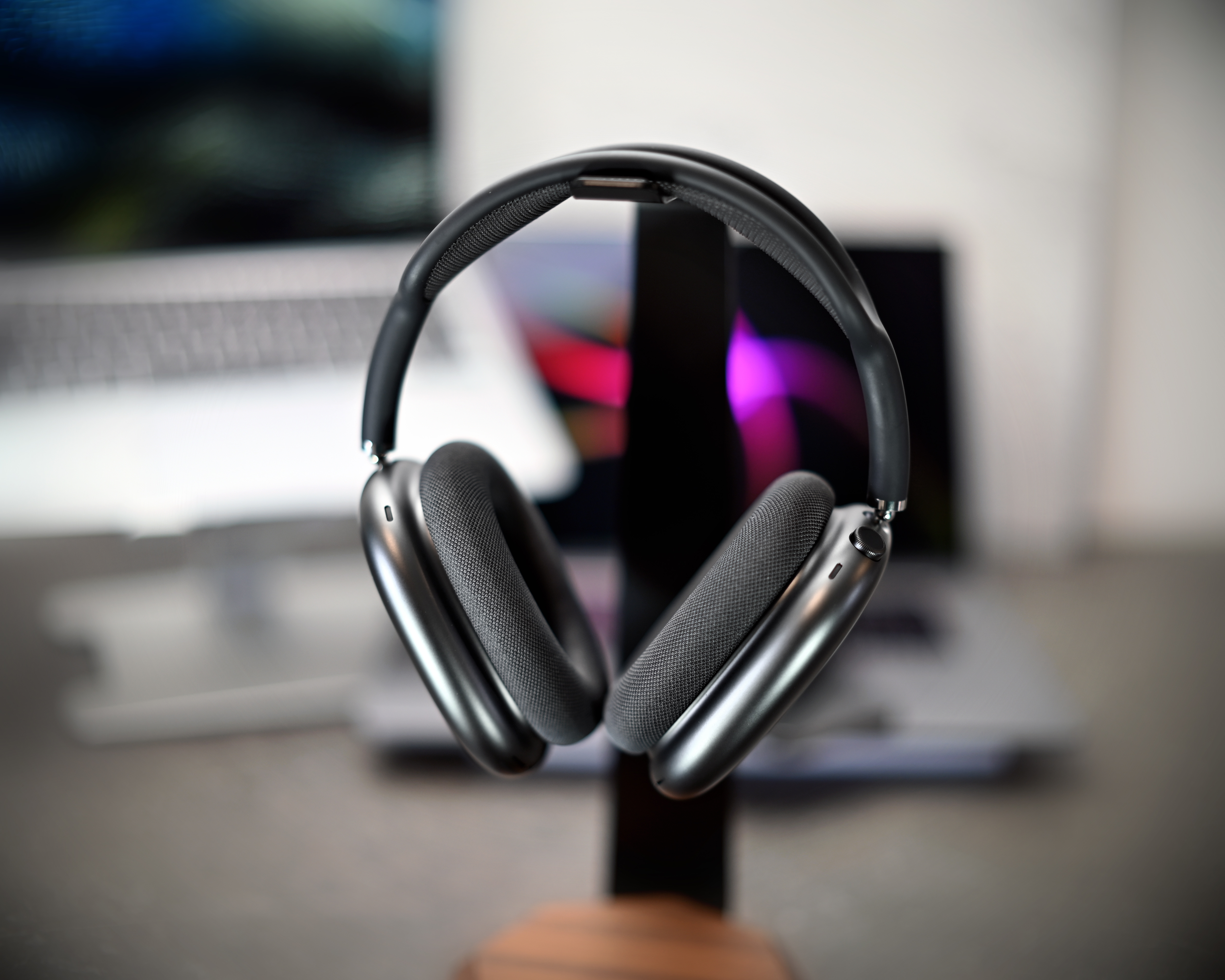
ANC on the AirPods Max is exceptional and among the best in the over-ear category, closely competitive with the Sony WH-1000XM5. Apple's eight-microphone system (three outward-facing and one inward-facing per cup, plus a dedicated microphone under each ear cushion) creates a thorough noise picture. Independent measurements put low-frequency attenuation (50–300 Hz) at approximately 25–28 dB — sufficient to make airplane engine roar a distant irrelevance and commuter train noise fade to background texture.
SimonWaldherr / Wikimedia Commons (CC BY-SA 4.0)
In practical environments:
- On long-haul flights, reviewers generally find the AirPods Max reduce cabin noise more effectively than most rivals, with the XM5 remaining fractionally ahead at low frequencies
- In open offices, HVAC noise, keyboard sounds, and ambient conversation all attenuated effectively
- On subway platforms, train arrival noise was significantly reduced without requiring the headphones to be removed for awareness
Adaptive Transparency (on the 2024 USB-C model) matches the performance of the AirPods Pro 2's Transparency mode — dynamically suppressing sudden loud transients while passing through ambient sound at natural volume levels. In everyday use, Transparency on the AirPods Max sounds closer to not wearing headphones than any competing product.
Comfort & Design
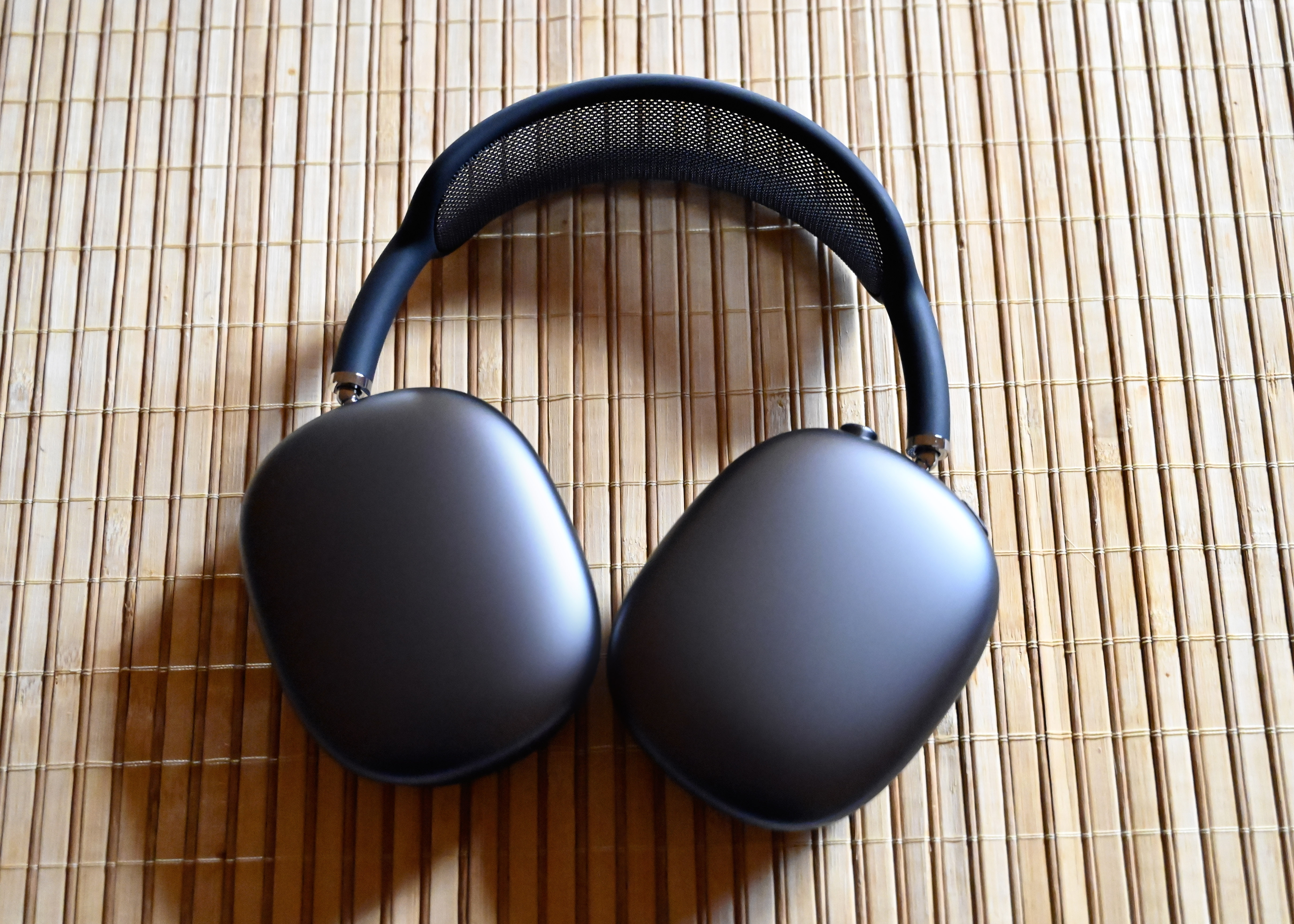
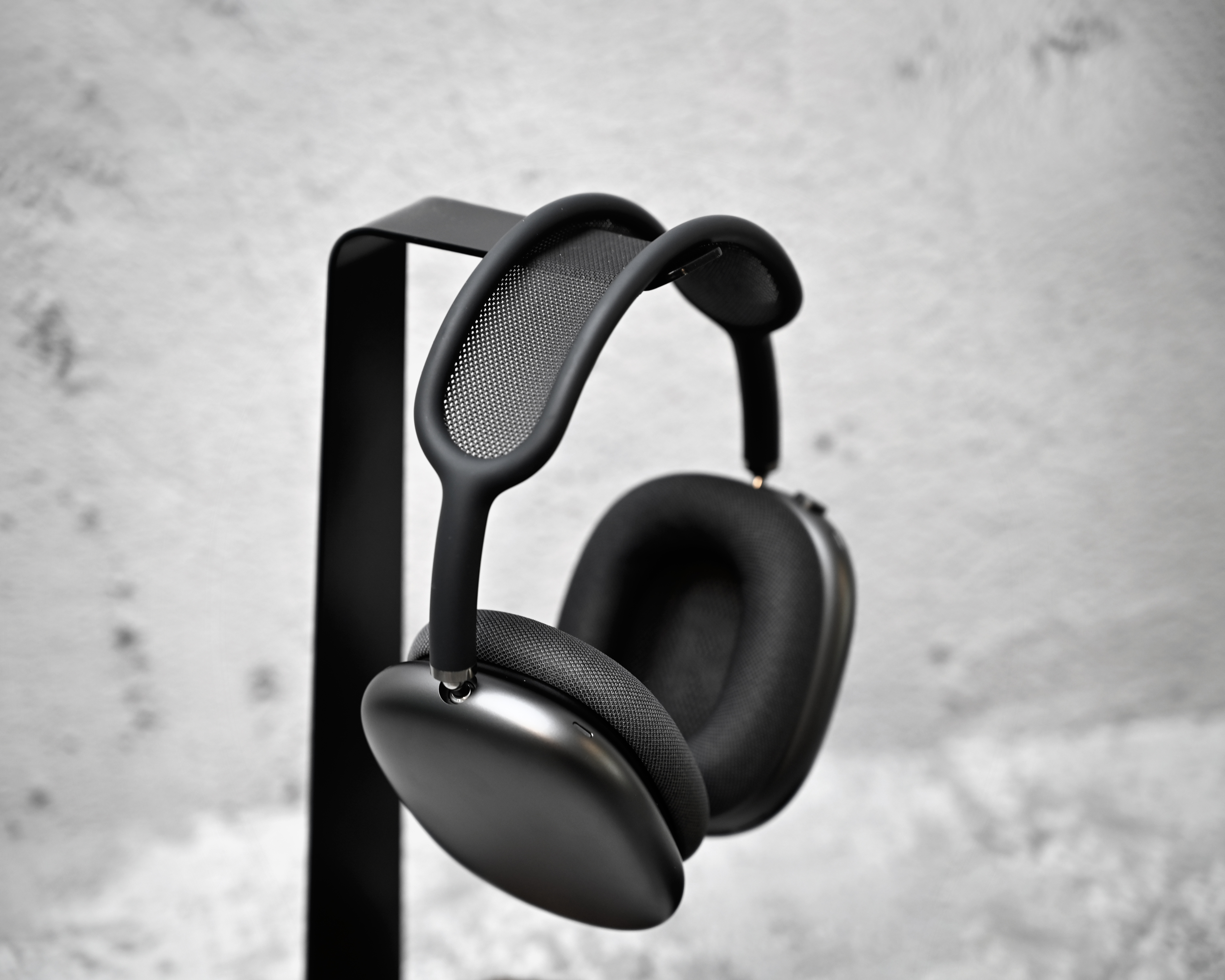
The AirPods Max's design is a polarizing subject. The breathable knit mesh canopy distributes weight across the crown of the head rather than applying pressure points the way a traditional padded headband does. The result, for many users, is better crown comfort on extended sessions. The anodized aluminum ear cups and stainless steel headband arms feel unambiguously premium — there is no flex, no creak, no plastic.
SimonWaldherr / Wikimedia Commons (CC BY-SA 4.0)
The memory foam ear cushions wrapped in breathable mesh fabric are among the most comfortable ear pad materials in the category. They do not create the heat buildup that synthetic leather produces over time, and the passive seal they create is substantial.
The weight is the material trade-off. At 385 grams, the AirPods Max are substantially heavier than the Sony XM5 (250g) and Bose QC45 (238g). The mesh canopy helps distribute this weight, but on sessions beyond two hours, the cumulative pressure on the neck and the weight on the head become noticeable. Frequent travelers who wear headphones for four-plus hours on a single flight may find the XM5's lighter frame preferable.
Features & Connectivity
Like the AirPods Pro 2, the AirPods Max are optimized for Apple device users. One-tap pairing, automatic device switching across iPhone, iPad, and Mac, and Siri voice control with always-on detection are all seamless. The Digital Crown on the right ear cup is a deliberate callback to Apple Watch design, offering precise volume control, playback management, and ANC mode switching in a way that feels intentional rather than functional.
SimonWaldherr / Wikimedia Commons (CC BY-SA 4.0)
Find My integration means the AirPods Max appear on Apple's Find My network — useful for home misplacement but less precise than the Precision Finding available with the AirPods Pro 2's chip revision.
The Smart Case puts the AirPods Max into an ultra-low-power state but does not fully encapsulate the headphones. The ear cups remain exposed. While the case is elegantly designed, it protects less than rigid clamshell cases from competing brands, and its bag-hook shape is arguably less convenient for packing.
Battery Life
Twenty hours with ANC active is adequate but trails direct competitors meaningfully. The Sony WH-1000XM5 delivers 30 hours; the Bose QuietComfort 45 delivers 24 hours. For most use cases — daily commuting, workday listening, a domestic flight — 20 hours is sufficient between charges. For long-haul international travel or multi-day trips without charging opportunity, the AirPods Max require more planning.
Quick charge returns 1.5 hours from 5 minutes on USB-C, which helps bridge short gaps. A full charge takes approximately 2 hours.
Who Should Buy It?
- Heavy Apple ecosystem users who want the best Apple-native audio experience and value seamless integration above all else
- Listeners who prioritize Transparency mode — for environmental awareness at work, reception desks, or any context where ambient sound matters, no competing headphone matches it
- Those who care about industrial design — the AirPods Max are objectively the best-built headphone in the consumer market at any price
- Movie and TV watchers who want the most immersive spatial audio experience on Apple content
Not suitable for Android users, budget-conscious buyers, frequent hi-res streamers, or users who need 25+ hours of continuous battery on long-haul travel.
Verdict
The AirPods Max are the finest-built consumer headphones available, with exceptional ANC and the best Transparency mode in the industry. But at $549, they cost $200 more than the Sony WH-1000XM5 while delivering shorter battery life and no hi-res codec support. For iPhone-centric users who value build quality, comfort, and spatial audio above all else, they are justifiable. For everyone else, the Sony XM5 or Bose QC45 deliver comparable or better performance at significantly lower prices.