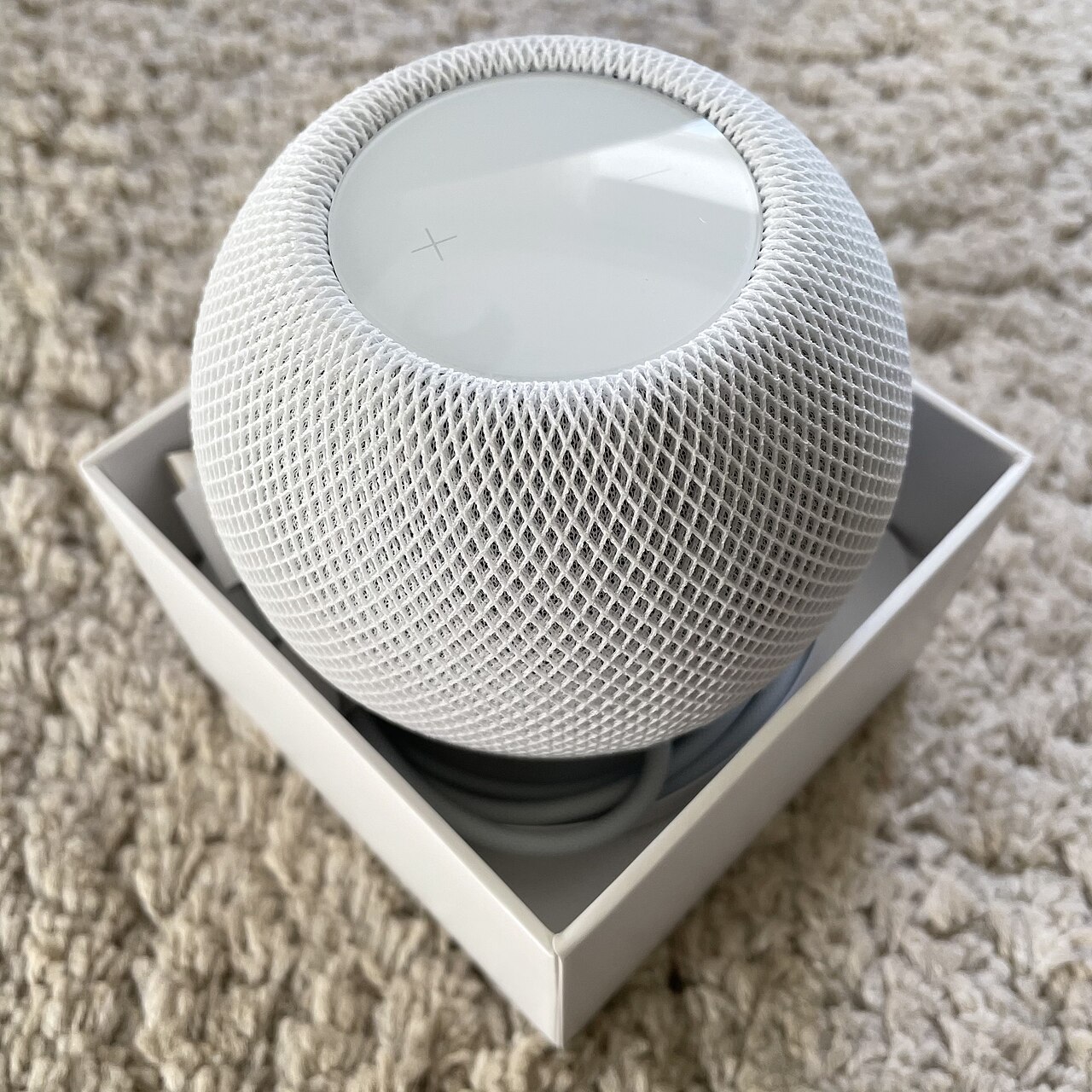
Overview: the tiny Apple speaker that matters most as a home hub
The Apple HomePod mini is a better smart-home product than its size suggests, and a more limited smart speaker than Apple fans sometimes admit. At 99 USD, it is easy to describe as a small music speaker, but the stronger reason to buy it is that it quietly anchors an Apple household with Siri, Intercom, Handoff, Thread, and HomeKit hub behavior in a 3.3 inches body.
That distinction is important. If you use an iPhone, Apple Music, HomeKit accessories, and other Apple devices, the HomePod mini feels like infrastructure: a speaker, voice point, automation bridge, and family intercom in one object that weighs 0.76 lbs. If you use Android, prefer Alexa skills, rely on Google Assistant, or want a speaker with a 3.5mm input, it is the wrong product no matter how charming the hardware is.
The HomePod mini is built around Apple’s S5 chip, a full-range driver, dual passive radiators, 360-degree audio with computational processing, Wi-Fi 802.11n on 2.4GHz and 5GHz bands, Bluetooth 5.0, a U1 Ultra Wideband chip, and Thread border-router support. That is a dense feature list for a device this small. The catch is that Apple’s strengths and restrictions arrive together: the setup is wonderfully easy with an iPhone, and essentially unavailable to Android users.
Design, build, and setup: small, friendly, and Apple-only
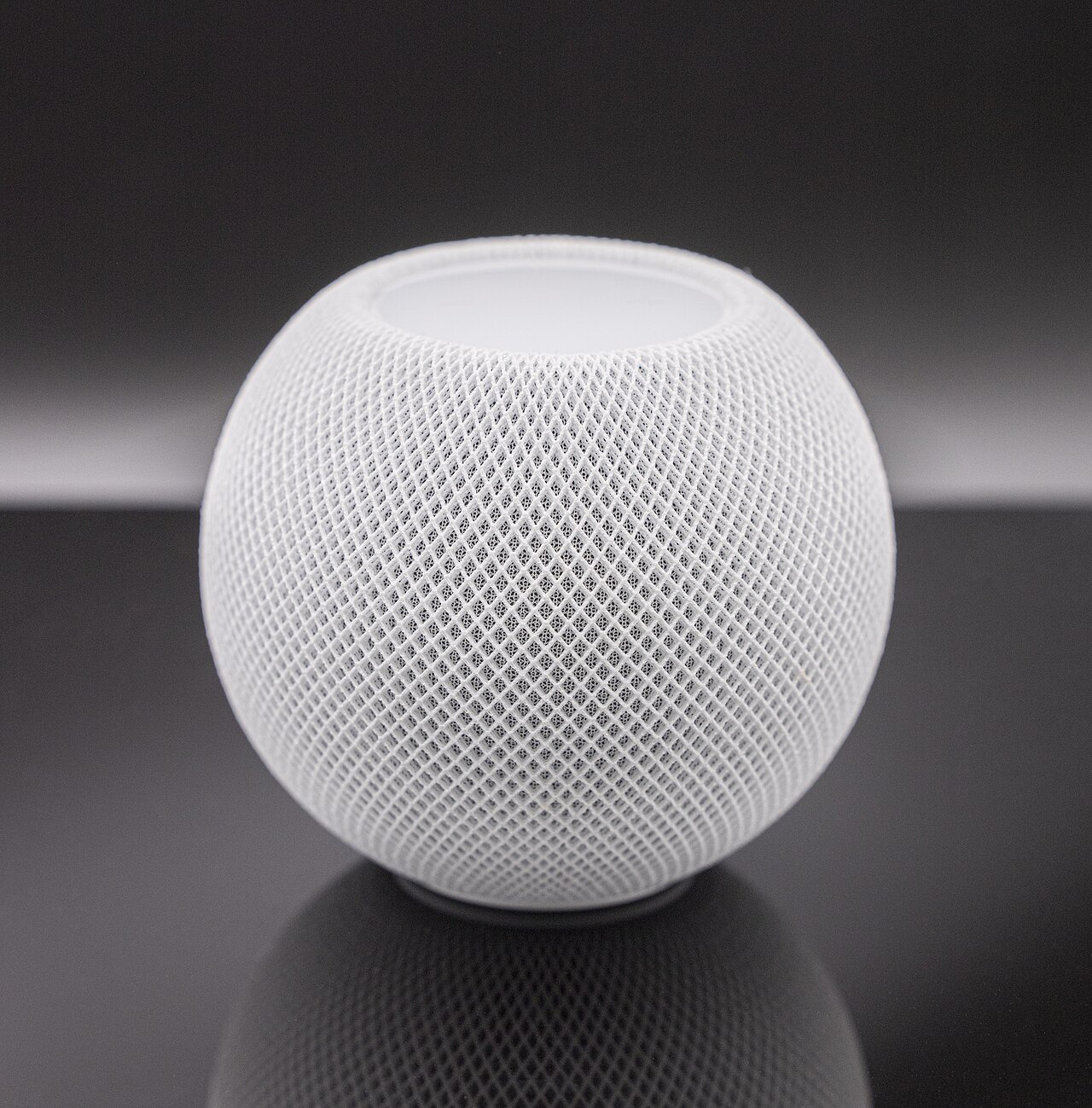
The HomePod mini looks like a fabric-covered ball rather than a piece of stereo equipment. At 3.3 inches tall and 0.76 lbs, it can sit on a kitchen counter, nightstand, bookshelf, or desk without visually taking over the room. That matters because smart speakers often fail not because they sound bad, but because nobody wants one more gadget dominating a shared space.
Arne Müseler / Wikimedia Commons (CC BY-SA 3.0 de)
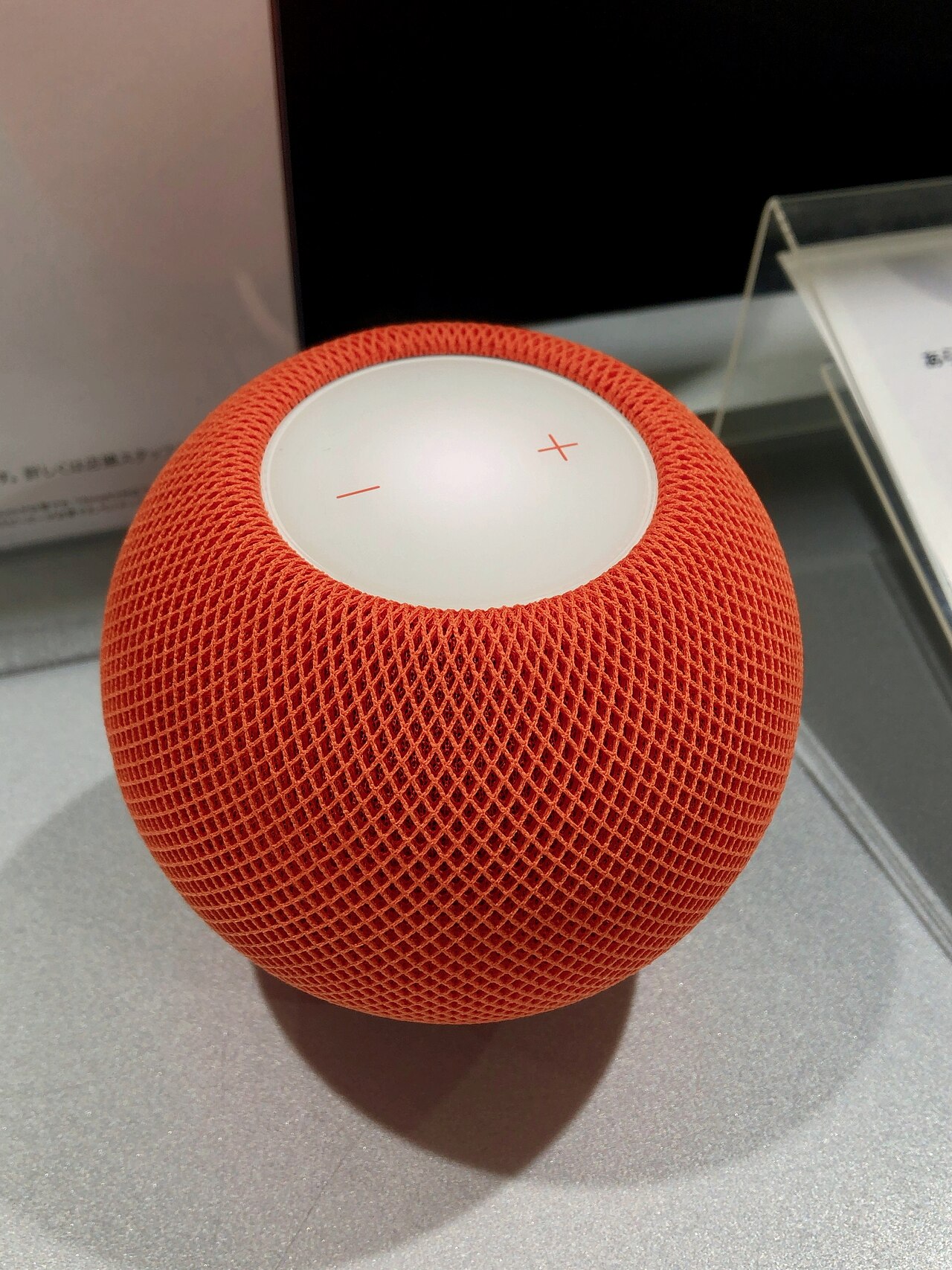
The mesh exterior and glowing top surface are doing two jobs. They make the speaker softer and less appliance-like, and they reduce the number of visible controls to the essentials. Volume is handled on the top surface, while Siri feedback appears as an animated light. There is no display, no clock face, no exposed aux port, and no battery. This is a stationary home device, not a portable Bluetooth speaker.
Setup is excellent if you have the required Apple hardware. Bring an iPhone close, follow the pairing card, and the speaker can receive your Apple ID, Wi-Fi, and Home settings quickly. The process can be under 3 minutes when your account and Home app are already in order. That is the kind of setup experience that makes ordinary Bluetooth pairing feel old.
The same simplicity becomes a hard wall for everyone else. The HomePod mini requires an Apple ID and iPhone for initial setup. Android users cannot treat it like an Echo Dot or Google Nest speaker. Bluetooth 5.0 is present, but the product is not designed as an open Bluetooth speaker you hand to any guest. Audio flows best through Apple services and AirPlay, which is convenient inside Apple’s world and frustrating outside it.
The power arrangement also deserves attention before purchase. The HomePod mini uses USB-C power, and the cable is included, but the power adapter is sold separately. If you already have a suitable adapter, that is harmless. If you are outfitting several rooms, the missing adapter is a real hidden cost. A 99 USD speaker can become more expensive in practice when you need to buy power bricks for every location.
Performance and real-world testing: better room sound than the size promises
The HomePod mini sounds larger than a 3.3 inches speaker should, but it does not break physics. The full-range driver and dual passive radiators give it a warm, rounded presentation that works well for casual listening, podcasts, kitchen music, and bedroom use. The 360-degree audio pattern is the most important acoustic trait because placement is forgiving. Put it on a counter or shelf and the sound spreads around the room instead of forming a narrow sweet spot.
KKPCW / Wikimedia Commons (CC BY-SA 4.0)
Apple’s computational audio, driven by the S5 chip, keeps the small driver from sounding thin at normal volumes. Vocals are clear, bass has more presence than the cabinet size implies, and the speaker remains composed for background listening. Push it hard and you will hear the limits: deep bass compresses, large rooms swallow the scale, and dense music does not have the separation of a larger speaker.
A stereo pair changes the value calculation. Two HomePod minis cost 198 USD before any extra adapters, and they produce a wider, more convincing stage than one unit can manage. A pair makes sense on a desk, in a bedroom, or near an Apple TV setup where the goal is compact stereo rather than home-theater impact. A single unit is better thought of as a smart speaker with surprisingly pleasant audio. A pair becomes a legitimate small-room music system.
Siri performance is the main reason to hesitate. For Apple tasks, it works well: play music, set timers, control HomeKit devices, send an Intercom message, make simple calls, trigger scenes, or hand off audio from an iPhone. The U1 chip makes Handoff feel precise because the phone and speaker understand proximity better than ordinary Bluetooth behavior would allow.
For broad knowledge, third-party integrations, shopping-style tasks, and complex routines outside Apple’s ecosystem, Siri trails Alexa and Google Assistant. The gap is not subtle if you already use Alexa skills or Google services every day. The HomePod mini is at its best when the command concerns your Apple home. It is less impressive when the command asks the wider internet to be useful.
As a smart-home hub, the story is much stronger. Thread border-router support helps compatible devices form a low-power mesh network, and that matters as Matter and Thread accessories become more common. The HomePod mini can serve as a HomeKit hub for automations and remote access, so it is not just waiting to play songs. For a 99 USD device, that hub role may be more valuable over time than the speaker driver.
Privacy is another Apple advantage. Siri requests are processed on-device where possible, and Apple’s posture is more privacy-focused than the ad-driven ecosystems around some rivals. That does not mean every request stays local or that microphones stop being a personal comfort decision. It does mean the HomePod mini is the easier recommendation for households that want a voice speaker but dislike the business model behind some competing assistants.
HomePod mini vs Amazon Echo, Google Nest, and Sonos alternatives
The Amazon Echo Dot 5th Gen is the obvious cheaper alternative. It is better for Alexa users, broader third-party skills, and households that already have Echo devices in several rooms. It is also easier to recommend to Android users because setup and control do not assume an iPhone. The HomePod mini counters with better Apple integration, Thread support for HomeKit homes, stronger privacy positioning, and fuller sound than its size suggests.
The Amazon Echo 4th Gen is a stronger all-purpose Alexa speaker than the Dot, and it makes sense if voice-assistant breadth matters more than Apple polish. Alexa still wins for many smart-home odds and ends, especially when a household has accumulated devices that do not live neatly inside HomeKit. If your home is already organized around Alexa, a HomePod mini will feel isolated.
Google Nest Audio is the better fit for people who live in Google services. It handles Google Assistant queries more naturally, works well for Android households, and fits homes built around Chromecast or Google routines. The HomePod mini is not trying to win that buyer. It is trying to be the small speaker that makes an iPhone-centered home feel more connected.
Sonos Era 100 belongs in the conversation for buyers who care more about music quality than voice control or HomeKit hub duties. Sonos is the richer speaker path; Apple is the tighter smart-home path. If you want a room-filling music-first speaker, look at Sonos. If you want a small Apple hub with good casual sound, the HomePod mini is the cleaner choice.
Who should buy the HomePod mini — and who should not
Buy the HomePod mini if your household already runs on Apple devices. It is best for iPhone owners who use Apple Music, HomeKit accessories, Intercom, Handoff, and Siri for simple home tasks. It is also a good way to add Thread border-router coverage without buying a separate hub, especially if you plan to add more Matter-compatible accessories over time.
It is ideal for kitchens, bedrooms, home offices, and children’s rooms where a 3.3 inches speaker with 360-degree audio is more practical than a larger sound system. It is also easy to justify as a first smart-home hub because 99 USD buys more than a speaker: it buys a voice point, automation anchor, and Apple household utility.
Do not buy it if you use Android, if Spotify Connect-style openness is your top concern, if you need a 3.5mm line-in, or if Alexa and Google Assistant already run your home. Do not buy one expecting big-room stereo authority. And do not forget the power adapter situation; the included USB-C cable is not the same as a complete wall-power setup.
Verdict: excellent for Apple homes, easy to skip elsewhere
The Apple HomePod mini is a focused product with an honest limitation. It is excellent inside an Apple home because the S5 chip, U1 Handoff, Thread border-router support, Intercom, HomeKit hub features, and 360-degree audio all reinforce one another. It is much less compelling for anyone outside that ecosystem.
At 99 USD, the value is strong if you count smart-home infrastructure as part of the purchase. At 198 USD for a stereo pair, it becomes a tidy small-room audio setup with real Apple convenience. The sound is impressive for the size, Siri is useful but not class-leading, and the missing power adapter is annoying. For iPhone households building a smarter home, the HomePod mini remains one of Apple’s most practical devices.