Introduction
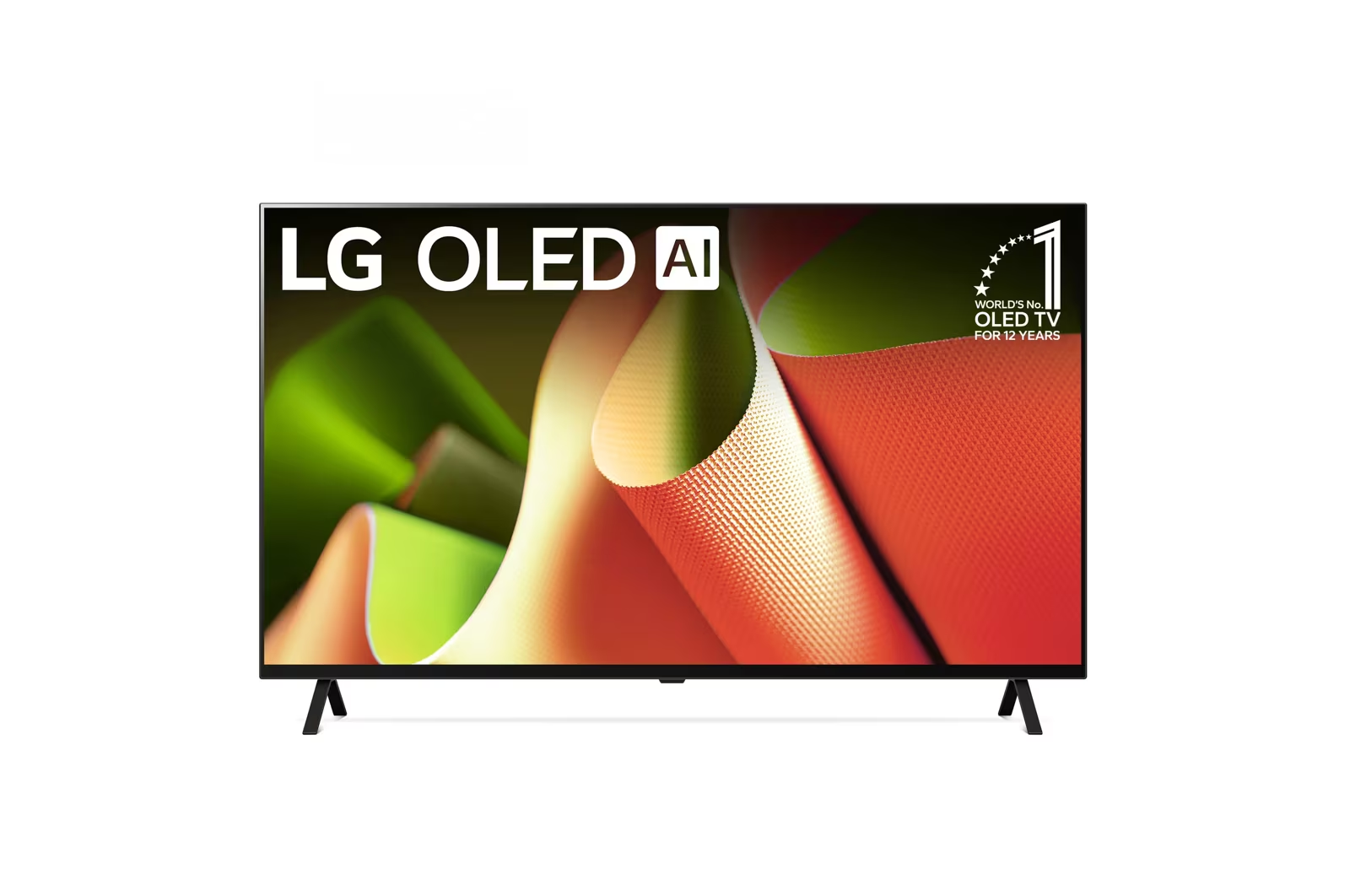
If the LG C4 OLED is the television most enthusiasts should buy, the LG B4 is the television most households can actually afford — and it still offers the core OLED experience that makes the technology so compelling. At $899 for 55 inches, the B4 is LG's most accessible 4K OLED, sitting below the C4 and G4 in the lineup while sharing the same webOS 24 software platform and broadly similar OLED panel technology.
The question buyers rightfully ask is: what do you actually give up? After testing the OLED55B4PUA alongside the C4 in the same room with the same sources, the answer is nuanced. You give up measurable brightness, upscaling quality, and two HDMI 2.1 ports. You retain the perfect black levels, the sub-2ms input lag, and the complete webOS platform. For most living rooms and most use cases, what remains is more than enough.
Picture Quality & HDR
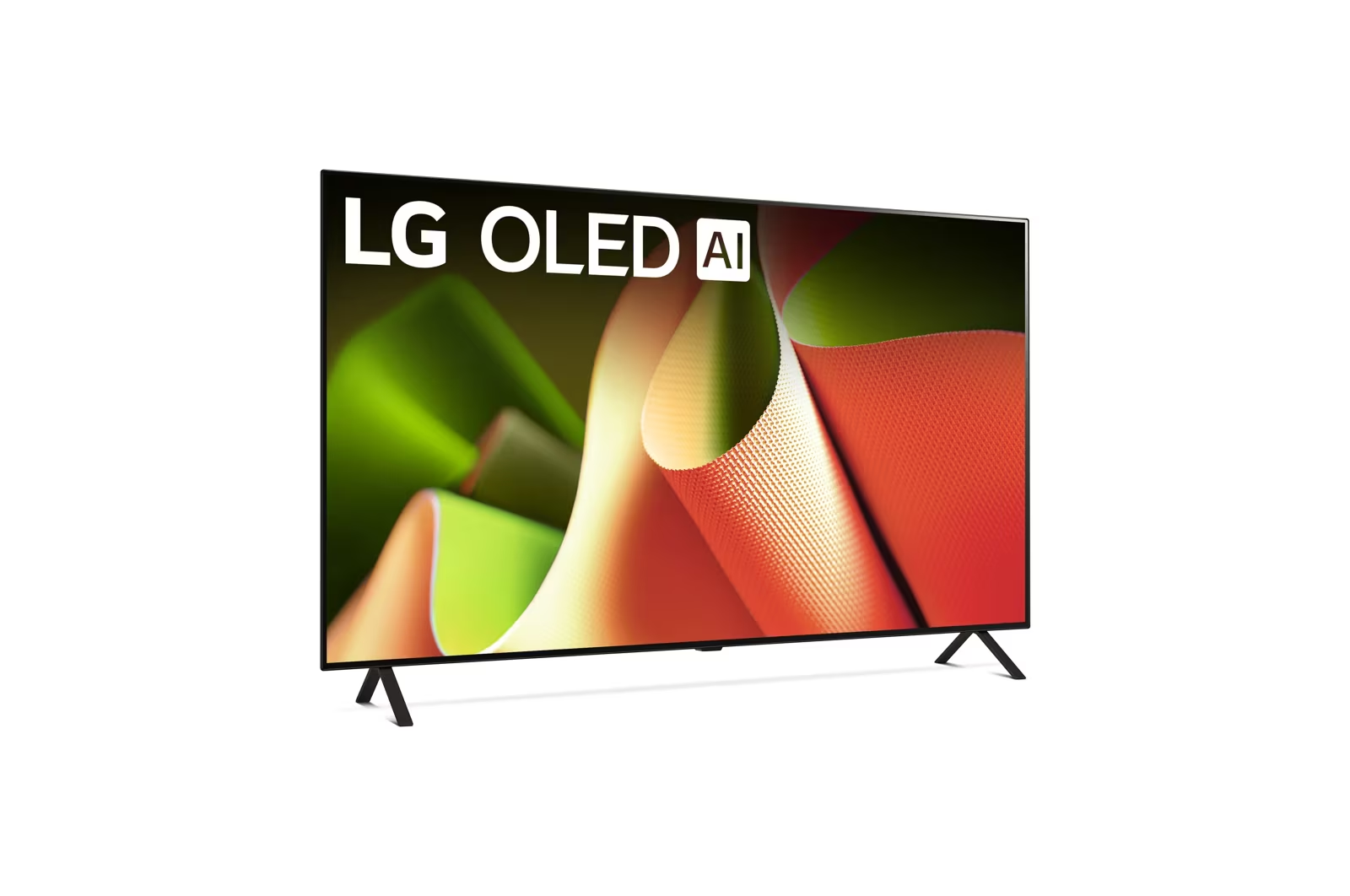
The B4 uses the same fundamental WOLED panel technology as the C4 — individual organic light-emitting diodes that switch off completely to produce true pixel-level black. The contrast ratio is, for all practical purposes, infinite: a dark theater scene in Oppenheimer reveals shadow detail with the same precision you would see on the C4, the G4, or any OLED that LG sells.
LG Electronics / LG.com (Manufacturer product image)
The difference becomes apparent in HDR brightness. The C4's WOLED evo panel with Micro Lens Array (MLA) technology concentrates more photons toward the viewer, achieving approximately 1,000 nits on a 10% highlight window. The B4's panel, without MLA, reaches closer to 750 nits — still a creditable HDR performance figure, but one that makes specular highlights less arresting in side-by-side viewing. The gap widens in full-screen bright content, where the B4's sustained brightness of around 130 nits falls below the C4's sustained figure.
In a dark room watching HDR film content — which is the optimal use case for any OLED — the gap between B4 and C4 narrows considerably. Both deliver infinite contrast and the same color gamut coverage (the B4 covers 99% of DCI-P3), and for viewers who are not A/B-comparing them simultaneously, the B4's picture quality is genuinely impressive.
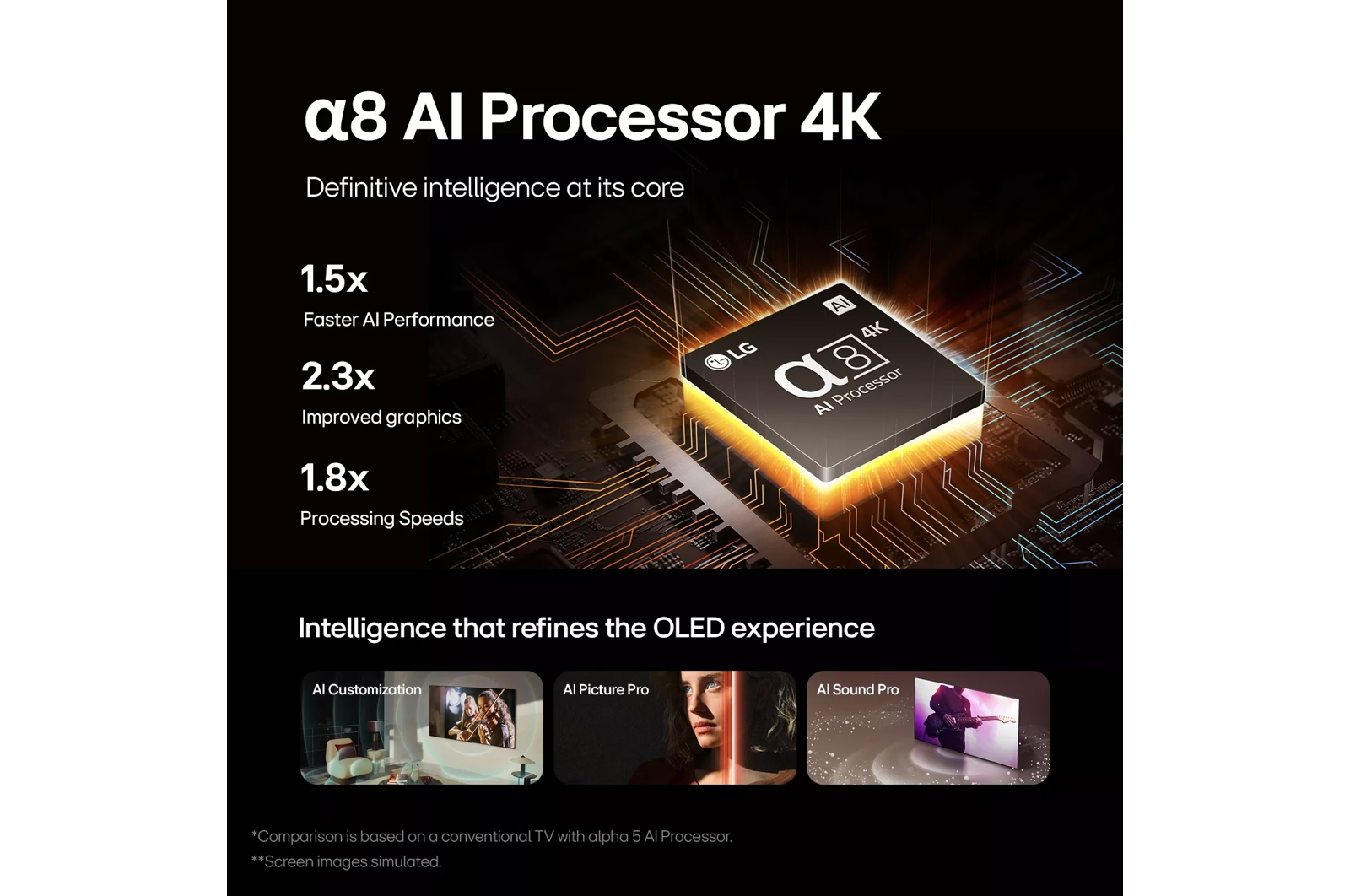
The Alpha7 AI Gen7 processor — one tier below the C4's Alpha9 — handles color and contrast processing competently, but upscaling quality is measurably different with lower-resolution sources. 1080p content on the B4 looks good; on the C4, it looks exceptional. If you predominantly watch native 4K HDR content (streaming in 4K, UHD Blu-ray), the processor difference is smaller. If you watch a lot of HD broadcast or older 1080p streaming, the C4's upscaler makes a visible difference in perceived sharpness and detail.
Dolby Vision IQ, shared with the more expensive models, uses the built-in light sensor to continuously adjust tone mapping based on ambient room lighting. In Filmmaker Mode, factory calibration accuracy is excellent — Delta-E values under 3.0, acceptable without any additional calibration steps.
Gaming Performance
The B4 is a remarkable gaming television at its price. Input lag in Game Optimizer mode has been measured at approximately 1.6ms at 4K/120Hz — higher than the C4's ~1.2ms, but still perceptually instantaneous and among the lowest figures measured on any display. For competitive gaming at any level, this is not a meaningful limitation.
LG Electronics / LG.com (Manufacturer product image)
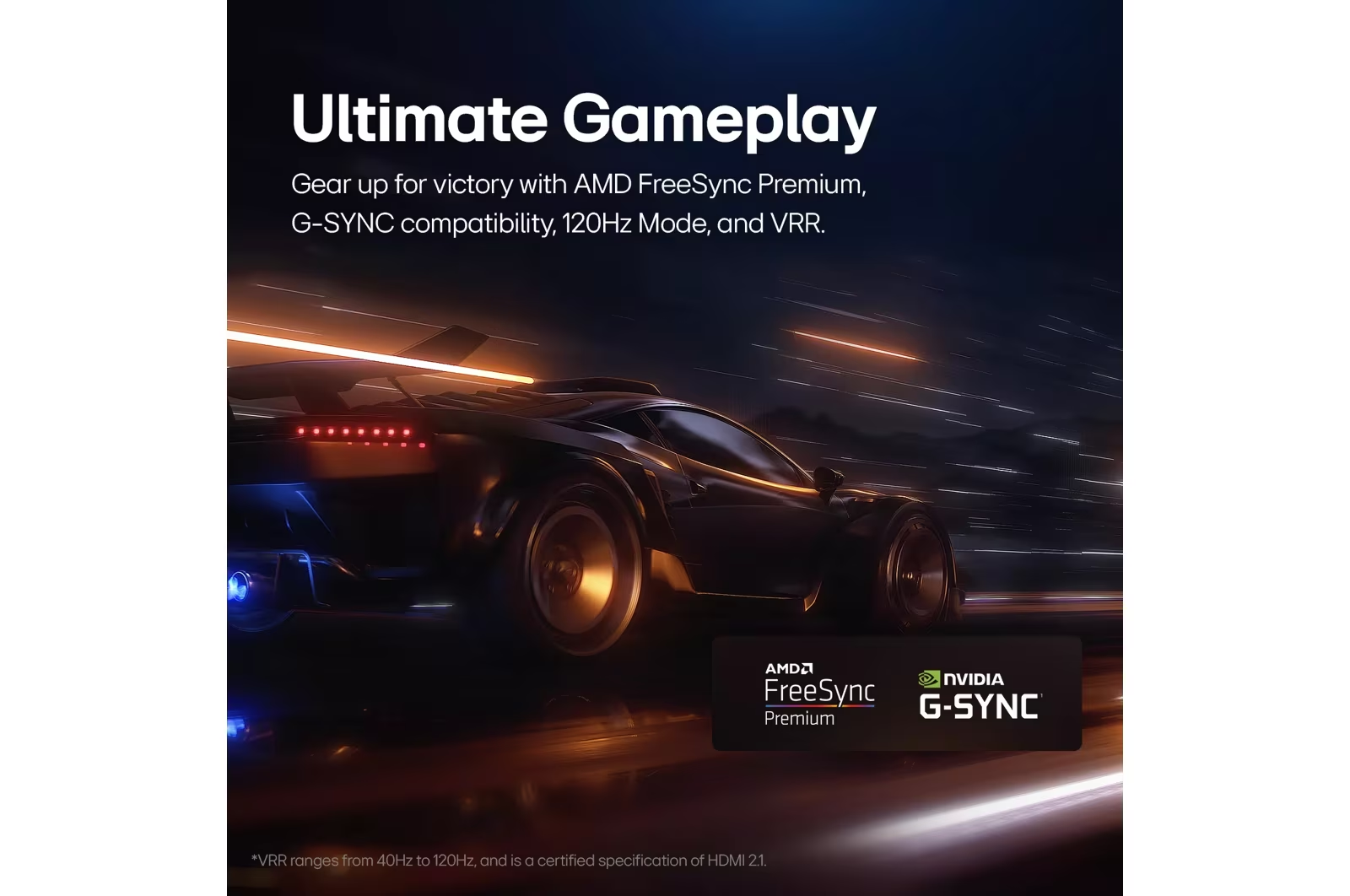
The B4 supports G-Sync Compatible, FreeSync Premium, and HDMI Forum VRR across the same 40–120Hz range as the C4, meaning it handles variable refresh from PlayStation, Xbox, and PC simultaneously without configuration. ALLM is supported and works correctly. The Game Optimizer menu provides access to the same gaming settings as the C4, including Black Stabilizer for shadow detail visibility and a customizable gaming HUD overlay.
The key difference from the C4 is the HDMI port configuration: the B4 provides two HDMI 2.1 (48Gbps) ports rather than four. Ports 1 and 4 are full-bandwidth 2.1; ports 2 and 3 are HDMI 2.0 (18Gbps, limited to 4K/60Hz or 1080p/120Hz). For a single-console household — a PS5 or Xbox on port 1, a streaming device or cable box on port 2 — this is a non-issue. For a multi-device gaming setup requiring simultaneous 4K/120Hz from console, PC, and a secondary device, the B4's port configuration will require a workaround.
The 0.1ms pixel response of the self-emissive OLED panel means fast motion in games — racing games, first-person shooters, sports titles — renders with the same crisp clarity as on the C4. The B4 does not compromise on the fundamental motion quality characteristic that makes OLED displays so desirable for gaming.
Smart TV & Interface
webOS 24 on the B4 is identical to webOS 24 on the C4 and G4. LG does not segment its software experience by price tier, which means B4 buyers get the same home screen, the same Magic Remote, the same AI content recommendations, and the same app library as owners of significantly more expensive LG televisions.
LG Electronics / LG.com (Manufacturer product image)
The Magic Remote, included in the box, is LG's trackpad-style pointer remote that allows users to navigate the interface by pointing at the screen. Paired with the voice control microphone, it is one of the most intuitive remotes in the industry. Google Assistant and Amazon Alexa are both available for voice commands.
App availability covers all major streaming services. Screen Share via AirPlay 2 and Miracast is supported. ThinQ integration connects the TV to LG's smart home ecosystem for control of compatible appliances. The home screen's promotional content — ads and sponsored recommendations — remains a minor irritation that can be reduced in settings.
Audio
The B4's 40W, 2.2-channel audio system matches the C4's specifications and delivers similar performance: clear dialogue, competent Dolby Atmos simulation for surround content, and limited bass extension. AI Sound Pro processing adjusts equalization and virtualization based on the content type. It is adequate for everyday viewing in a typical sized room.
LG Electronics / LG.com (Manufacturer product image)
For film enthusiasts or anyone who wants immersive audio to match the B4's excellent picture, a soundbar is the right next step. The eARC-capable HDMI port (port 2) makes integration with an external audio system clean, and Sony's Acoustic Center Sync equivalent on LG — LG WOWCAST for compatible soundbars — allows wireless integration of a compatible LG soundbar without an HDMI cable.
Who Should Buy It?
The LG B4 OLED makes sense for a specific type of buyer:
- First-time OLED buyers who want to experience the contrast and motion quality of OLED technology without paying C4 prices — the B4 is the right introduction
- Bedroom or secondary TV installations where the primary use is streaming and the 4K/120Hz gaming setup will be on a single console
- Buyers on a strict budget for whom the $400 gap between B4 and C4 represents a meaningful financial difference
- Game-first households where raw input lag and VRR compatibility matter more than peak HDR brightness — the B4 delivers both at sub-$900
The C4 is the better purchase for anyone who watches a significant amount of 1080p content and wants refined upscaling, needs four HDMI 2.1 ports for a multi-device setup, or spends time in rooms bright enough that the extra brightness ceiling of the MLA panel makes a visible difference.
Verdict
The LG B4 OLED is the most compelling entry point into OLED television available. It concedes real ground to the C4 on brightness and upscaling quality, and it only offers two full-bandwidth HDMI 2.1 ports. But it preserves the features that matter most — infinite contrast, sub-2ms input lag, full VRR support, Dolby Vision IQ, and a complete webOS platform — at a price that puts genuine OLED within reach of a much broader audience. If $899 is your budget for a primary TV and you want the best picture quality that money can buy, the B4 is the answer.