Introduction
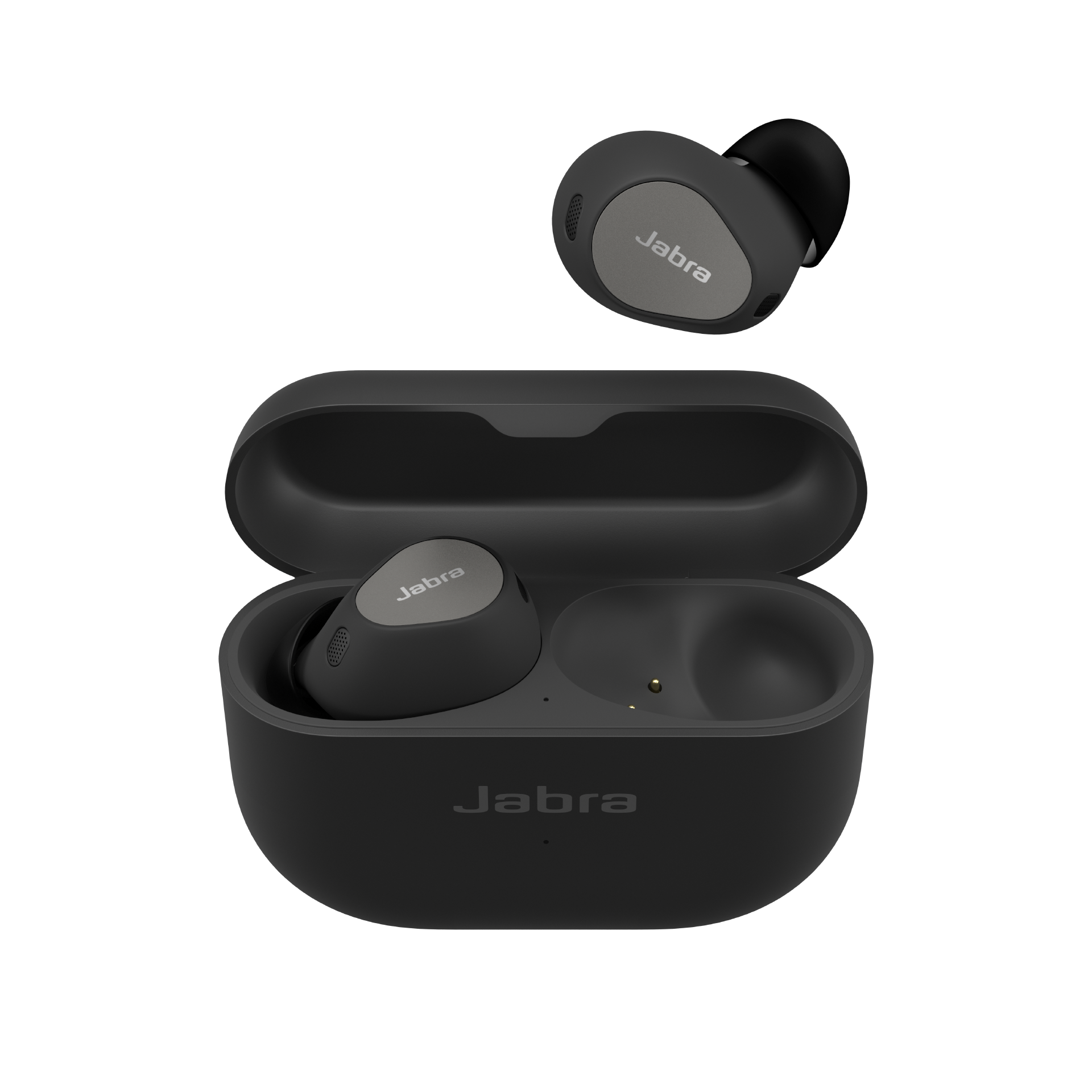
Jabra has been making professional communication headsets for decades before the consumer earbud market existed, and that DNA is deeply embedded in the Elite 10. These are earbuds engineered from the ground up with call quality as a primary design objective — not an afterthought. The result is a flagship true wireless earbud that is objectively the best-performing product in its class for voice communication, while also delivering a compelling listening experience and an unusually comfortable open-canal fit.
At $249, the Elite 10 competes directly with the Sony WF-1000XM5 and Apple AirPods Pro 2 at the top of the true wireless earbud market. Unlike those competitors, the Elite 10 does not try to win on ANC performance alone. Instead, Jabra differentiates on three axes: call clarity via MultiSensor Voice technology, Dolby Atmos spatial audio via real-time head tracking, and all-day comfort via the ComfortFit open-canal design that eliminates the irritation of deep in-ear insertion.
Across daily commuting, extended work-from-home conference calls, gym sessions, and travel, the Elite 10's appeal rests on comfort, call quality, and balanced performance across the scenarios these earbuds target.
The Elite 10 is not the right choice if class-leading ANC is your singular priority. If you spend significant time on calls, care about comfort over marathon sessions, and want a spatially aware listening experience, these are among the best earbuds available at any price.
Design & Comfort
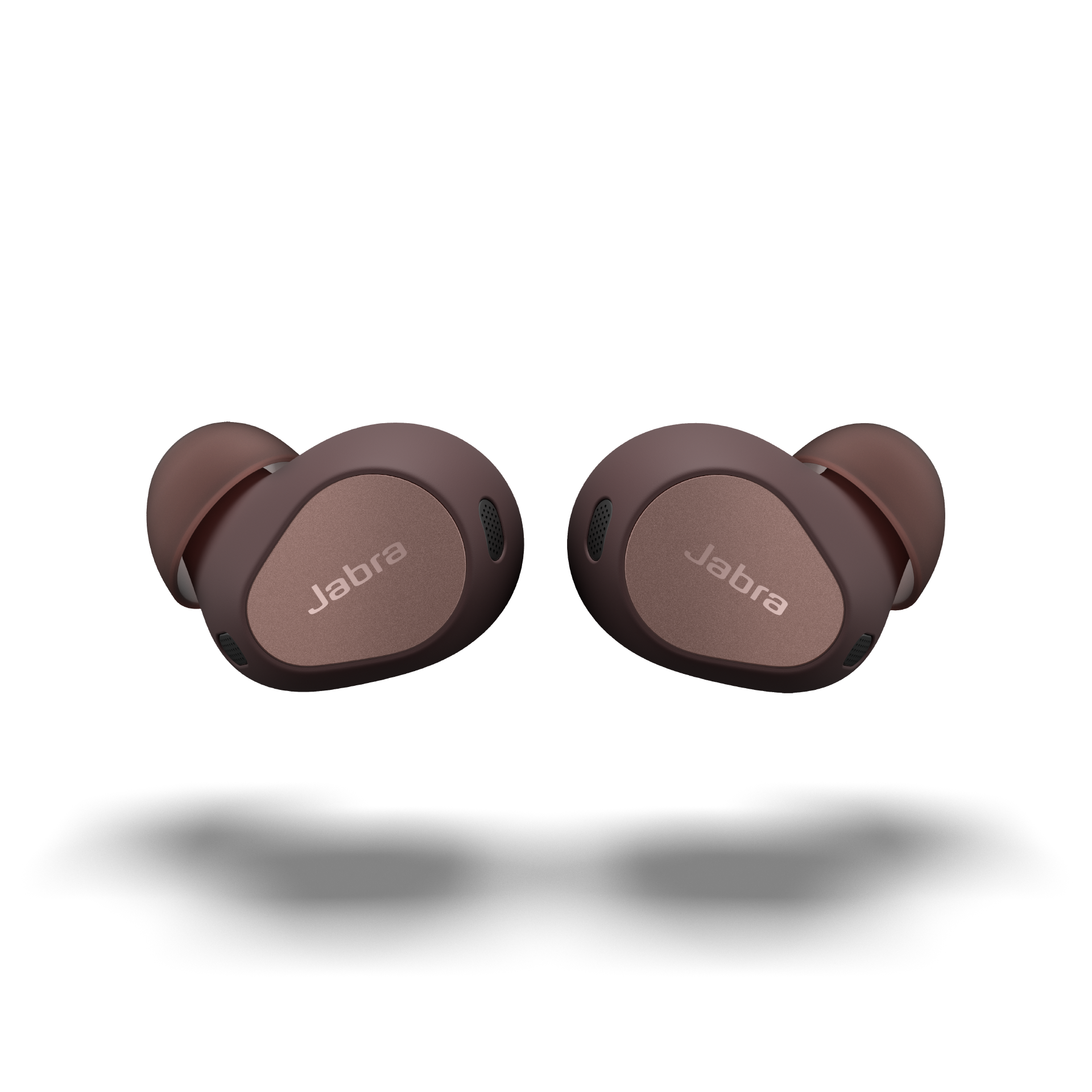
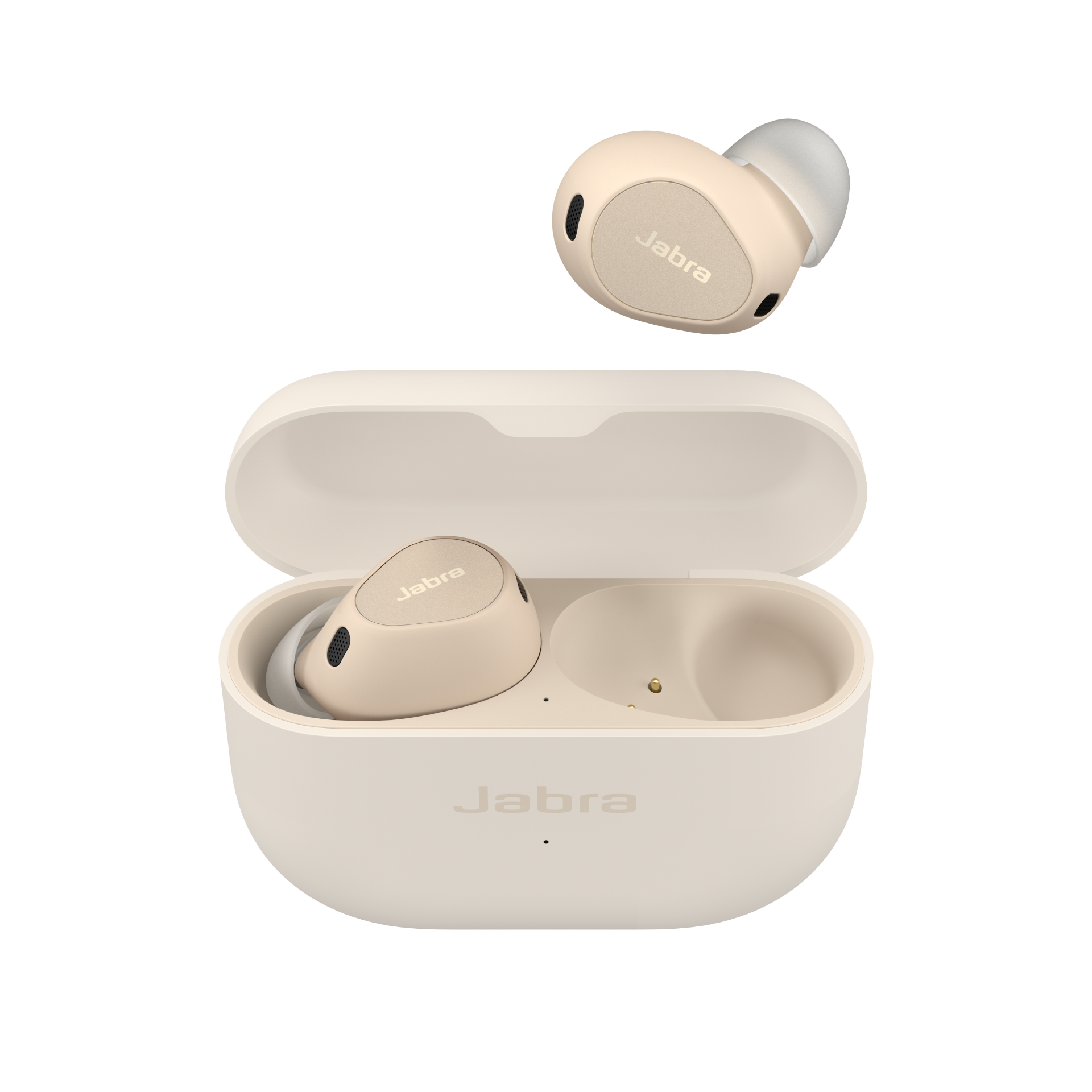
The Elite 10's ComfortFit design represents a genuinely different approach to earbud ergonomics. Rather than inserting a silicone tip deep into the ear canal, the Elite 10 rests in the concha — the curved bowl of the outer ear — with the driver housing sitting at the canal entrance without penetrating it. This design has several meaningful consequences.
GN Audio / Jabra (Manufacturer product image)
First, ear fatigue is dramatically reduced. Traditional in-ear earbuds create a pressure seal inside the ear canal; over time, especially during long conference calls or multi-hour listening sessions, this pressure becomes uncomfortable. The Elite 10's open-canal geometry eliminates that pressure entirely. Reviewers commonly report comfortable wear across 4 to 6-hour continuous sessions that would have caused discomfort with conventional tip-based earbuds.
Second, situational awareness is naturally enhanced. The open-canal design allows ambient sound to reach the ear even without transparency mode, which makes walking, cycling, and commuting feel safer and less isolating. For users who find fully occluded earbuds claustrophobic or socially awkward, this is a genuine differentiator.
Third, passive isolation is reduced. Without an acoustic seal, bass frequencies bleed outward and ambient mid-frequencies enter more freely. ANC compensates for much of this, but the Elite 10 will never match the raw isolation of a deeply sealing Sony WF-1000XM5 or Bose QC Earbuds II. This is a design trade-off, not a deficiency.
The buds weigh 6.4 grams each — light enough to feel absent during extended sessions. The IP57 rating is the best in the premium earbud segment, meaning the buds can survive submersion to one meter for 30 minutes, making them genuinely pool-proof and suitable for heavy rain.
Sound Quality
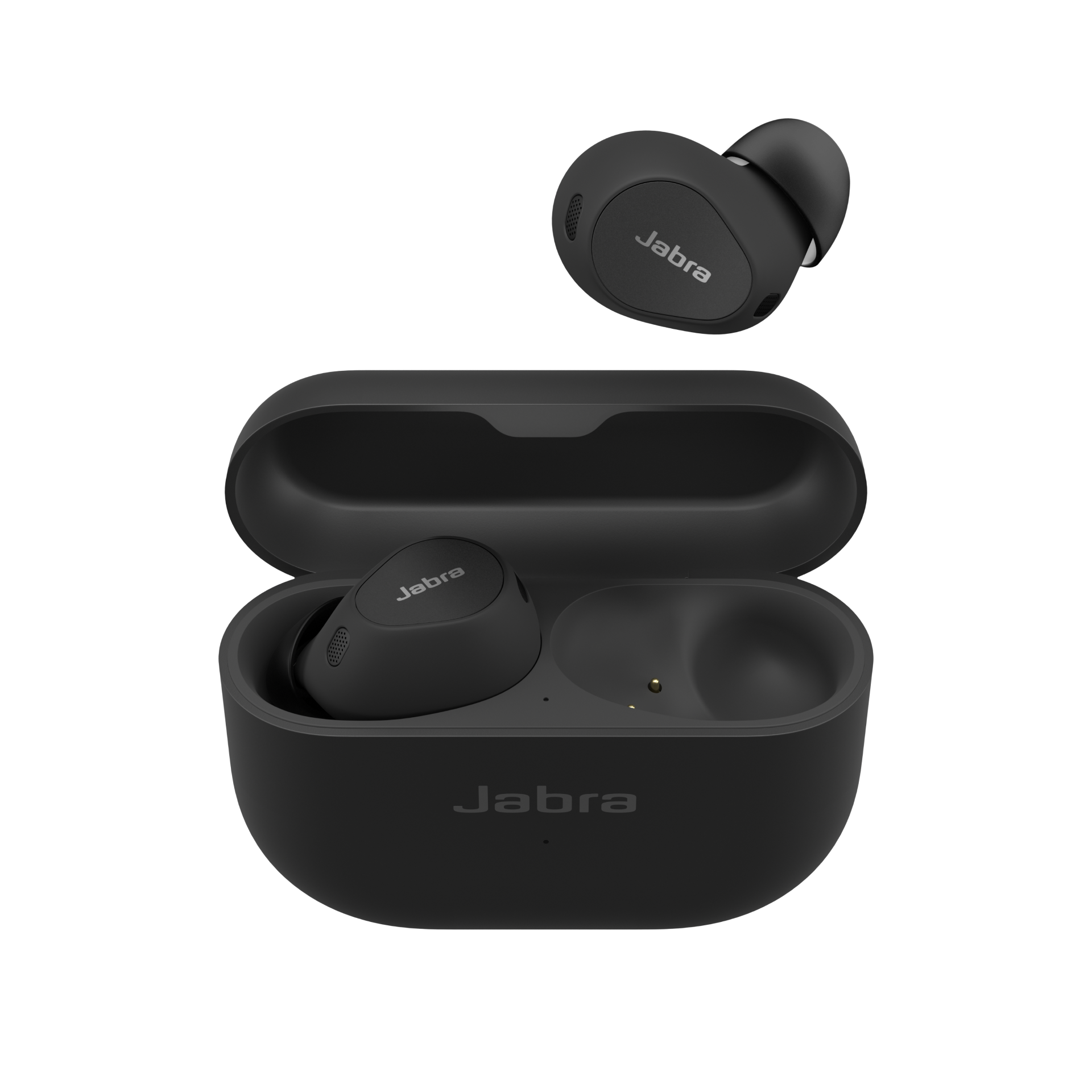
Jabra tuned the Elite 10 with a warm, balanced sound signature that flatters both voice content and music. The 10mm full-range drivers deliver clean low-frequency extension with good sub-bass presence — more articulate and less one-dimensional than the thin bass response some competing earbuds produce. Midrange reproduction is the Elite 10's strongest suit, which is appropriate given its call-quality focus: voice frequencies (300 Hz to 3 kHz) are reproduced with exceptional clarity and presence.
GN Audio / Jabra (Manufacturer product image)
The Jabra Sound+ app provides a six-band equalizer plus the proprietary MySound feature — a brief audio test (similar to an audiogram) that characterizes your hearing response and creates a personalized EQ profile to compensate for your specific hearing characteristics. The effect is subtle but measurable, particularly for listeners over 35 who have begun to lose sensitivity in the upper frequency ranges.
Dolby Atmos Spatial Sound uses the Elite 10's motion sensors to track head rotation and reposition the stereo image relative to your head movement — so if the sound stage is anchored "in front of you" and you turn left, the image stays in its original position rather than turning with your head. For movie and TV content, this effect is convincing and useful. For music, the effect is more subtle — some listeners love it, others prefer standard stereo.
LC3 codec support via Bluetooth LE Audio is forward-looking: when paired with a LE Audio-capable device, LC3 delivers higher audio quality at lower power consumption than SBC, along with reduced latency. As of this writing, LE Audio source devices are not yet mainstream, but the Elite 10's support means it will benefit from the ecosystem as it matures.
ANC & Transparency Mode
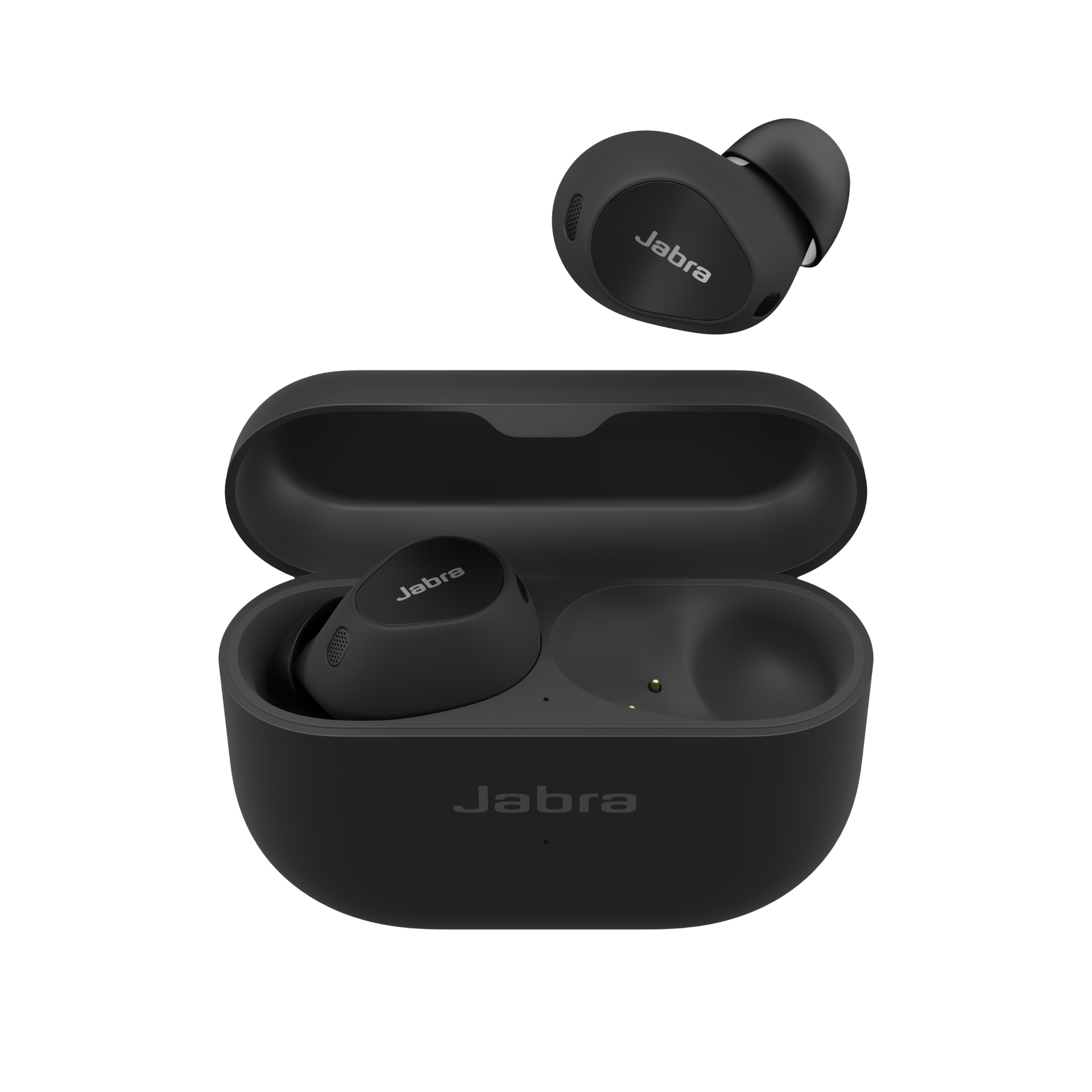
The Elite 10's ANC is effective and well-tuned, but prospective buyers should calibrate their expectations. The open-canal design's reduced passive isolation means that the ANC system must work harder to achieve the same perceived quiet as a sealed design. The six-microphone feed-forward/feedback hybrid system is good at attenuating low-frequency noise — commuter rumble, HVAC, road noise — but mid-to-high frequency transients like keyboard clicks and nearby conversations are less thoroughly suppressed than on the Sony WF-1000XM5 or Bose QuietComfort Earbuds II.
GN Audio / Jabra (Manufacturer product image)
That said, the ANC Adjustable slider in the Sound+ app allows fine-grained control over how much ambient noise is allowed through — useful in contexts where full isolation would be unsafe (cycling) or socially undesirable (office use). HearThrough transparency mode is natural-sounding and free of the processing artifacts that make some competitors' transparency modes sound synthesized.
For ANC-first buyers, the Elite 10 is not the optimal choice. For buyers who want comfortable, aware earbuds with good-but-not-maximum noise reduction, the balanced approach is well-suited to real-world use.
Battery & Connectivity
The Elite 10 delivers 6 hours per charge with ANC enabled, which is consistent with the premium true wireless segment. The case adds 21 hours for a total of 27 hours — sufficient for several days of typical use. With ANC off, earbud life extends to approximately 8 hours, which is among the longer single-charge runtimes in the segment.
GN Audio / Jabra (Manufacturer product image)
The five-minute quick charge (delivering 1 hour of playback) is genuinely useful. Wireless charging via Qi makes bedside top-ups convenient. The case itself is compact, with a satisfying magnetic closure and an IP54 rating that protects it against splashes.
Bluetooth 5.3 multipoint connects to two devices simultaneously. Call switching between laptop and phone is handled automatically based on which device receives incoming audio. Connection stability is widely reported as excellent.
Verdict
The Jabra Elite 10 earns its premium price by delivering the best call quality in the true wireless category alongside a comfortable, practical design that rewards all-day wearers. MultiSensor Voice is not marketing language — reviewer comparisons with the Sony WF-1000XM5, Apple AirPods Pro 2, and Google Pixel Buds Pro 2 consistently rate the Elite 10's voice reproduction as most natural and least processed. ComfortFit is equally genuine: wearers who find conventional in-ear buds uncomfortable can use the Elite 10 for full workdays without fatigue.
If your earbuds are your primary work communication device and you log significant daily call time, the Elite 10 is the clear choice at this price point. If you want the absolute best ANC and primarily listen to music, the Sony WF-1000XM5 is the better fit.