Introduction: the Anso promise finally lands in a pocket
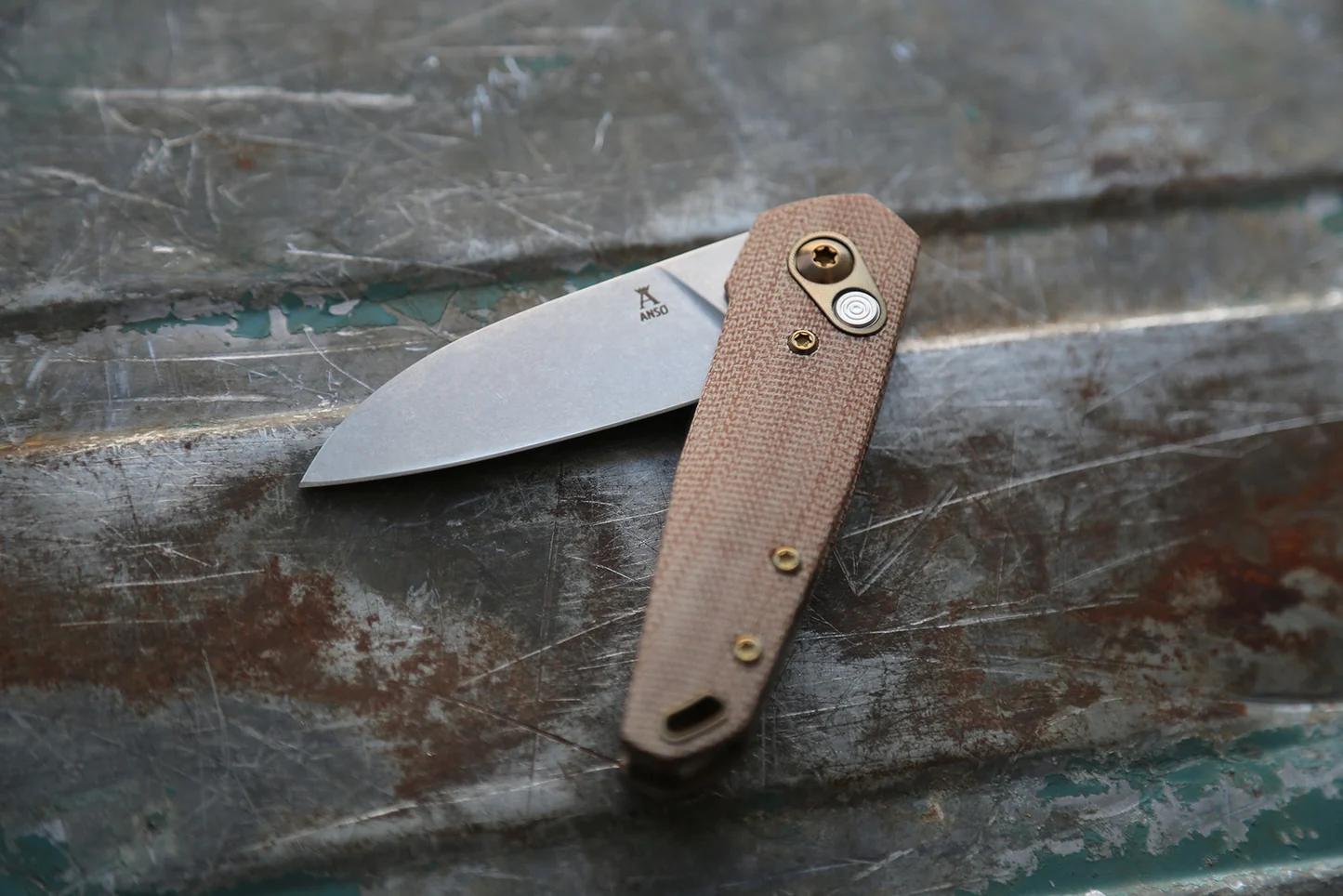
The Aros is the rare expensive folding knife that does not ask you to admire it from a distance. Jens Anso has always been able to draw a knife that looks like nobody else's knife; the surprise here is how little of the Aros feels like sculpture once it is open and cutting. The 2.5 inches of blade are not there to posture. The 6 inches of overall length are not there to impress a forum thread. At 1.91 oz in the carbon-fiber version, it disappears until the moment you need it, then behaves with the confidence of a much plainer work tool.
Anso of Denmark (Maker product image)
The result matters more than the romance. Anso designs have spent roughly 20 years being interesting, distinctive, and sometimes a little too pleased with their own shapes. The Aros is different. It takes the asymmetric language, the tidy clip solution, the button lock, the bearing pivot, and the RWL34 steel, then turns those choices into a knife that actually earns daily carry. It is still a 565 USD knife in carbon fiber. It still arrives in packaging so excessive that it makes a ziplock bag feel morally superior. But the object inside is not a trophy pretending to be useful. It is a small, exact, deeply considered EDC folder.
The basic brief is almost suspiciously modest: a flat-ground RWL34 blade, a button lock, a sculpted clip, and a handle compact enough for normal pockets. The execution is where the knife separates itself. The blade has enough tip control for marking work, enough belly for routine slicing, and enough edge length for cardboard without turning the handle into a brick. The button lock gives the action a light, clean character without making the knife feel like a fidget toy first and a tool second. The clip and lanyard arrangement is the kind of detail that looks minor until you realize how many makers solve the same problem by wasting handle space.
My opinion is blunt: if you are already comfortable with the idea of a premium daily-carry folder, the Aros belongs on the very short list. If you are not comfortable with the price, nothing in the knife will magically make 565 USD feel rational. The question is not whether the Aros is expensive. It is. The question is whether the design gives you anything that a cheaper, larger, more conventional knife does not. In actual pocket use, it does.
Design and build: asymmetry with a job to do
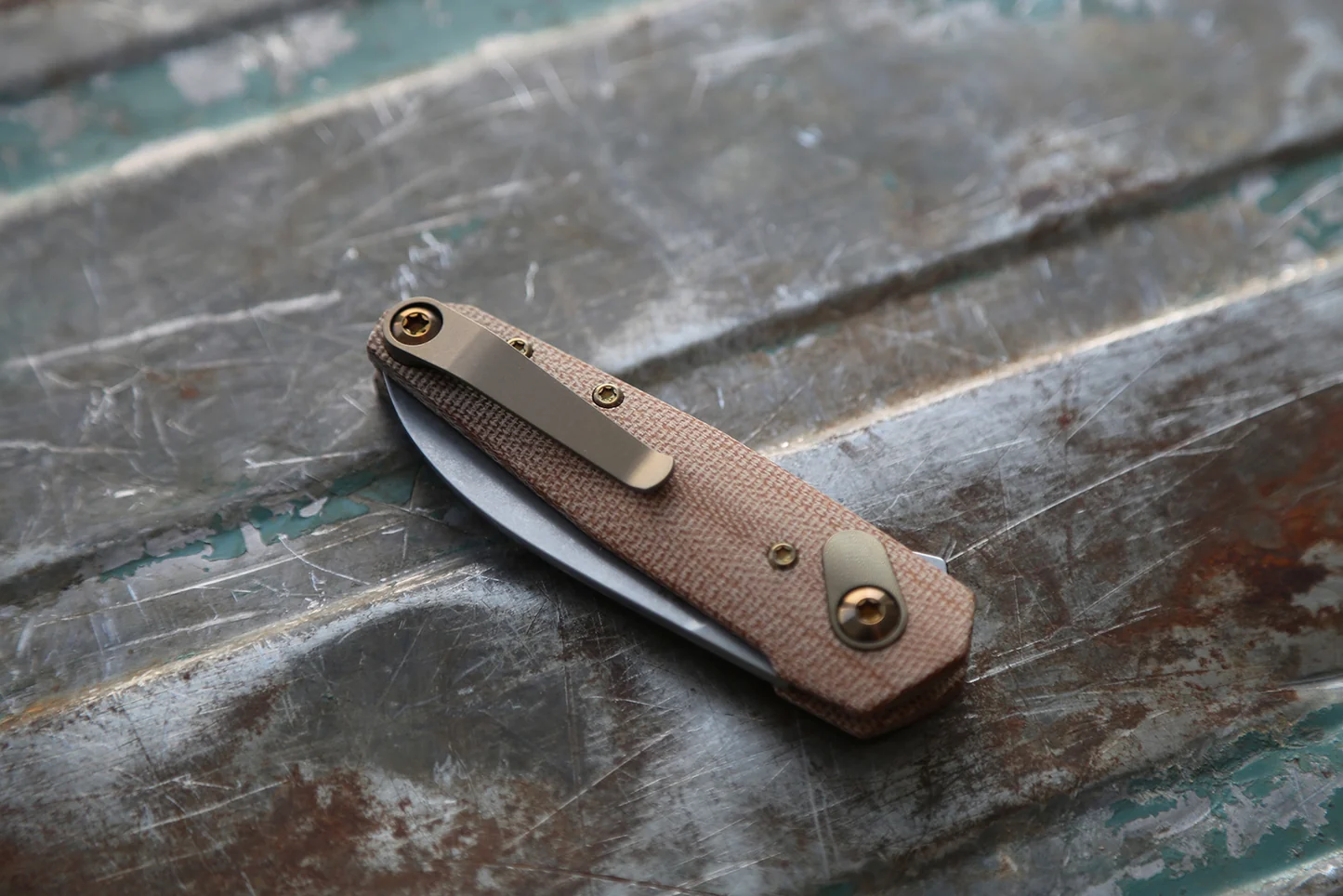
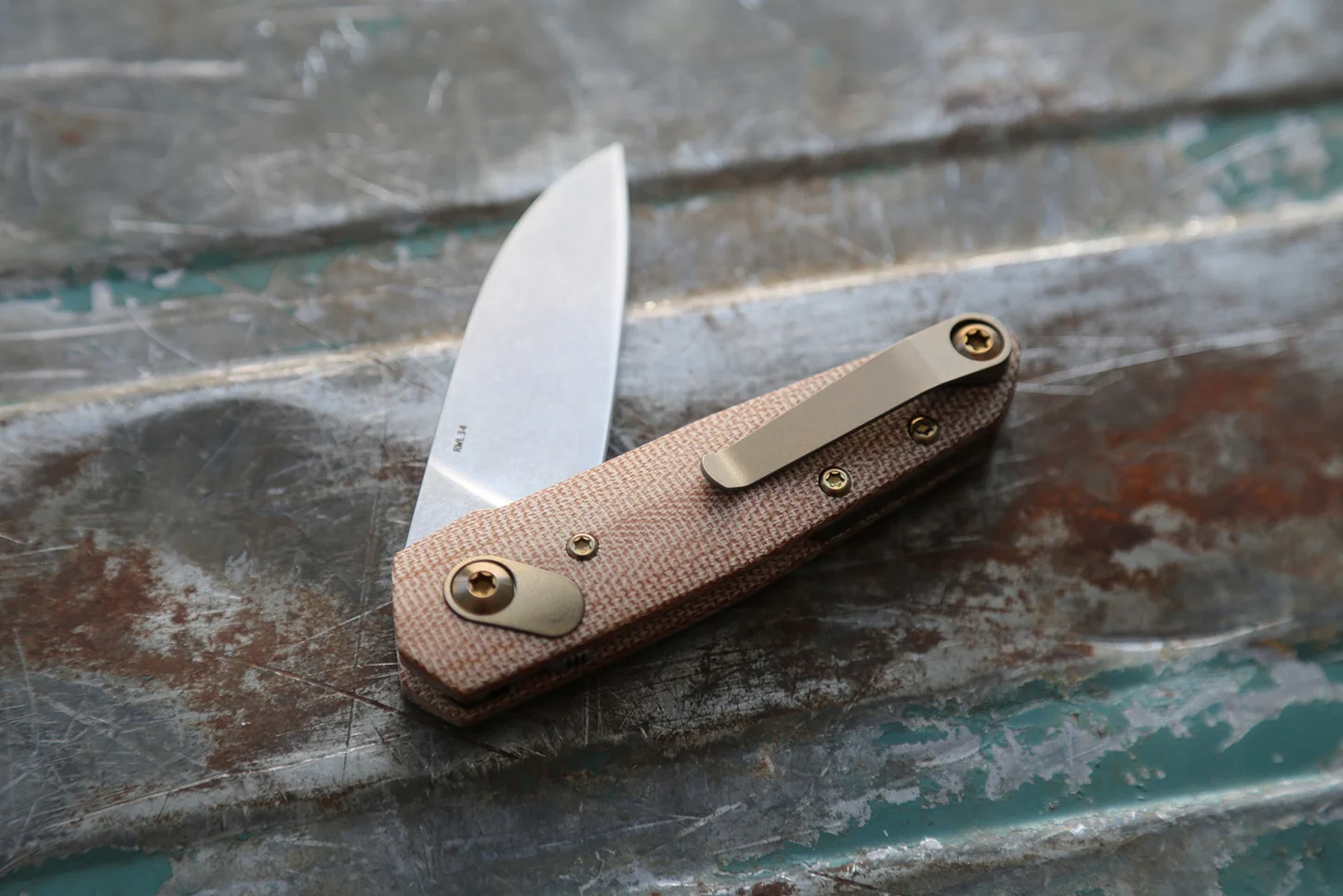
The Aros looks playful, but the best parts of the design are practical. The handle has enough contour and milling to give your fingertips information without turning the scales into sandpaper. The blade sits in the handle like it was drawn from the back end forward, not bolted onto a generic frame. The clip is elegant without being fragile, and it lands at the same end of the handle where the lanyard problem usually appears. Instead of forcing the lanyard hole through both scales and making the clip fight for real estate, Anso routes the lanyard out the back. It is a small asymmetry, but it solves a real pocket problem.
Anso of Denmark (Maker product image)
The dimensions matter. A 2.5 inches blade is short enough to be legal in more places than a 3.5 inches bruiser, easier to use in a crowded workshop, and less awkward around people who do not think knives are a hobby. A 6 inches overall length means the handle is compact, yet it does not feel like a keychain knife. The 1.91 oz carbon-fiber weight is the sweet spot: light enough that gym shorts and thin summer pockets do not complain, substantial enough that the knife does not feel disposable. Many high-end folders are excellent on a desk and annoying in jeans. The Aros reverses that order. It is better in the pocket than in photographs.
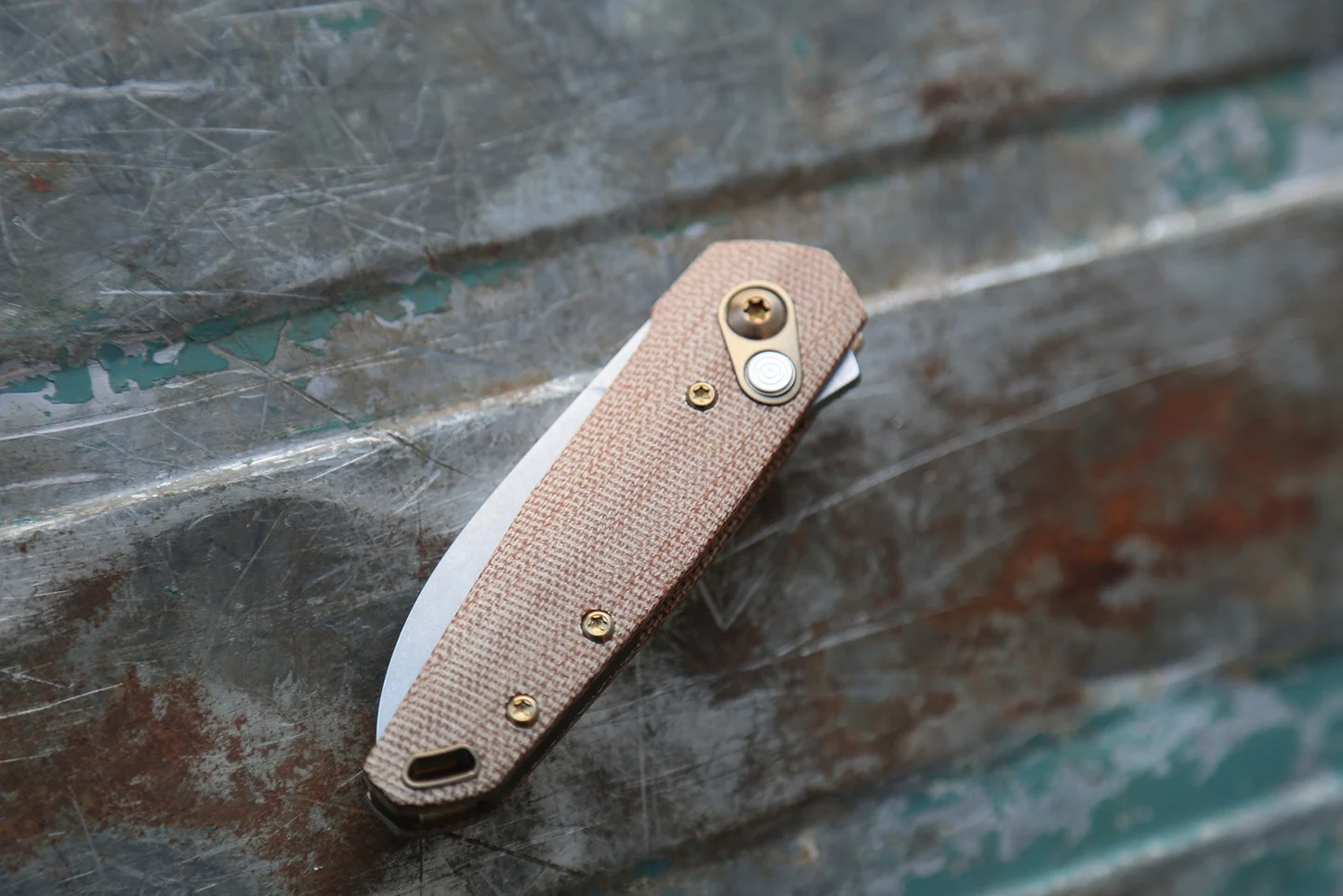
Build quality is high in the ways that affect use. The crowned spine is comfortable under the thumb. The sharpening choil is wide enough to make stropping easy all the way to the heel of the edge. The bearing pivot helps the small flipper tab do its work without requiring a theatrical wrist snap. The button lock is smooth and intuitive, and on a knife this size the usual complaint about button locks not being the absolute strongest mechanism misses the point. This is not a pry bar. It is a precision slicer.
The one design decision I actively dislike has nothing to do with the knife. The packaging is absurd. Opening it can feel like unpacking a branded nesting doll: box, paper, smaller box, pouch, more bits, and more material than a 1.91 oz knife needs to cross the world. Presentation matters for expensive objects, but waste is still waste. I would rather have the old Strider-style bag and more confidence that the money went into machining, finishing, or inventory. A knife this good should not need 15 boxes of stagecraft.
Real-world cutting performance: small blade, long reach
The first job was cardboard, because cardboard is where pocket knives tell on themselves. Thick packing board can make a pretty edge feel wedgy, especially when the blade stock is proud and the grind is lazy. The Aros did not behave that way. The flat grind and slender blade moved through thick cardboard like a zipper pull, separating the material cleanly instead of cracking it apart. In corrugated cardboard, the tip pierced easily and the edge tracked straight. It is not as thin behind the edge as a Victorinox blade or a TRM Nerd, but it has enough bite to feel efficient rather than decorative.
Anso of Denmark (Maker product image)
That distinction is important. Plenty of expensive knives have fine steel and beautiful finishing, then remind you during the first recycling run that geometry beats glamour. The Aros has both. It is not a hard-use folder in the theatrical sense. It is not the knife I would take to baton kindling, scrape paint, or abuse on a job site. It is the knife I would choose for the daily stream of precise cuts: cardboard, clamshell packaging, cord, tape, food-packet openings, and the small workshop chores where a larger knife starts to feel rude.
A walnut-box task remains the clearest illustration. I needed to mark hinge mortises on thin walls where a pencil line was too wide and a bigger blade would have obscured the square. The Aros gave me a clean scribe line, pre-cut the fibers, and made the chisel work tidier. That is the kind of job that separates a good EDC knife from a pocket ornament. The 2.5 inches blade was not a limitation there; it was the reason the tool worked.
RWL34 helped the case. The steel stayed sharp for a long stretch of normal work, showed no corrosion in the use described here, and responded well to stropping. It sits in the same broad family as 154CM, and the powder metallurgy version feels like a smart match for a small premium folder: balanced edge retention, civilized maintenance, and no need to turn sharpening into a religious experience. CPM 154 is a personal favorite for similar reasons, and RWL34 makes sense in that neighborhood. On the Aros, it reinforces the whole design thesis. This is not about chasing the newest alphabet soup steel. It is about choosing material that suits a clean, accurate cutter.
Lock, action, and carry: the button lock earns its keep
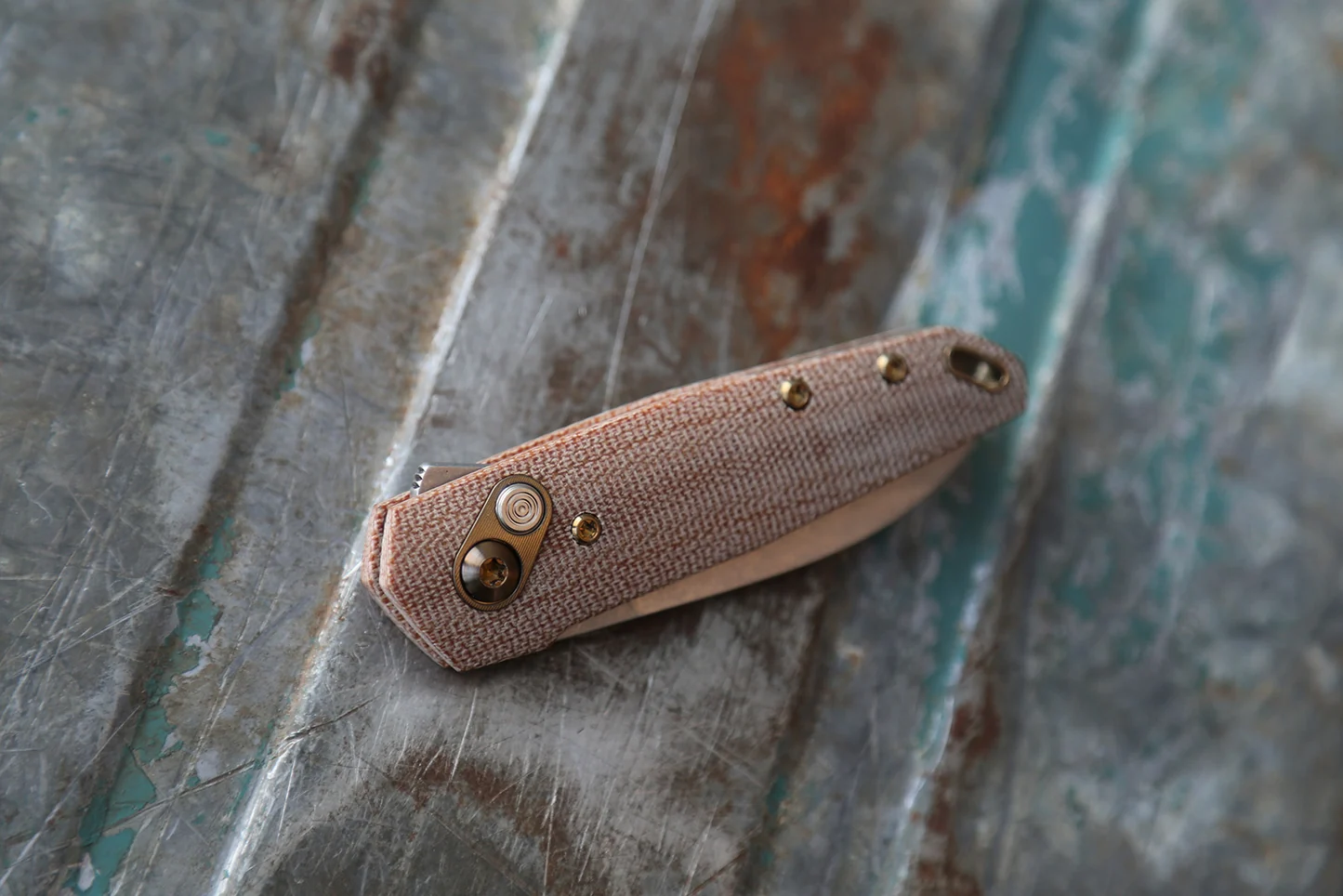
Button locks can be polarizing because they live at the intersection of convenience and strength. On a massive work knife, I understand wanting a different lock geometry. On the Aros, the button lock is exactly the right call. The blade opens smoothly, closes without gymnastics, and allows one-handed use that feels natural rather than performative. The bearing pivot gives the flipper tab enough mechanical help that the tab can stay small. That matters on a compact knife, because a giant tab would ruin both the outline and the pocket experience.
Anso of Denmark (Maker product image)
The action is quick, but not silly. The Aros is enjoyable to open, yet it does not feel like a knife designed primarily for couch fidgeting. There is enough detent and leverage to make deployment reliable, and the button keeps closing simple when you are done with a cut. In daily use, that means less thought. You take it out, open it, cut, close it, and put it away. Expensive knives often overcomplicate that sequence with drama. The Aros trims the drama down to a clean motion.
Carry is the strongest argument for the knife. The 1.91 oz weight means it does not drag at the pocket. The 6 inches overall length gives enough grip without demanding a dedicated pocket strategy. The clip is sculpted, attractive, and less visually aggressive than many deep-carry clips that look like bent office hardware. The lanyard routing is the clever bit: by sending the lanyard out the end instead of through the scales, Anso avoids the classic clip-versus-lanyard compromise. You can dislike lanyards and still appreciate the solution.
The rating breakdown weights what the knife is actually being judged on: blade steel and edge retention at 45%, ergonomics and carry at 20%, cutting performance and geometry at 15%, lock and action at 10%, and build quality and materials at 10%. A folding knife should be graded first on how it cuts and carries. Everything else is secondary.
Aros vs Spyderco, Benchmade, Chris Reeve, and other alternatives
The closest everyday comparison is not another Anso design; it is the set of compact premium folders people already trust. Against a Spyderco Para 3, the Aros feels smaller, cleaner in the pocket, and more refined, while the Spyderco gives you a more familiar thumb-hole opening and a broader aftermarket culture. The Para 3 is also easier to treat as a tool you can beat up. The Aros asks for more care, not because it is delicate, but because it is too nicely resolved to make abuse feel sensible.
Against a Benchmade Mini Bugout, the Aros is denser in design and more premium in feel. The Mini Bugout is famously easy to carry at roughly 1.5 oz depending on configuration, and it remains a better choice if your priority is ultralight utility at a less painful price. The Aros counters with superior handle presence, a more interesting blade, and a level of finishing that makes the Benchmade feel industrial by comparison. If you want pure pocket invisibility, the Benchmade has the argument. If you want a compact folder that feels special every time you use it, the Aros wins.
The Chris Reeve Small Sebenza 31 is the philosophical foil. It is quiet, conservative, and built around the pleasure of perfect restraint. The Aros is more playful and more ergonomic for quick, precise cutting. The Sebenza's appeal is confidence and longevity; the Aros's appeal is design intelligence. A Small Sebenza blade is around 3 inches, which gives it more edge, but it also carries like the more traditional knife it is. The Aros feels more like a custom designer solving for modern EDC pockets.
Then there are semi-production status knives such as the Grimsmo Rask, Oz Machine Co Roosevelt, and SPK Lamia. Those are excellent objects, and some buyers will prefer their larger, more mechanical personalities. The Aros is not trying to win by being more imposing. It wins by being easier to live with. A 565 USD knife has to justify not only the drawer slot but also the opportunity cost of every other premium object competing for the same budget.
Who should buy the Aros?
Buy the Aros if you already know you like compact folders and want the best version of that idea. It is ideal for the person who cuts often but discreetly: cardboard at home, packaging at work, light workshop layout, food packets on the road, and the little tasks where control beats blade length. It is also for the Anso fan who has admired the design language but wanted the usefulness to catch up with the personality. Here, it finally does.
It is not the right first good knife for most people. A 565 USD entry point is too steep if you are still learning what blade shapes, locks, and pocket clips you prefer. It is not the right knife for people who equate value with maximum materials per dollar. It is also not ideal if you want a large hard-use folder, a field knife, or something you can lend without a pulse spike. The Aros is a daily tool, but it is a precise daily tool.
Collectors should pay attention, but users should pay more attention. The danger with an in-house designer knife is that it becomes an object you preserve rather than a knife you carry. The Aros deserves carry. The scratches and small signs of use will probably bother some owners at first; then they will realize the design is better when it is earning them.
Bottom line verdict
The Aros is the best kind of premium knife: expensive for reasons you can feel in the hand, not just reasons you can list in a spec table. The RWL34 steel is a smart choice. The flat grind cuts well. The button lock suits the scale of the design. The 2.5 inches blade and 6 inches overall length hit a rare pocketable balance. The 1.91 oz carbon-fiber build makes it easy to forget until it is useful. The packaging is silly, and the price will exclude plenty of sensible buyers, but the knife itself is close to unimpeachable.
If you want the maximum amount of knife for the least money, look elsewhere. If you want a compact folder where the designer's quirks have been disciplined into utility, the Aros is outstanding. It feels like Jens Anso finally delivering the knife his reputation always promised.
Overall: 4.3 out of 5.